
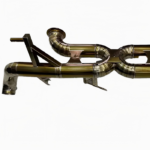
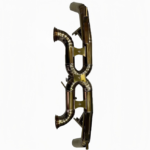
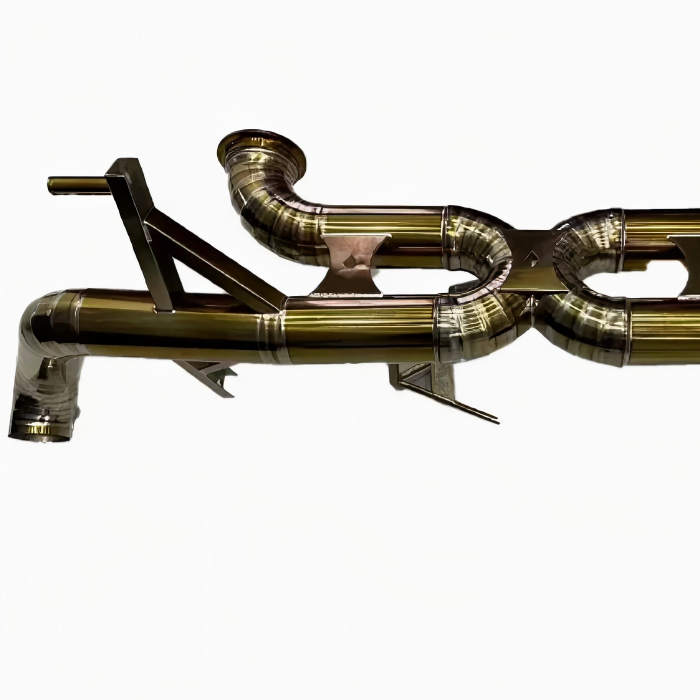
Stable Titanium Cat Back Exhaust Welding Service 4 Layer Heat Shield Design for Race Ready Titanium Exhaust Systems
Angebot anfordern
Geben Sie die benötigte Menge ein und fügen Sie sie Ihrer Angebotsliste für Preisanfragen hinzu.
Details zum Produkt
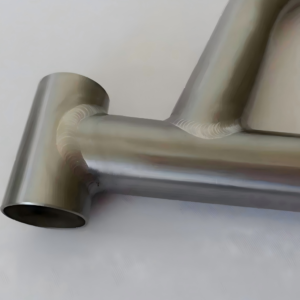
Titanium Cat Back Exhaust Welding Service 15 Horsepower Gain with Precision TIG Welding Lightweight and corrosion resistant.
What Is a Titanium Cat Back Exhaust?
A cat back exhaust refers to the portion of the exhaust system from the catalytic converter to the exhaust tips. It includes the intermediate pipe, resonator, muffler, and tailpipe. A titanium version replaces the factory steel components with titanium alloy construction. The result is a system that weighs dramatically less, resists rust indefinitely, and produces a unique exhaust note that steel cannot replicate.
Unlike full turbo-back or header-back systems, this type of exhaust does not require tuning changes or emission compliance concerns in most regions. This makes it one of the most accessible high-performance upgrades available. Enthusiasts from the track to the street choose a titanium system for its immediate, noticeable benefits.
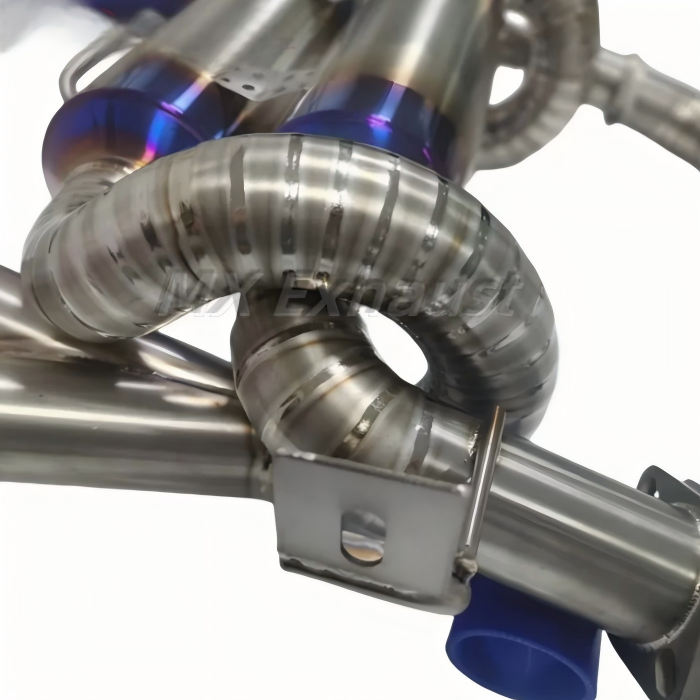
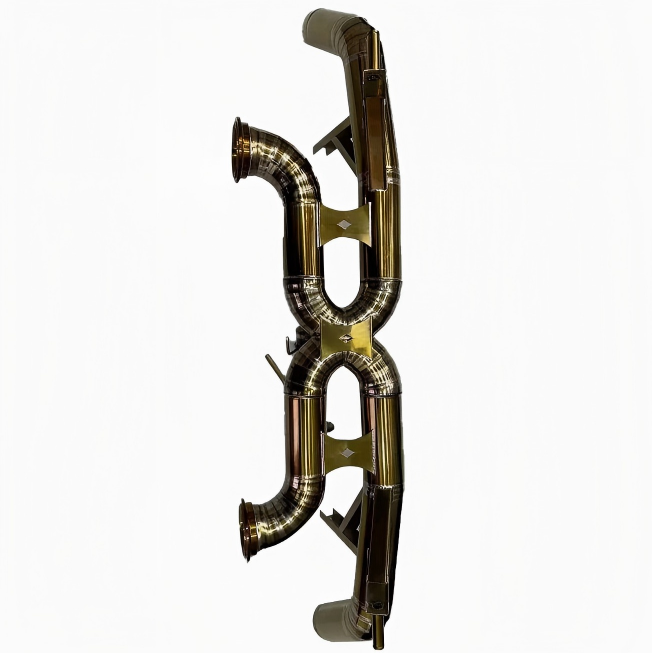
Why Titanium for a Cat Back Exhaust?
Titanium offers three distinct advantages for exhaust applications. First, weight. A titanium cat back exhaust typically weighs 40 to 60 percent less than an equivalent stainless steel system. For a performance vehicle, reducing unsprung weight or overall mass improves acceleration, braking, and handling. Second, corrosion resistance. Titanium never rusts. Road salt, moisture, and exhaust condensation have no effect. A titanium cat back exhaust will outlast the vehicle itself.
Third, thermal properties. Titanium dissipates heat more effectively than steel. A titanium cat back exhaust cools faster after hard driving and conducts less heat to surrounding components. This protects fuel tanks, rear differentials, and body panels from excessive temperatures. Additionally, titanium produces a sharper, more resonant exhaust tone with distinctive overtones that steel systems cannot match.
Challenges of Welding a Titanium Cat Back Exhaust:
Despite its advantages, titanium presents serious fabrication challenges. Titanium is highly reactive when exposed to oxygen, nitrogen, and hydrogen at elevated temperatures. During welding of a titanium cat back exhaust, the weld zone must be completely shielded from atmospheric contamination. If shielding fails, the titanium absorbs these elements, resulting in embrittlement and cracking.
Exhaust tubing for a titanium cat back exhaust is typically thin-walled, ranging from 0.8mm to 1.5mm. Thin titanium requires precise heat control to avoid burn-through. Additionally, exhaust systems involve complex joints: flanges, hangers, slip joints, and muffler connections. Each weld must be sound to withstand vibration, thermal cycling, and road impacts.
For these reasons, a titanium cat back exhaust should only be fabricated by welders experienced with reactive metals. General exhaust shops rarely have the equipment or training for titanium.
Critical Steps for Welding a Titanium Cat Back Exhaust:
Successful fabrication of a titanium cat back exhaust begins long before the arc is struck:
Material selection: Grade 2 commercially pure titanium or Grade 5 (6Al-4V) is commonly used for this application. Grade 2 offers excellent formability and weldability. Grade 5 provides higher strength at the cost of reduced ductility.
Tube preparation: Titanium tubes must be cut square, deburred, and cleaned inside and out. Use acetone or isopropyl alcohol followed by a dedicated stainless steel brush used only on titanium. Never use tools that have touched steel.
Fit-up: Gaps should not exceed 0.5mm. Use alignment clamps or fixtures to maintain concentricity. Poor fit-up leads to burn-through or incomplete fusion.
Back-purging: The inside of each tube must be filled with pure argon at 99.999 percent purity. Without this step, the root side of the weld oxidizes, creating a brittle layer that cracks under vibration. For a titanium exhaust, continuous purge during the entire weld is essential.
Torch setup: Gas tungsten arc welding (GTAW/TIG) is the only process recommended for titanium exhaust fabrication. Use a 2 percent ceriated or lanthanated tungsten electrode. A gas lens improves coverage. Set post-flow to at least 15 seconds to protect the cooling weld.
Design Features of a Quality Titanium Cat Back Exhaust:
A well-engineered titanium exhaust system includes several features that affect performance. Mandrel-bent tubing maintains constant diameter through bends, maximizing flow. Straight-through muffler designs reduce restriction while controlling sound. Resonators tuned to specific frequencies eliminate drone without sacrificing power.
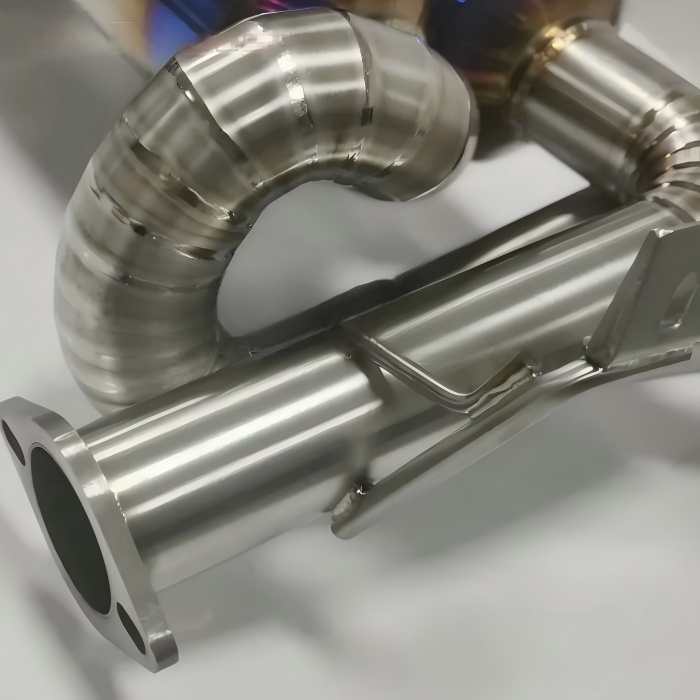
Welded hangers must be positioned correctly to support the system without transferring excessive vibration to the chassis. Flange thickness should match or exceed the tubing wall thickness. Slip joints allow for thermal expansion while maintaining seal integrity.
Sound signature is another consideration. A titanium exhaust produces a higher-frequency sound than steel, with more pronounced harmonics. Many enthusiasts prefer this sharper, more exotic tone. Some manufacturers add Helmholtz chambers or quarter-wave resonators to fine-tune the acoustic profile.
Common Defects in Titanium Cat Back Exhaust Welding:
Even experienced welders may encounter defects when fabricating a titanium cat back exhaust:
Oxidation and discoloration: Silver or light straw welds indicate proper shielding. Blue, purple, or grey means contamination requiring weld rejection. Prevention requires checking gas flow, ensuring back-purging, and extending post-flow.
Burn-through: Excessive heat creates holes in thin tubing. Reduce amperage or increase travel speed. A titanium cat back exhaust with burn-through is typically scrapped, as repair welding often causes further contamination.
Incomplete penetration: The weld does not fully bond through the tube wall. This results from insufficient heat or excessive gap. Adjust parameters and refit the joint.
Cracking: Hydrogen embrittlement or rapid cooling causes cracks. Ensure thorough cleaning and adequate post-flow before moving the torch away.
Applications and Market Demand:
The demand for a premium titanium cat back exhaust spans several markets. Japanese performance cars like Nissan GT-R, Mitsubishi Evo, and Subaru STI frequently receive titanium systems. European exotics including Porsche, Lamborghini, and Ferrari benefit from weight reduction. American muscle cars and track-focused vehicles also adopt a titanium cat back exhaust for competitive advantage.
Motorcycles represent another growing market. A titanium cat back exhaust for sportbikes offers dramatic weight savings near the rear wheel, improving handling and acceleration.
Conclusion:
A titanium cat back exhaust represents the ultimate expression of exhaust engineering. When welded correctly by experienced professionals, it delivers unmatched weight savings, permanent corrosion resistance, and a distinctive sound that transforms any vehicle. For enthusiasts who demand the best, titanium is the clear choice.
Frequently Asked Questions About Titanium Cat Back Exhaust:
Q1: Is a titanium cat back exhaust worth the extra cost?
A: Yes for performance enthusiasts. Titanium weighs 40 to 60 percent less than steel, never rusts, and produces a unique exhaust tone that justifies the premium.
Q2: How long does a titanium cat back exhaust last?
A: A properly welded titanium cat back exhaust lasts indefinitely because titanium does not rust or corrode.
Q3: How much weight can I save with a titanium cat back exhaust?
A: Typical savings range from 20 to 40 pounds compared to a stainless steel system.
Q4: Will a titanium cat back exhaust pass emissions inspection?
A: Yes, because it does not remove or modify the catalytic converter and is legal in all 50 states.
Q5: Can a titanium cat back exhaust be repaired if damaged?
A: Yes, but only by a welder experienced with titanium and back-purging. General exhaust shops cannot perform titanium repairs.