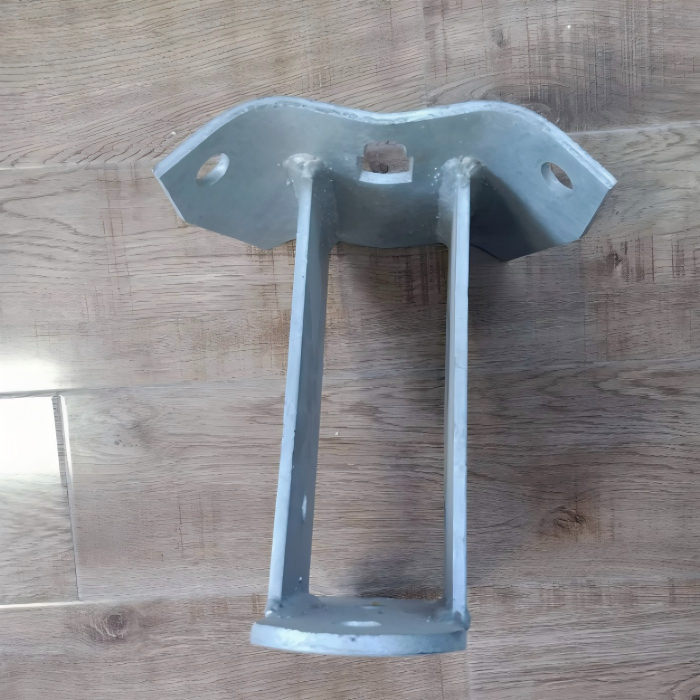

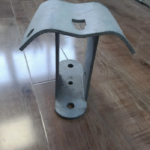
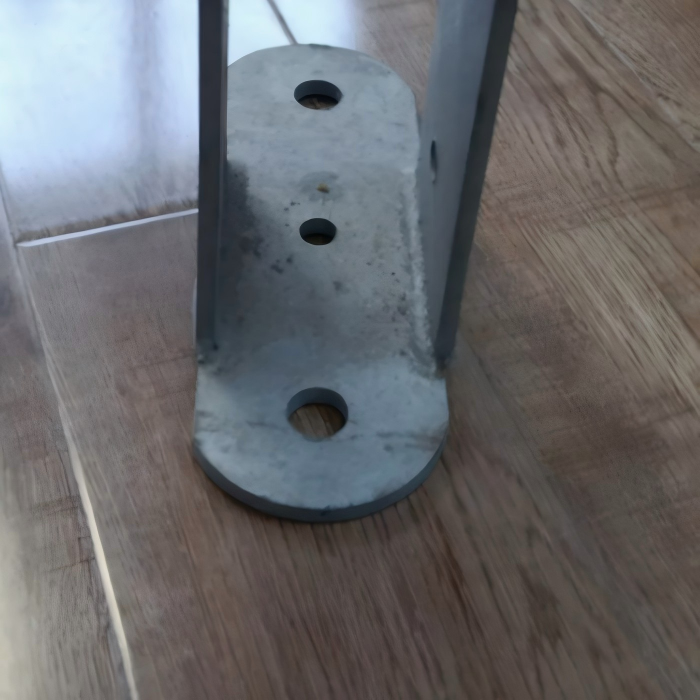
Durable Transformer Mounting Bracket 48 Hour Custom Sample and 6 Quality Welding Checks
Запрос Цитировать
Введите необходимое количество и добавьте в свой список для запроса цен.
Подробнее о продукте
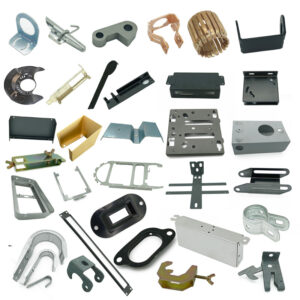
Need a stronger transformer mounting bracket? Our stamped steel version replaces fabricated angle iron. Lighter, consistent.
Product Definition and Key Advantages:
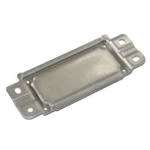
A true industrial grade transformer mounting bracket must maintain exact bolt hole alignment while supporting weights ranging from 50 kg for pole mounted units to over 2000 kg for pad mounted transformers. Our manufacturing process begins with precision stamping using progressive dies, followed by MIG or robotic welding. This approach ensures every component maintains consistent flange angles, hole positions, and weld penetration depth.
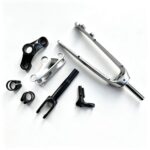
Key advantages of our product include material options such as hot rolled steel, galvanized steel, and stainless steel. The thickness range runs from 3.0 mm to 10.0 mm based on transformer weight and seismic requirements. Surface finishes include hot dip galvanizing, zinc plating, powder coating, or plain for post welding treatment. Pre welded nuts or locating pins are available for faster field installation. For high volume orders, we also offer jig welded assemblies where the bracket is integrated with cross members or reinforcement gussets.
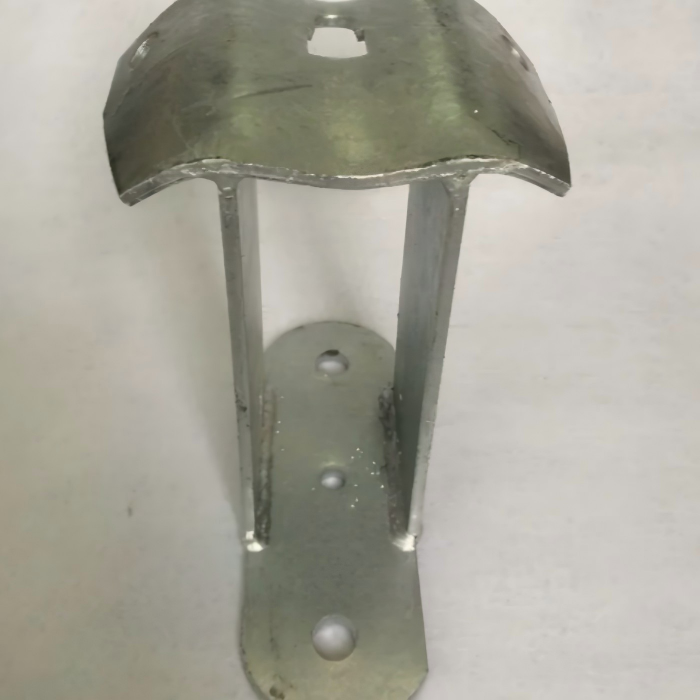
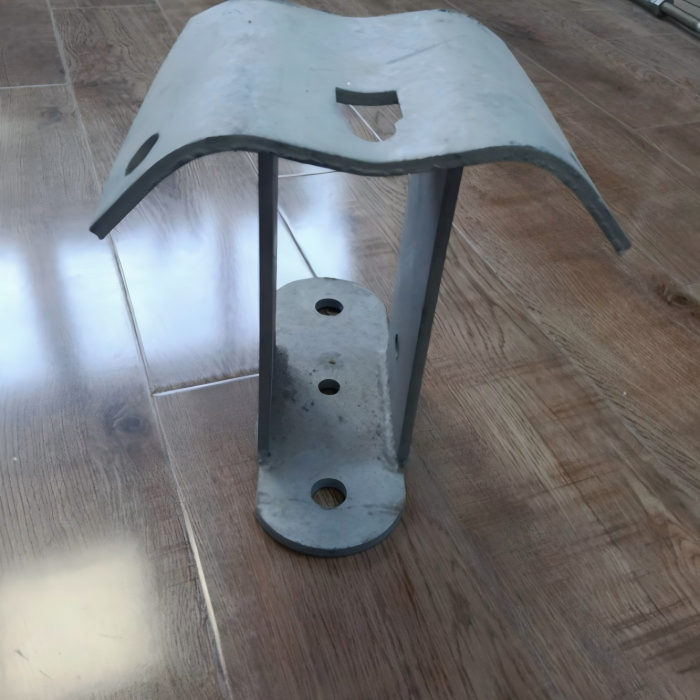
Technical Specifications – Stamping and Welding Capabilities:
Precision Stamping Process:
Our presses range from 250 tons to 1200 tons, enabling tight tolerances on the transformer mounting bracket inner and outer dimensions, typically ±0.5 mm. Critical dimensions include bolt hole center distances, mounting surface flatness, and bracket arm perpendicularity. Compared to laser cut or fabricated versions, a stamped bracket delivers consistent thickness distribution, work hardened edges, and faster cycle times for bulk orders. We can produce progressive dies that form, pierce, and trim the component in a single press stroke, reducing per piece cost for quantities above 3000 units.
Welding Standards:
As a welded fabrication specialist, we apply GMAW for structural steel brackets, ensuring penetration depth at least 80 percent of material thickness. Resistance projection welding is used for high volume units with pre embossed weld projections, which eliminates loose hardware and reduces assembly steps. Post weld finishing includes grinding, shot blasting, or tumbling to remove spatter and sharp edges, ensuring a clean surface for galvanizing or powder coating.
Quality Control:
Every batch undergoes pull out testing, shear testing, and dye penetrant inspection on critical welds. For seismic zones or high wind areas, we recommend a reinforced design with gusset plates welded at high stress transition zones.
Typical Applications for Transformer Mounting Bracket:
Pole Mounted Transformer Installations:
Utility poles require a transformer mounting bracket that wraps around the pole while supporting the transformer at a safe height above ground. Our stamped and welded design includes curved back plates that match standard pole diameters from 150 mm to 400 mm. A correctly fabricated transformer mounting bracket in this application must resist wind induced fatigue and maintain bolt tension over decades of service.
Pad Mounted Transformer Platforms:
Ground level transformers need a transformer mounting bracket that lifts the unit above standing water and allows cable access underneath. Our heavy duty version uses 6.0 mm to 8.0 mm galvanized steel with full penetration welds. The transformer mounting bracket in these applications often supports both the transformer tank and the secondary compartment, requiring exact flatness across multiple mounting points.
Substation and Switchgear Mounting:
Indoor and outdoor substations demand a transformer mounting bracket that can handle short circuit forces and switching surges. We add reinforcement ribs during the stamping stage and use controlled cooling after welding to reduce residual stress. Many customers request a hot dip galvanized transformer mounting bracket for corrosion resistance when installed in coastal or industrial environments.
Renewable Energy Projects:
Solar farms and wind turbine installations often include step up transformers mounted on steel structures. A transformer mounting bracket for these applications must accommodate thermal expansion and contraction without loosening. Our design includes slotted mounting holes to allow minor movement while maintaining electrical bonding continuity. For saltwater marine environments near offshore wind farms, we offer a stainless steel transformer mounting bracket with fully welded closed box sections.
Why Choose Us as Your Stamping and Welding Supplier?
Many suppliers sell a generic transformer mounting bracket, but few control both stamping and welding in house. This vertical integration delivers no tolerance mismatch because we design dies and weld fixtures together, so your transformer mounting bracket always has aligned hole patterns. Mixed batch capability means if you need 300 units in 4.0 mm steel and 150 units in 6.0 mm galvanized steel, we can run both in one schedule. We also offer direct replacement by reverse engineering an existing transformer mounting bracket from a physical sample, drawing, or even a worn original part.
Quality Assurance Checklist for Every Transformer Mounting Bracket:
Dimensional report using coordinate measuring machine, weld penetration macro etch on first article, hardness test on stamped zones, proof load test at 2.0 times transformer weight, and dye penetrant inspection on all structural welds. For galvanized brackets, we also verify coating thickness according to ASTM A123.
Frequently Asked Questions:
Q: Can a stamped transformer mounting bracket replace a fabricated angle iron bracket?
A: Yes for most applications. Our stamped and welded version offers better dimensional consistency than manually fabricated angle iron brackets because progressive dies ensure every part is identical. It is typically 10 to 20 percent lighter while matching or exceeding the load capacity. For large transformers above 3000 kg, we recommend increasing material thickness rather than switching to fabrication.
Q: Do you provide welded assemblies with multiple brackets on one frame?
A: Absolutely. We can supply a welded frame that includes the transformer mounting bracket along with cable management brackets and surge arrester mounts as a single assembly. This reduces field installation time and ensures consistent mounting positions across multiple transformer pads.
Q: What is the maximum transformer weight for one transformer mounting bracket?
A: Static load capacity depends on material thickness and weld design. For a 6.0 mm steel bracket with full penetration welds, the safe working load is approximately 800 kg per unit. For heavier transformers, we recommend using four or six brackets per transformer. Contact us for a load calculation sheet specific to your transformer model and seismic zone.
Q: Can you add rubber pads or vibration isolators to the transformer mounting bracket?
A: We do not mold rubber, but we can bond pre cut neoprene or EPDM pads to the mounting surface after welding. For active vibration control, we recommend specifying a bracket that accepts standard vibration isolators available from electrical supply distributors.
Q: Do you offer design assistance for a custom transformer mounting bracket?
A: Yes. Our engineering team can review your transformer mounting points, pole or pad dimensions, and available space envelope. We will propose an optimal stamped and welded bracket geometry within one week. We also provide finite element analysis reports showing stress distribution and safety factors for seismic and wind loads.
Q: What surface treatment is best for outdoor transformer mounting brackets?
A: Hot dip galvanizing per ASTM A123 provides the longest corrosion protection for a bracket installed outdoors, typically 50 to 75 years in most environments. For less severe conditions, zinc plating with a top coat offers 10 to 20 years of protection at lower cost. Powder coating is suitable for indoor or sheltered outdoor applications but can be damaged by UV exposure over time.