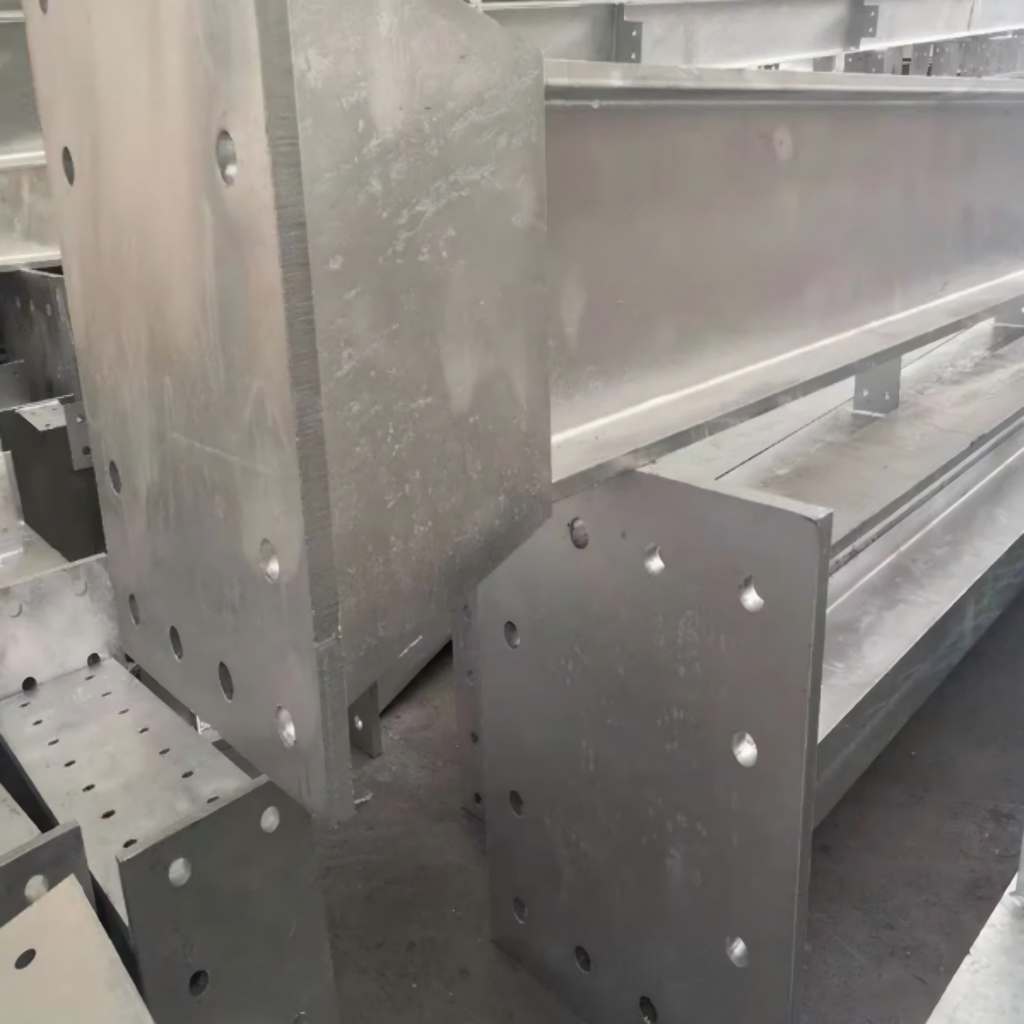
Tig Welded Steel Frame Welding Service 3mm Wall Thickness with Professional Grade for Custom Fabrication
Angebot anfordern
Geben Sie die benötigte Menge ein und fügen Sie sie Ihrer Angebotsliste für Preisanfragen hinzu.
Details zum Produkt
Professional stainless steel tig welded steel frame service for structural supports equipment stands and custom fabrications. Full penetration welds with distortion control. Custom sizes available.
Why Professional Tig Welded Steel Frame Delivers Superior Strength?
Many structural failures in welded frames occur not at the center of the material but at the joint where two sections meet. A poorly executed weld creates stress risers, lack of fusion, or incomplete penetration. These defects are often invisible from the outside. Over time, cyclic loading causes them to propagate until the entire structure fails.
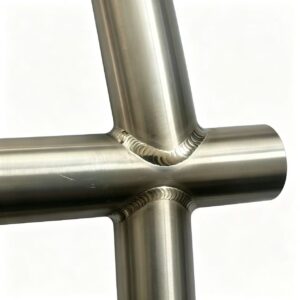
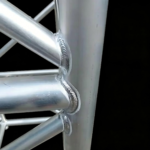
A properly completed tig welded steel frame produces a joint that is as strong as the base metal. The TIG process offers exceptional control over heat input and filler metal deposition. This results in smooth, consistent welds with full penetration. Additionally, the aesthetic quality of TIG welding makes it the preferred choice for visible frame applications where appearance matters.
Our shop has invested in precision cutting equipment, CNC fixturing tables, and multiple TIG welding stations to produce each assembly with consistent quality. For production runs of 50 pieces or more, we recommend automated TIG welding. Every project we undertake for tig welded steel frame begins with a thorough review of material grade, wall thickness, joint configuration, and end use requirements.
What Is Stainless Steel Tig Welded Frame?
A tig welded steel frame is a structural assembly created by joining stainless steel tubes or bars using the gas tungsten arc welding process. TIG welding uses a non consumable tungsten electrode and separate filler rod, allowing precise control of heat and weld puddle. Stainless steel contains at least 10.5 percent chromium, which forms a passive oxide layer on the surface.
Our technique uses shielding gas—typically pure argon—to protect the molten weld pool from atmospheric oxygen. This allows the chromium to re form its protective layer as the weld cools. A properly completed tig welded steel frame will resist rust at the weld line as effectively as the base metal. We also control heat input carefully because too much heat causes chromium carbide precipitation. By using low heat input and proper technique, we prevent this problem on every project.
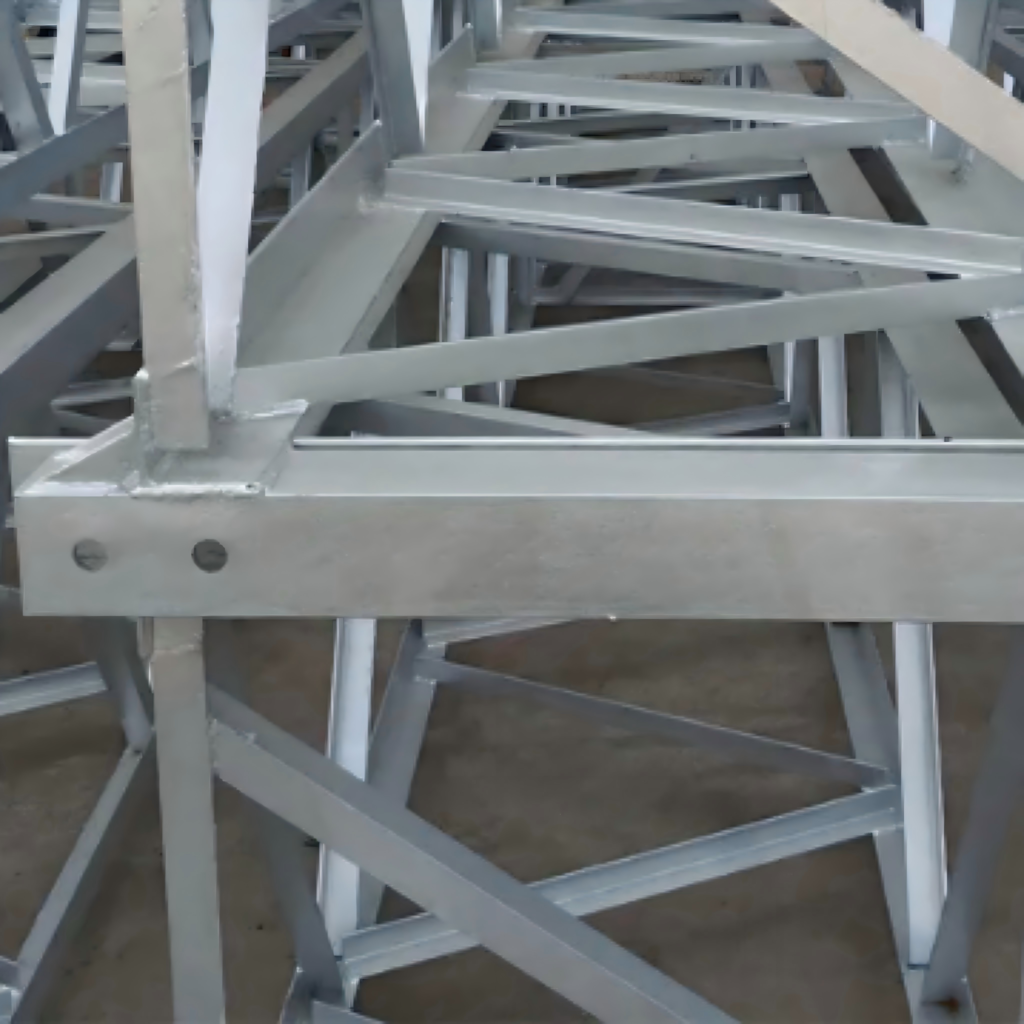
Common Joint Configurations for Steel Frames:
We offer several joint configurations for tig welded steel frame construction, each suited for different structural requirements.
Butt Joint – Tube to Tube Straight Connection:
Two tubes are aligned end to end and welded around the entire perimeter. This configuration for tig welded steel frame is common for extending length in handrails and long frames. Full penetration is required.
Corner Joint – 90 Degree Connection:
One tube end is cut square and butted against the face of another tube. A fillet weld is applied to both visible sides. This method is used for frame corners and equipment stands.
T Joint – Perpendicular Connection at Mid Span:
The end of one tube is prepared to fit against the side of another tube. This configuration requires access to both sides for proper fusion. Used for cross bracing.
Lap Joint – Overlapping Connection:
One tube overlaps another with fillet welds on both sides. This tig welded steel frame method provides good strength with simple fit up.
For each order, we document the joint configuration so you can reorder identical assemblies.
Material Selection for Steel Frame Welding:
Not all stainless steel welds equally well. We stock several alloys for tig welded steel frame projects.
304 Stainless Steel – The workhorse alloy for most industrial and architectural applications. Good corrosion resistance and excellent weldability. Our standard material for tig welded steel frame used in food equipment, handrails, and structural frames.
316 Stainless Steel – For marine environments, chemical plants, or outdoor installations near salt water. Molybdenum addition improves pitting resistance. A 316 frame costs more but lasts indefinitely in coastal exposure.
304L Low Carbon Grade – For applications requiring maximum weld integrity. Lower carbon content reduces the risk of weld decay. Recommended for tig welded steel frame in high humidity environments.
We do not recommend free machining stainless grades for any tig welded steel frame application.
Tube End Cutting and Edge Preparation:
The quality of any tig welded steel frame operation starts with accurate tube end cutting. Poorly cut ends create gaps that require excessive filler metal.
Precision Cold Saw – Produces a burr free square cut. Ideal for tig welded steel frame where tube ends must fit tightly together. Tolerances hold to plus or minus 0.010 inch.
Abrasive Cut Off Saw – Faster than cold sawing but leaves a small burr. We deburr all cut ends before tig welded steel frame fabrication.
Horizontal Band Saw – Best for tube over 4 inches or lengths over 10 feet. Efficient for large tig welded steel frame orders.
For all projects, we inspect cut ends for squareness. Any tube end with more than 0.5 degree deviation is rejected.
Distortion Control During Frame Welding:
Steel frames warp from weld heat because the weld metal shrinks as it cools. Long assemblies with multiple welds are vulnerable to distortion during tig welded steel frame operations.
Our solutions include:
- Balanced welding sequence – Weld opposite sides in alternating order
- Strongback fixturing – Clamp tubes to a precision flat steel table
- Copper backup bars – Sink heat away from the weld zone
- Skip welding – Weld short 1 inch segments then move to another area
- Post weld straightening – Hydraulic press correction for long frames
Using these methods, we hold straightness to within 1/16 inch over 10 feet for most tig welded steel frame applications.
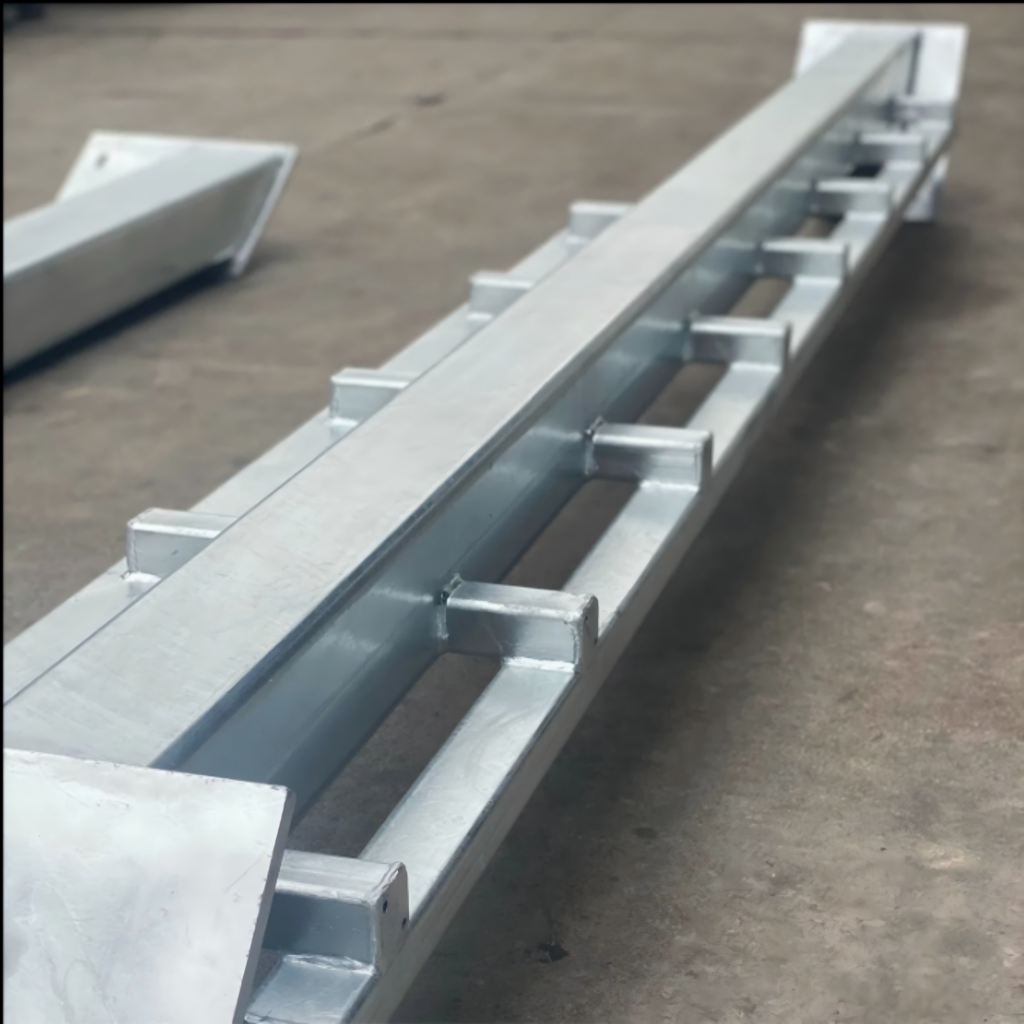
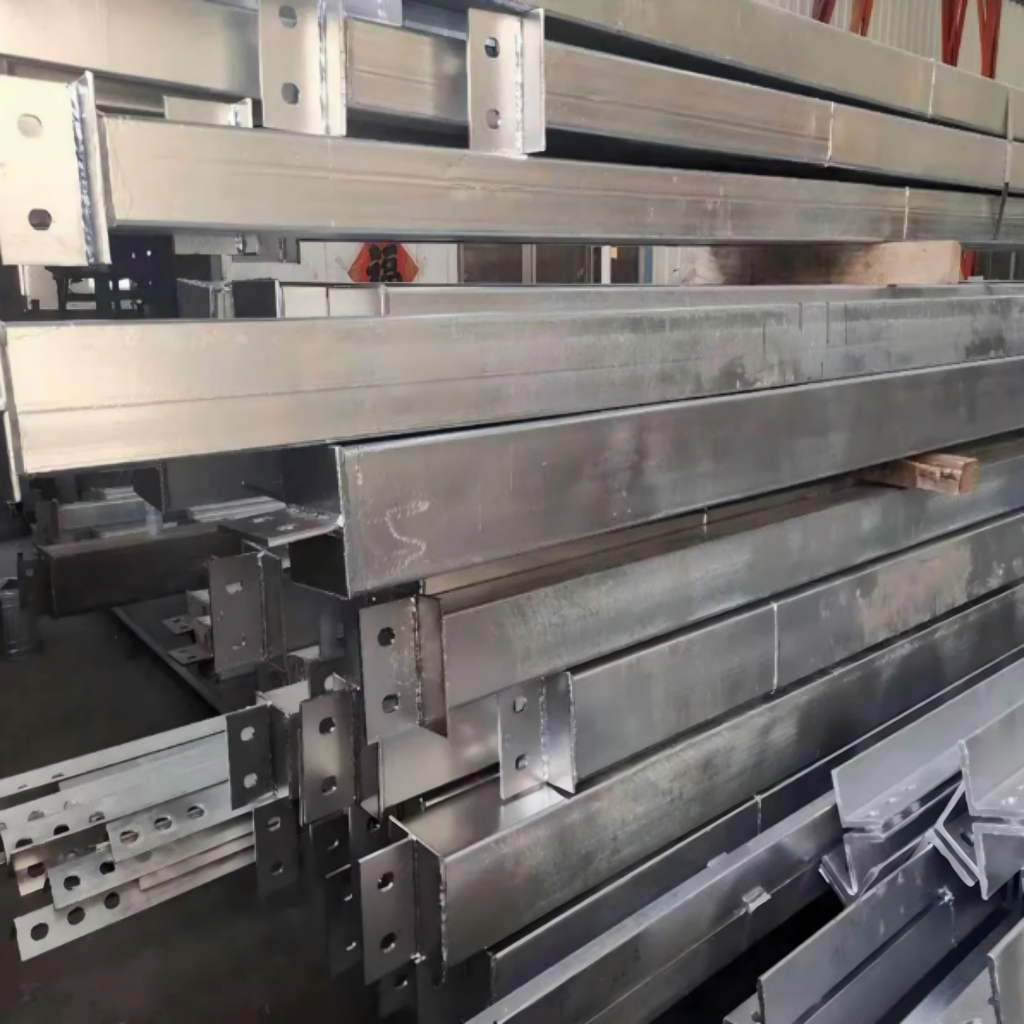
Common Applications and Industries:
Our clients use our tig welded steel frame service for many purposes.
Structural Frames and Building Supports:
Industrial building frames, mezzanines, equipment stands, and machine bases. Our tig welded steel frame assemblies provide the structural backbone for manufacturing facilities.
Handrails and Guardrails:
Stair rails, platform edges, walkways, and balcony guards. Tig welded steel frame for handrail applications requires smooth finishes and consistent joint appearance.
Architectural Metalwork:
Furniture frames, retail display stands, exhibit structures, and decorative gates. Visible tig welded steel frame joints must be cosmetically perfect.
Food Processing Equipment:
Conveyor frames, washdown stations, equipment enclosures, and stainless tables. Sanitary tig welded steel frame has no crevices that could trap bacteria.
Automotive Components:
Battery trays, equipment mounts, and accessory brackets. Tig welded steel frame for vehicle applications must withstand vibration.
Solar Panel Mounting Frames:
Rooftop solar racks use tig welded steel frame assemblies to hold panels. Weather resistance is essential.
Design Recommendations:
If you are designing parts for tig welded steel frame, follow these guidelines.
- Wall thickness – Minimum 1.5mm for light duty, 3mm for structural
- Joint access – Ensure torch can reach all sides of every joint
- Gap control – Design tube ends to fit with 1/16 inch gap maximum
- Material specification – Clearly state 304, 316, or 304L
- Avoid sharp internal corners – Radius to at least 1/8 inch
We offer free design reviews for your tig welded steel frame assemblies.
Surface Finish Options:
The appearance of tig welded steel frame joints matters for visible installations. We offer three finish levels.
Mill Finish – As welded with light oxidation. Suitable for hidden applications. Lowest cost option.
Wire Brushed Finish – Passivation followed by stainless wire brushing. Removes heat tint. Selected by 70 percent of our customers for visible tig welded steel frame.
Ground and Blended Finish – Weld beads are ground flush then blended. The joint becomes nearly invisible. Recommended for handrails and architectural work.
Electropolished Finish – Produces a bright mirror like finish. Resists fingerprints. Recommended for marine and high end applications