Perfect Titanium Bike Frame Welding Service 5X Longer Fatigue Life with Precision TIG Welded Titanium Frames
Solicitar un presupuesto
Ingrese la cantidad que necesita y añádala a su lista de cotizaciones para solicitar precios.
Detalles del producto
Titanium Bike Frame Welding Service 7 Proven Methods for Ultralight Strong and Responsive Bicycle Frames Ideal for custom builders and cycling enthusiasts Learn more today
Titanium Bike Frame Welding: The Art and Science of Building Premium Bicycle Frames
For cycling enthusiasts who demand the perfect balance of weight, strength, and ride quality, titanium stands unmatched. A well-constructed titanium frame offers the compliance of steel, the lightness of aluminum, and the corrosion resistance that lasts a lifetime. However, achieving these benefits depends entirely on one critical factor: the quality of titanium bike frame welding. Unlike mass-produced aluminum or carbon frames, titanium frames require specialized skills, meticulous preparation, and a deep understanding of how this reactive metal behaves under heat. This article explores the techniques, challenges, and quality standards that define exceptional titanium bike frame welding.
Why Titanium Bike Frame Welding Is Different?
Titanium is highly reactive when exposed to oxygen, nitrogen, and hydrogen at elevated temperatures. During titanium bike frame welding, the molten weld pool and the surrounding heat-affected zone must be completely shielded from atmospheric contamination. If the shielding gas fails or turbulence introduces air, the titanium absorbs these elements, resulting in embrittlement, cracking, and loss of fatigue strength.
For a bicycle frame, which experiences thousands of stress cycles during every ride, weld quality is not just about aesthetics. A poorly welded titanium frame can fail catastrophically. Unlike steel, where a weld can be ground and rewelded, titanium bike frame welding leaves no room for error. Discoloration—yellow, blue, purple, or grey—indicates oxidation and often means the weld must be cut out and redone entirely. This is why the best frame builders take extraordinary care with every step of titanium bike frame welding.
Critical Preparation Steps for Titanium Bike Frame Welding:
Preparation is the foundation of successful titanium bike frame welding. Every surface that will be heated must be free of oils, grease, dust, and oxide layers. Use stainless steel wire brushes designated exclusively for titanium—never used on steel or aluminum. Chemical cleaning with acetone or isopropyl alcohol is also recommended, followed by thorough drying.
The inside of the tubes requires attention as well. For titanium bike frame welding, back-purging with inert gas is essential. The builder fills the tube interior with pure argon (99.999% purity) to protect the root side of the weld. Without proper purging, the inner surface oxidizes, creating a brittle layer that can initiate cracks under the repeated stresses of riding.
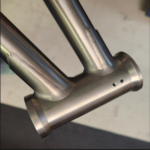
For complex joints like bottom brackets, specialized purge fixtures or dissolvable purge dams may be used to ensure complete inert gas coverage. Some builders also use trailing shields that attach to the TIG torch, extending gas coverage over the cooling weld zone.
The Best Welding Process for Titanium Bike Frame Welding:
Gas tungsten arc welding (GTAW), commonly known as TIG, is the only process widely used for titanium bike frame welding. TIG offers the precise heat control and clean arc characteristics that thin titanium tubes demand. Unlike carbon frames which are glued, or aluminum frames which are often MIG welded, titanium frames are almost always TIG welded by hand.
For titanium bike frame welding, a 2% ceriated or lanthanated tungsten electrode is standard. The electrode should be sharpened to a point with a small flat tip. Shielding gas is pure argon, flowed at 10 to 20 cubic feet per hour depending on the joint size. A gas lens is highly recommended to reduce turbulence and improve coverage.
The welder must maintain a tight arc length, typically 1.5mm to 3mm, and move smoothly to avoid excessive heat buildup. Many experienced frame builders pulse the foot pedal to modulate amperage, allowing the weld pool to cool slightly between pulses. This technique reduces total heat input and minimizes distortion.
Common Defects in Titanium Bike Frame Welding:
Even skilled builders encounter defects in titanium bike frame welding. The most frequent issues include:
Oxidation and discoloration: The most common failure. Silver or light straw welds are acceptable, but any blue, purple, or grey color means the weld is contaminated. Prevention requires checking gas flow, extending post-flow to 15 seconds minimum, and using a trailing shield for longer welds.
Undercut: A groove melted into the base metal adjacent to the weld. This creates a stress riser. Undercut is usually caused by excessive amperage or improper torch angle. Reduce heat or adjust technique.
Burn-through: A hole melted through the thin tube wall. This occurs when heat input is too high or travel speed is too slow. Use lower amperage or faster travel.
Incomplete fusion: The weld metal does not fully bond to the tube. This results from insufficient heat or poor fit-up. Ensure tight joint fit and adequate amperage.
Porosity: Small gas pockets in the weld. Usually caused by contaminated base material or damp filler rod. Recut and replace the tube section if porosity appears.

Visual Standards for Titanium Bike Frame Welding:
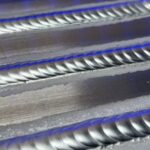
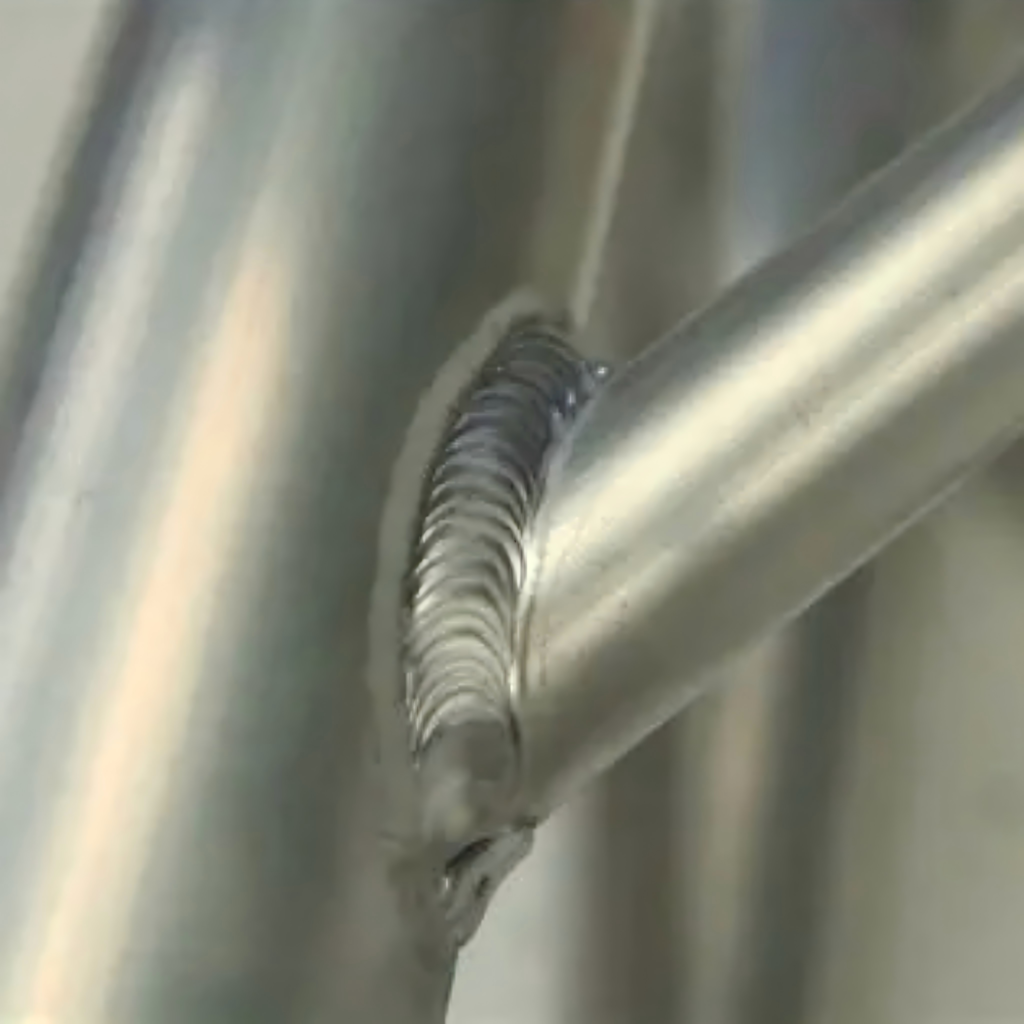
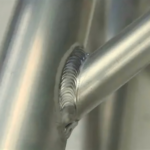
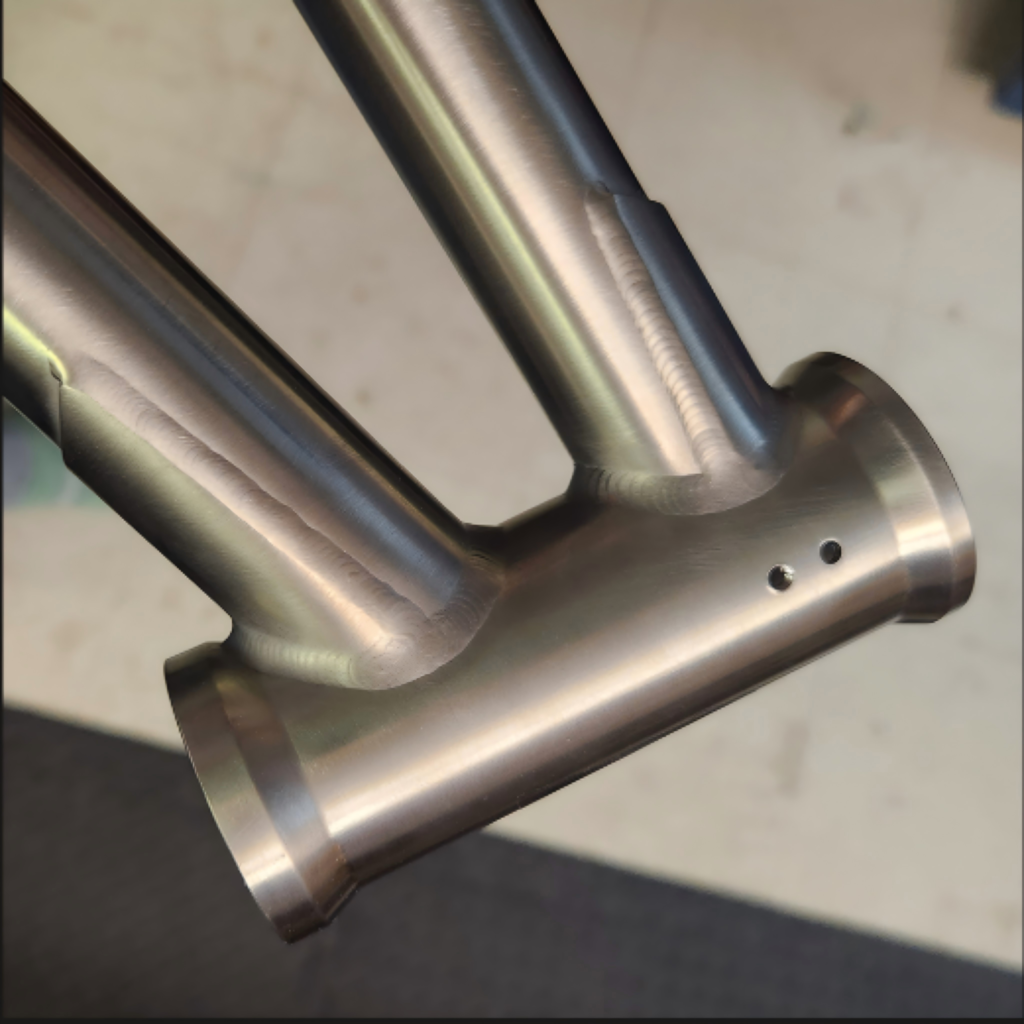
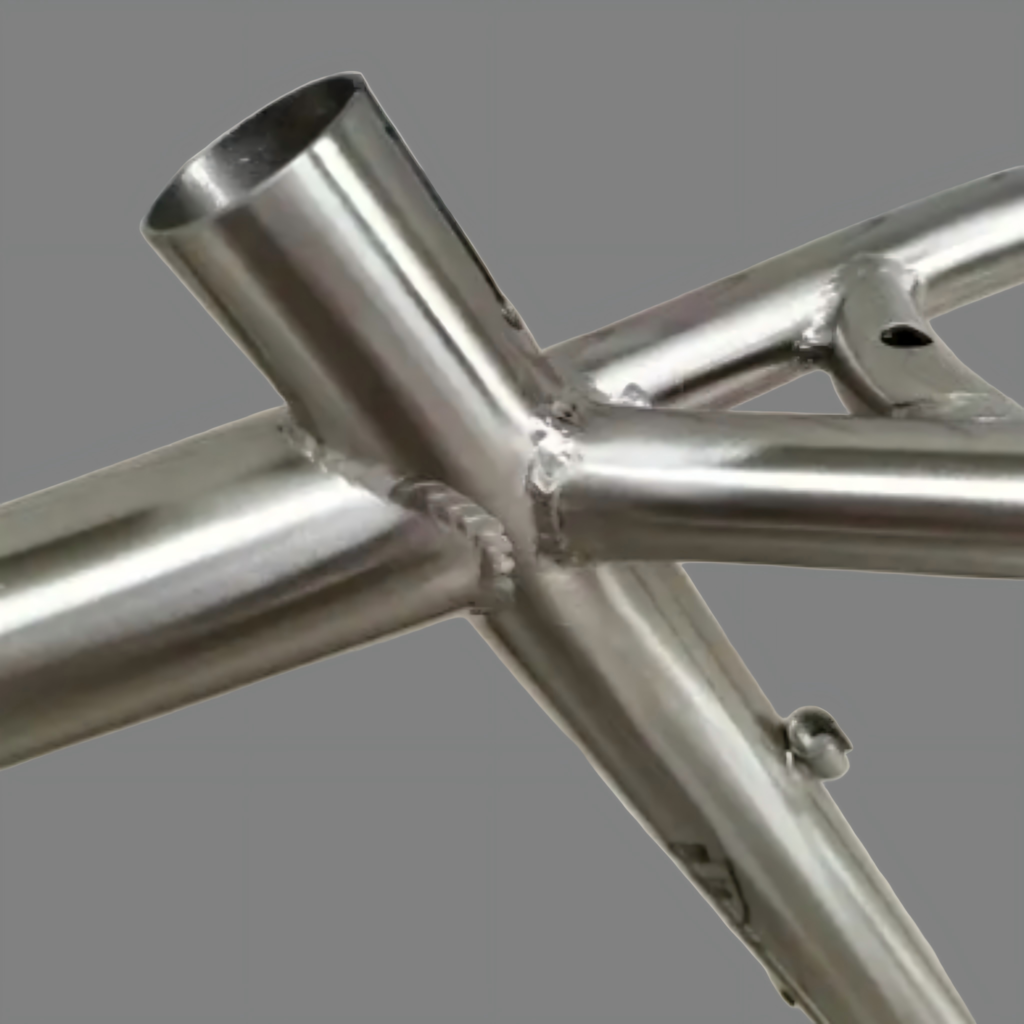
The cycling industry has developed informal but strict visual standards for titanium bike frame welding. A high-quality weld appears silver or pale straw with smooth, consistent ripples. The weld should have full penetration visible on the inside of the joint as a uniform bead. There should be no undercut, no crater cracks, and no discoloration beyond light straw.
Many custom builders take pride in welds that look almost like stacked dimes, with each ripple evenly spaced. Achieving this aesthetic while maintaining structural integrity is the hallmark of a master titanium bike frame welding specialist.
Why Frame Builders Choose Titanium?
Despite the challenges of titanium bike frame welding, builders continue to choose titanium for premium frames because of its unique properties. Titanium offers an unmatched ride quality described as lively yet comfortable. It dampens high-frequency vibration from rough pavement while remaining stiff enough for efficient power transfer.
Titanium also never rusts. A properly welded titanium frame can outlast its owner. Unlike carbon fiber, which can be damaged by impacts invisible to the eye, titanium handles dings and scratches without losing structural integrity. And unlike aluminum, titanium does not suffer from fatigue failure over decades of use.
These advantages explain why titanium bike frame welding remains a sought-after skill. Brands like Lynskey, Moots, Seven, and Firefly have built reputations on exceptional titanium welding, and custom frame builders charge premium prices for hand-welded titanium frames.
Choosing a Titanium Bike Frame Welding Specialist:
Not every welding shop can perform titanium bike frame welding. Look for a provider that uses a titanium-only work area to prevent cross-contamination from steel or aluminum. They should have documented welding procedure specifications and be willing to show examples of finished welds.
A true specialist understands the unique demands of bicycle frames: thin tubes, complex joints, and the need for both strength and beauty. They will ask about your tube selection, geometry, and intended use. They will also explain their back-purging setup and gas purity standards.
Conclusion:
Titanium bike frame welding is one of the most demanding applications in metal fabrication. It requires absolute cleanliness, precise heat control, and unwavering attention to shielding gas protection. When done correctly, it produces frames that are lightweight, durable, and extraordinarily comfortable to ride. Whether you are a custom builder or a cyclist seeking the perfect frame, understanding the standards of titanium bike frame welding helps you recognize quality and avoid costly mistakes.