Introduction :
Pourquoi le soudage de l’aluminium est-il difficile par rapport à d’autres métaux comme l’acier ? Bien que l’aluminium soit largement utilisé dans les secteurs automobile, aérospatial, maritime, électronique et des équipements industriels en raison de ses propriétés légères, de sa résistance à la corrosion et de son excellent rapport résistance/poids, produire des soudures en aluminium fiables nécessite des connaissances spécialisées et un contrôle précis du processus.
Beaucoup de gens supposent que le soudage de l’aluminium est plus facile parce que l’aluminium est mou, léger et facile à usiner. Cependant, l’aluminium se comporte très différemment pendant le soudage en raison de sa couche d’oxyde, de sa conductivité thermique élevée, de sa dilatation thermique et de sa sensibilité à l’apport de chaleur. Ces caractéristiques rendent le soudage de l’aluminium plus difficile que de nombreuses applications de soudage traditionnelles.
Des connaissances de base sur le soudage de l’aluminium aux processus avancés tels que le soudage TIG de l’aluminium et le soudage GTAW de l’aluminium, comprendre les propriétés des matériaux, les techniques de soudage et les défis courants est essentiel pour obtenir des soudures solides, cohérentes et de haute qualité.
Comprendre les caractéristiques de l’aluminium avant le soudage
Avant d’aborder la question « Pourquoi le soudage de l’aluminium est-il difficile », il est important de comprendre les propriétés uniques qui influencent le processus de soudage.
Par rapport à l’acier, l’aluminium présente plusieurs caractéristiques qui affectent directement la qualité de la soudure :
- Structure légère
- Conductivité thermique élevée
- Basse température de fusion
- Taux de dilatation thermique élevé
- Formation naturelle d’une couche d’oxyde
- Différents niveaux de soudabilité parmi les alliages d’aluminium
Ces propriétés font de l’aluminium un excellent matériau pour les applications sensibles au poids, mais elles nécessitent également un contrôle minutieux pendant la fabrication.
Par exemple, les structures de châssis de machines en aluminium bénéficient de la légèreté et de la résistance à la corrosion de l’aluminium, mais le maintien de la précision dimensionnelle pendant le soudage nécessite une conception de fixation appropriée, une gestion de la chaleur et une planification de la séquence de soudage.
Pourquoi le soudage de l’aluminium est-il difficile ? Principaux défis expliqués
La couche d’oxyde d’aluminium crée des problèmes de fusion
L’une des principales raisons pour lesquelles le soudage de l’aluminium est difficile est la couche d’oxyde d’aluminium qui se forme naturellement à la surface.
Lorsque l’aluminium entre en contact avec l’oxygène, il développe rapidement un mince film d’oxyde protecteur. Cette couche aide à prévenir la corrosion, mais elle crée des défis pendant le soudage car l’oxyde d’aluminium fond à une température beaucoup plus élevée que le matériau de base en aluminium.
Si la couche d’oxyde n’est pas correctement éliminée avant le soudage, elle peut provoquer :
- Une mauvaise fusion entre les matériaux
- Une contamination de la soudure
- Un aspect irrégulier de la soudure
- Une résistance mécanique réduite
Un nettoyage approprié, une préparation de surface et des techniques de soudage adaptées sont essentiels pour surmonter ce défi.
Cela est particulièrement important pour les applications de précision où la cohérence et l’aspect de la soudure sont critiques, comme les boîtiers en aluminium sur mesure, les boîtiers électroniques et les composants structurels légers.
La conductivité thermique élevée rend le contrôle de la chaleur plus difficile
Une autre raison majeure pour laquelle le soudage de l’aluminium nécessite de l’expérience est sa conductivité thermique élevée.
L’aluminium transfère la chaleur beaucoup plus rapidement que l’acier. Pendant le soudage, la chaleur se propage rapidement loin de la zone de soudure, ce qui rend difficile le maintien de la température correcte.
Si une chaleur insuffisante est appliquée :
- La soudure peut manquer de pénétration
- La qualité de la fusion peut diminuer
- Le joint peut devenir plus faible
Si une chaleur excessive est appliquée :
- L’aluminium peut se déformer
- Les sections minces peuvent brûler
- Les dimensions finales peuvent changer
Pour cette raison, les soudeurs doivent contrôler soigneusement :
- Le courant de soudage
- Vitesse de déplacement
- La longueur de l'arc
- La distribution de la chaleur
Les processus avancés tels que le soudage GTAW de l’aluminium permettent un meilleur contrôle de l’apport de chaleur, ce qui les rend adaptés aux applications nécessitant une haute précision.
La dilatation thermique provoque une déformation
L’aluminium se dilate et se contracte plus significativement que de nombreux autres métaux pendant le chauffage et le refroidissement.
Pendant le soudage, des changements de température inégaux peuvent entraîner :
- Un gauchissement
- Des changements dimensionnels
- Un désalignement
- Des contraintes résiduelles
Par exemple, lors de la fabrication d’un châssis de machine en aluminium, une chaleur de soudage excessive peut affecter la précision d’assemblage et créer des problèmes lors de l’installation finale.
Pour minimiser la déformation, les fabricants considèrent souvent :
- L’optimisation de la séquence de soudage
- Des méthodes de serrage appropriées
- La conception du joint
- Apport de chaleur contrôlé
Comprendre le comportement thermique de l’aluminium est l’un des facteurs les plus importants pour produire des composants soudés fiables.
Idées reçues courantes sur le soudage de l’aluminium
Mythe 1 : L’aluminium est facile à souder parce qu’il est mou
Une idée fausse courante est que l’aluminium devrait être plus facile à souder parce que c’est un matériau mou et léger.
En réalité, l’aluminium nécessite plus d’attention car ses propriétés physiques créent des défis supplémentaires en matière de soudage.
La difficulté ne vient pas de la dureté du matériau mais de :
- La formation d’oxyde en surface
- Les caractéristiques de transfert de chaleur
- Les risques de déformation
- Les différences d’alliages
Mythe 2 : Tout processus de soudage peut être utilisé pour l’aluminium
Une autre idée fausse est que l’aluminium peut être soudé en utilisant les mêmes méthodes et réglages que ceux utilisés pour l’acier.
Cependant, l’aluminium nécessite des procédures de soudage spécifiques.
Les méthodes courantes incluent :
- Le soudage TIG pour l’aluminium
- Le soudage MIG pour l’aluminium
- Le soudage MIG pulsé
- Le soudage GTAW de l’aluminium
Chaque processus présente des avantages différents selon l’épaisseur du matériau, les exigences de l’application et le volume de production.
Mythe 3 : Des soudures plus solides nécessitent toujours plus de chaleur
Appliquer plus de chaleur ne crée pas nécessairement des soudures en aluminium plus solides.
Une chaleur excessive peut en réalité réduire la qualité de la soudure en provoquant :
- Distorsion
- Fissuration
- Un affaiblissement du matériau
- Une mauvaise précision dimensionnelle
Un soudage réussi de l’aluminium dépend du contrôle de la chaleur plutôt que de son simple augmentation.
Techniques de soudage de l’aluminium : processus TIG, MIG et GTAW
Le soudage TIG pour l’aluminium
Le soudage TIG pour l’aluminium est largement utilisé lorsque la précision, l’aspect et la qualité de la soudure sont importants.
Le soudage TIG offre :
- Excellent contrôle de la chaleur
- Aspect de soudure propre
- Contrôle précis de l’arc
- Capacité à souder des géométries complexes
Il est couramment utilisé pour :
- Les composants en aluminium de précision
- Les matériaux en aluminium minces
- Les prototypes
- Les assemblages de haute qualité
Parce que le soudage TIG permet un meilleur contrôle du processus de soudage, il est souvent choisi pour les applications où l’aspect et la précision sont critiques.
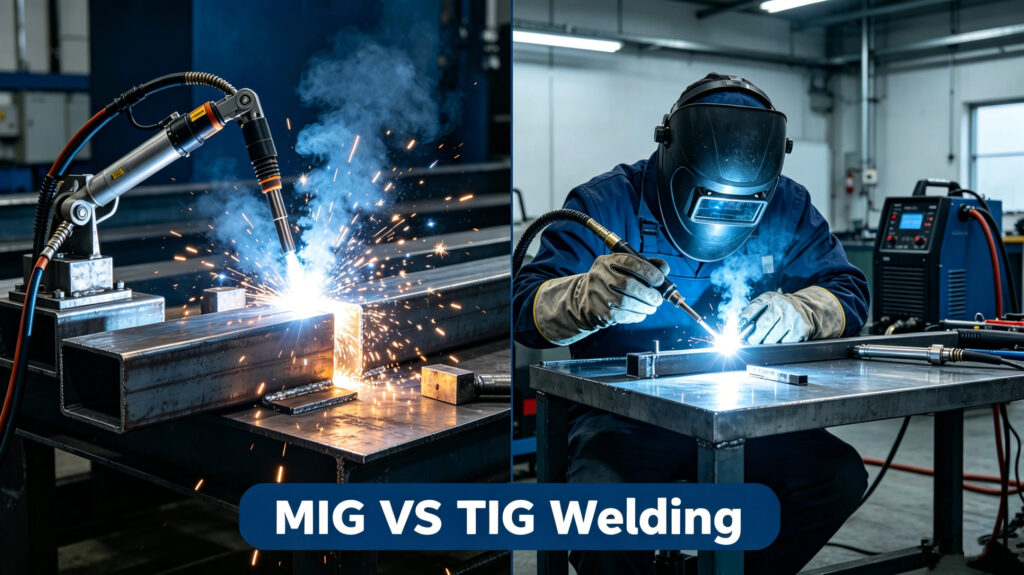
Le soudage GTAW de l’aluminium
Le soudage GTAW de l’aluminium est un autre terme couramment utilisé pour le soudage au tungstène sous gaz inerte.
Ce procédé utilise une électrode en tungstène non consommable et un gaz de protection pour protéger la zone de soudure de la contamination.
Les avantages incluent :
- Soudures de haute qualité
- Bon contrôle de l’apport de chaleur
- Un risque de contamination réduit
- Adapté aux applications exigeantes
Le soudage GTAW de l’aluminium exige des opérateurs qualifiés, car le maintien d’une stabilité d’arc correcte et le contrôle de l’ajout de métal d’apport sont essentiels pour des résultats cohérents.
Soudage MIG de l'aluminium
Le soudage MIG est couramment utilisé pour les applications à plus haute productivité.
Par rapport au soudage TIG, le soudage MIG offre :
- Vitesse de soudage plus rapide
- Efficacité de production plus élevée
- Meilleure adaptation aux grandes structures
Il est souvent utilisé pour :
- Cadres en aluminium
- Les équipements industriels
- Grands assemblages soudés
Pour les environnements de production, le soudage MIG peut offrir un équilibre efficace entre qualité et efficacité de fabrication.
Soudage de précision de l’aluminium : conseils pour les applications petites et complexes
Le soudage de précision de l’aluminium exige une attention encore plus grande, car de petites erreurs peuvent affecter considérablement les performances finales.
Les considérations importantes incluent :
Contrôler l’apport de chaleur
Pour les petits composants en aluminium, une chaleur excessive peut rapidement provoquer une déformation.
Les soudeurs doivent gérer soigneusement :
- Les paramètres de soudage
- La séquence de soudage
- Le temps de refroidissement
Cela est particulièrement important pour les composants à parois minces et les structures détaillées.
Sélectionner le bon métal d’apport
Différents alliages d’aluminium nécessitent des métaux d’apport adaptés pour obtenir des performances de soudure fiables.
Une sélection incorrecte du métal d’apport peut entraîner :
- Fissuration
- Une résistance réduite
- Une mauvaise résistance à la corrosion
La compatibilité des matériaux doit toujours être prise en compte avant le soudage.
Maintenir des conditions de soudage propres
Parce que l’aluminium est sensible à la contamination, une préparation appropriée est essentielle.
Les étapes de préparation courantes comprennent :
- L’élimination des contaminants de surface
- Le nettoyage des couches d’oxyde
- L’utilisation d’outils appropriés
- La protection de la zone de soudage
Un environnement de soudage propre aide à améliorer la cohérence et à réduire les défauts.
Outils et considérations de sécurité pour le soudage de l’aluminium
Le soudage réussi de l’aluminium dépend non seulement des techniques de soudage, mais aussi d’outils appropriés et de pratiques opérationnelles sûres.
L’équipement courant comprend :
- Machines de soudage TIG
- Machines de soudage MIG
- Électrodes en tungstène appropriées
- Bagettes d’apport en aluminium
- Outils de nettoyage
- Gabarits de soudage
Les considérations de sécurité comprennent :
- Une ventilation adéquate
- Un équipement de protection
- Une manipulation correcte des gaz de protection
- Une protection contre le rayonnement de soudage
Suivre les procédures appropriées aide à maintenir à la fois la sécurité de l’opérateur et la qualité de la soudure.
Applications industrielles du soudage de l’aluminium
Parce que l’aluminium combine légèreté et résistance à la corrosion, il est largement utilisé dans de nombreuses industries.
Cadres de machines en aluminium
Cadre de machine en aluminium est couramment utilisé dans les équipements d’automatisation, les lignes de production et les systèmes industriels.
Les avantages incluent :
- Construction légère
- Assemblage facile
- La résistance à la corrosion
- Bonnes performances structurelles
Cependant, le soudage de ces structures nécessite un contrôle minutieux de la déformation pour maintenir des dimensions précises.
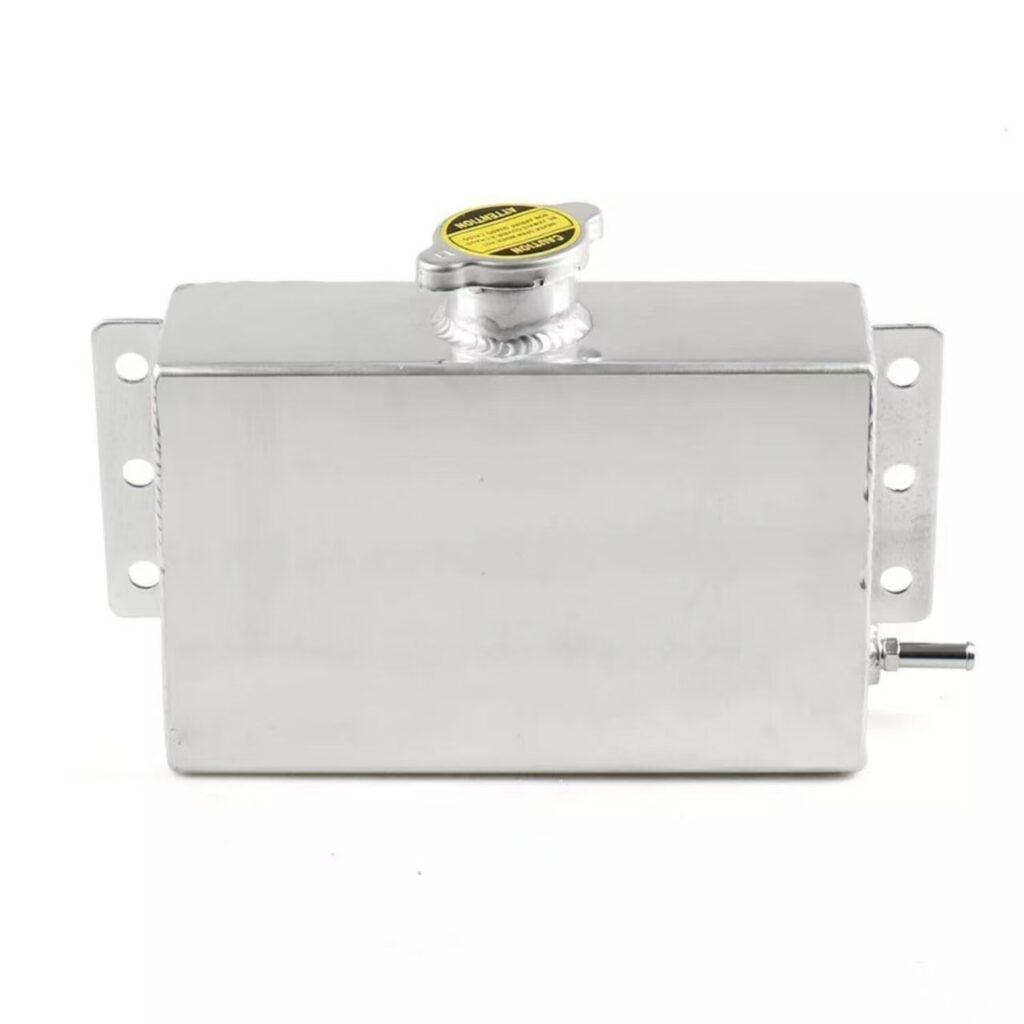
Boîtiers en aluminium sur mesure
Boîtiers en aluminium sur mesure sont largement utilisés pour protéger les systèmes électriques, les équipements industriels et les composants électroniques.
Les exigences importantes comprennent :
- Des dimensions précises
- Des soudures fiables
- Une bonne apparence de surface
- La durabilité à long terme
Le soudage de l’aluminium joue un rôle important dans la production de solutions d’enceintes légères et protectrices.
Composants automobiles et de transport
Le soudage de l’aluminium est largement appliqué dans les industries du transport, car la réduction du poids peut améliorer l’efficacité.
Les applications incluent :
- Structures de véhicules
- Composants liés aux batteries
- Supports légers
- Cadres de support
Structures marines
La résistance à la corrosion de l’aluminium le rend adapté aux applications marines.
Les exemples courants comprennent :
- Structures de bateau
- Équipement marin
- Composants offshore
Une qualité de soudure fiable est essentielle, car ces applications fonctionnent souvent dans des environnements exigeants.
Comment le soudage professionnel de l’aluminium améliore la fiabilité des produits
Bien que le soudage de l’aluminium soit difficile, des connaissances et des techniques appropriées peuvent améliorer considérablement les résultats.
Un soudage de l’aluminium de haute qualité dépend de :
- La compréhension des caractéristiques du matériau
- La sélection de méthodes de soudage adaptées
- Le contrôle de l’apport de chaleur
- La prévention de la contamination
- La conception de structures adaptées au soudage
Pour les fabricants fournissant des services de soudage de l’aluminium, le maintien de procédures de soudage cohérentes et un contrôle qualité sont essentiels pour produire des composants fiables.
Conclusion : maîtriser les défis du soudage de l’aluminium
Alors, pourquoi le soudage de l’aluminium est-il difficile ?
La réponse vient d’une combinaison de propriétés uniques du matériau et d’exigences de processus strictes. La couche d’oxyde, la conductivité thermique élevée, la dilatation thermique et la sensibilité à la chaleur rendent le soudage de l’aluminium plus difficile que celui de nombreux autres métaux.
Cependant, avec des techniques appropriées, un équipement adapté et une bonne compréhension du comportement de l’aluminium, des soudures de haute qualité peuvent être obtenues de manière cohérente.
Qu’il s’agisse de composants de précision, de cadres de machines en aluminium, d’enceintes en aluminium sur mesure ou de structures industrielles, le soudage de l’aluminium reste un processus de fabrication important qui nécessite à la fois des connaissances techniques et une expérience pratique.
Comprendre ces défis permet aux ingénieurs, aux concepteurs et aux fabricants de prendre de meilleures décisions lors du développement de produits en aluminium fiables.