Superior Perforated Aluminium Baking Tray Zero Warp Custom Welding Services with Food Grade Aluminium
申请报价
输入您需要的数量,并将其添加到您的报价清单,以便查询价格。.
产品详情
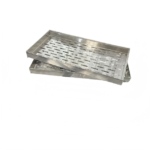
Perforated aluminium baking tray 100 percent quality tested custom welding services No sharp edges No crevices Food safe
Why MIG Welding for a Perforated Aluminium Baking Tray?
Not all fabrication methods are suitable for a perforated aluminium baking tray. Stamping requires expensive tooling and limits design changes. Riveted trays develop loose joints over time. MIG welding offers distinct advantages:
Lightweight Strength – A welded aluminium tray is significantly lighter than steel while maintaining rigidity. Your staff will appreciate the difference during busy shifts.
Fast Heat Response – Aluminium conducts heat five times faster than steel. A perforated aluminium tray heats up quickly and cools down rapidly, preventing over-baking.
Custom Sizes and Patterns – Unlike stamped trays locked into one design, a welded aluminium tray can be any dimension with any hole pattern. No tooling fees for changes.
Corrosion Resistance – With proper MIG welding and food-grade aluminium, your tray will not rust. It resists acidic foods and repeated washing.
Cost-Effective for Any Quantity – We can weld one prototype unit or five hundred production units. No minimum order quantity.
For these reasons, our welding services rely on MIG as the primary process for every aluminium baking tray we produce.
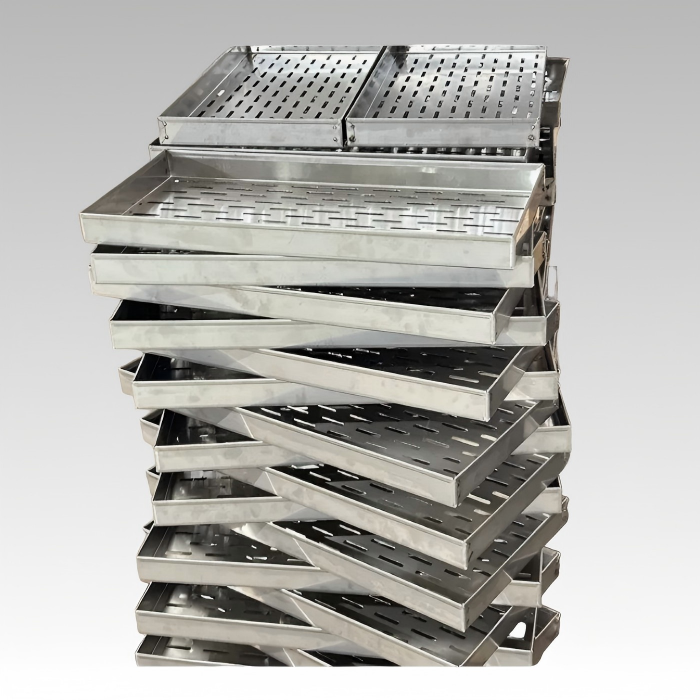
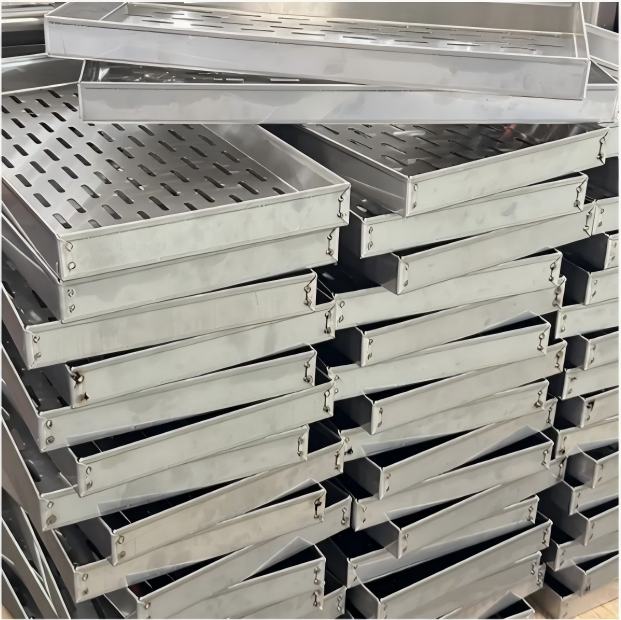
Common Applications for a Custom Perforated Aluminium Baking Tray:
A perforated aluminium baking tray is a versatile tool across commercial kitchens and bakeries. Here are the most common ways our customers use them:
Bread and artisan pastry baking – The combination of aluminium fast heat response and perforated airflow creates uniform crust color while reducing preheat waiting time
Cookie and biscuit high volume production – Lightweight construction lets staff rotate trays quickly during back to back baking cycles without fatigue
Frozen product cooking – Perforations direct hot air to the bottom surface while aluminium material accelerates heat transfer for thorough cooking
Herb and fruit drying – Unlike steel aluminium releases heat almost immediately after the oven cycles off preventing over drying
Post bake cooling – Rapid heat dissipation through the aluminium base stops the cooking process instantly keeping bottoms from turning soggy
Pizza and flatbread baking – The combination of aluminium conductivity and open perforation patterns produces consistently crisp crusts from edge to center
No matter the application, your perforated aluminium baking tray must match the exact oven size, rack spacing, and product dimensions. Generic trays rarely fit correctly. That is why custom welding services are the superior choice.
Material Options for Your Perforated Aluminium Baking Tray:
Choosing the right grade of aluminium for your perforated baking tray affects strength, corrosion resistance, and food safety compliance. Our welding services support:
5052 Aluminium – The preferred choice for most bakeries. A 5052 perforated aluminium baking tray offers excellent formability, weldability, and corrosion resistance. Suitable for bread, pastries, and general baking.
6061 Aluminium – Higher strength than 5052. A 6061 perforated aluminium baking tray works for heavier loads or larger tray sizes but is slightly less formable.
3003 Aluminium – Most economical. A 3003 perforated aluminium baking tray is common for disposable or light-duty applications but offers less strength than 5052 or 6061.
Each perforated aluminium baking tray we weld receives the appropriate filler wire (4043 or 5356) and pulse MIG settings to prevent burn-through on thin gauge material.
Customization Options for Your Perforated Aluminium Baking Tray:
Our welding services are built around your exact baking requirements. When you order a custom perforated aluminium baking tray from us, you control every detail:
Dimensions – Any length and width to fit your oven racks. Height options include flat trays or raised edges up to 2 inches.
Material Thickness – From 16 gauge (1.3mm) for lightweight trays up to 1/8 inch (3.2mm) for heavy-duty perforated aluminium baking trays that handle full loads.
Perforation Pattern – Round holes, slots, or custom shapes. Hole diameter from 1/16 inch to 3/4 inch. Open area from 10 percent to 50 percent depending on airflow needs.
Edge Treatment – Rounded corners for safety. Hemmed or folded edges for rigidity. Reinforced rims for perforated aluminium baking trays that stack or slide.
Wire Reinforcement – For large trays, we weld aluminium wire underneath to prevent sagging under heavy loads.
完成 – As-welded or brushed. Food-grade finish with no sharp edges.
Frame or Frameless – Some perforated aluminium baking trays use a perimeter frame. Others are perforated edge to edge. We build both.
No minimum order quantity. We can weld a single prototype perforated aluminium baking tray or scale to high-volume production.
Aluminium vs Stainless Steel for Perforated Baking Trays:
Many bakers ask about the difference between aluminium and stainless steel. Here is a quick comparison for your perforated aluminium baking tray decision:
| Feature | Perforated Aluminium Baking Tray | 不锈钢 |
|---|---|---|
| Weight | 66 percent lighter | Heavy |
| Heat Conductivity | Excellent (235 W/mK) | Poor (15 W/mK) |
| Preheat Time | Fast | Slow |
| Warping Risk | Low with proper gauge | Medium |
| Corrosion Resistance | Good | Excellent |
| Cost | Lower | Higher |
For most commercial bakeries, a perforated aluminium baking tray is the better choice due to weight savings and faster heat response.
Our MIG Welding Process for Perforated Aluminium Baking Trays:
Every custom perforated aluminium baking tray follows a controlled workflow inside our shop:
Step 1: Drawing and Specification Review – We accept DXF, PDF, or hand sketches. You specify hole pattern, dimensions, and alloy grade for your tray.
Step 2: Sheet Cutting – Aluminium sheet is cut to size using precision shearing or laser cutting.
Step 3: Perforation – Holes are punched or laser-cut according to your pattern. Perforation is completed before welding to maintain flatness.
Step 4: Forming – Edges are bent or folded on a press brake. For framed designs, frame sections are cut to length.
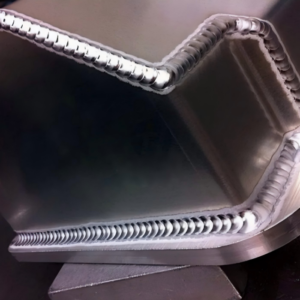
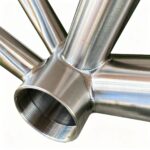
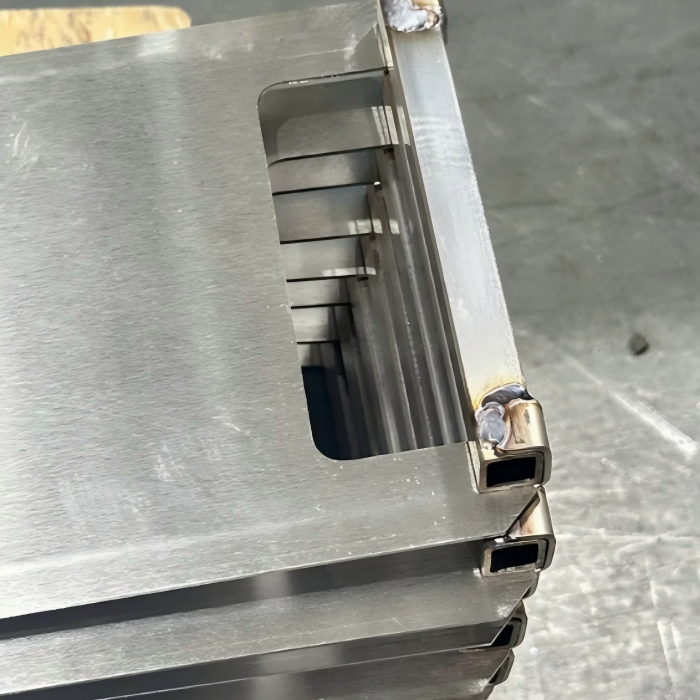
Step 5: MIG Welding – Our certified welders use pulse MIG on aluminium to prevent warping and burn-through. Each corner and reinforcement weld on your tray is clean and full penetration.
Step 6: Post-Weld Cleaning – Spatter is removed. The tray is then cleaned to remove any residue.
Step 7: Quality Inspection – Every unit is checked for flatness, hole alignment, weld integrity, and surface finish.
Step 8: Packaging and Shipping – Trays are stacked with protective interleaving and shipped to your bakery or commercial kitchen.
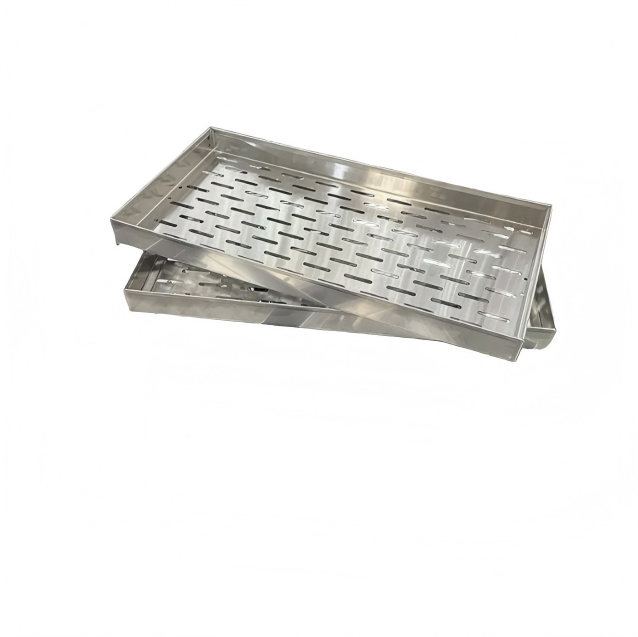
Why Our Perforated Aluminium Baking Tray Welding Services Stand Out?
Many shops offer fabrication, but few specialize in food-grade MIG welding for perforated aluminium baking trays. Here is why customers choose us:
- No warping – Pulse MIG and proper fixturing keep your perforated aluminium baking tray flat within 1/16 inch
- Food-safe welds – Smooth joints that do not trap food particles
- Fast lead times – Prototype perforated aluminium baking trays in as few as 5 days
- No tooling fees – Each tray is welded, not stamped
- Lightweight advantage – We help you choose the optimal gauge for strength without excess weight
Frequently Asked Questions About Perforated Aluminium Baking Tray Welding:
Q: Do you offer duplication services for an existing perforated aluminium baking tray that I already use?
A: Absolutely. We can take your current tray and create an identical custom welded version with exact dimensions and hole pattern.
Q: What are the dimensional limits for a welded perforated aluminium baking tray?
A: Standard sizes go up to 48 by 96 inches. For larger tray requirements, we add structural reinforcement to maintain flatness and strength.
Q: Can aluminium perforated trays handle regular commercial oven temperatures?
A: Yes. Food grade aluminium performs reliably up to 500 degrees Fahrenheit. Your custom tray will work perfectly in standard deck ovens convection ovens and pizza ovens.
Q: What factors determine the price of a custom perforated aluminium baking tray?
A: The final cost depends on four main factors overall size material thickness perforation pattern and order quantity. Contact us for a personalized quote.
Q: Is it possible to have my company logo or tray specifications added to the tray?
A: Yes. We offer laser engraving services to add your business logo part numbers or size markings on every custom perforated aluminium baking tray we weld.
Conclusion:
A properly made perforated aluminium baking tray delivers even browning, lighter handling for kitchen staff, and long service life. Standard products from restaurant equipment catalogs rarely match your exact oven dimensions or production needs. When you partner with our professional MIG welding services for your custom perforated aluminium baking tray, you receive precise dimensions, hygienic welds, and durable yet lightweight aluminium that stands up to daily commercial use.
Over the years, we have welded thousands of perforated aluminium baking trays for bakeries, pizzerias, and high-volume commercial kitchens. Each tray begins as a flat aluminium sheet and becomes a precision-engineered baking tool tailored to your workflow. Share your drawing or specifications with us today to start your project. No minimum order required. No surprise fees. Only dependable custom welding services delivered when you need them.