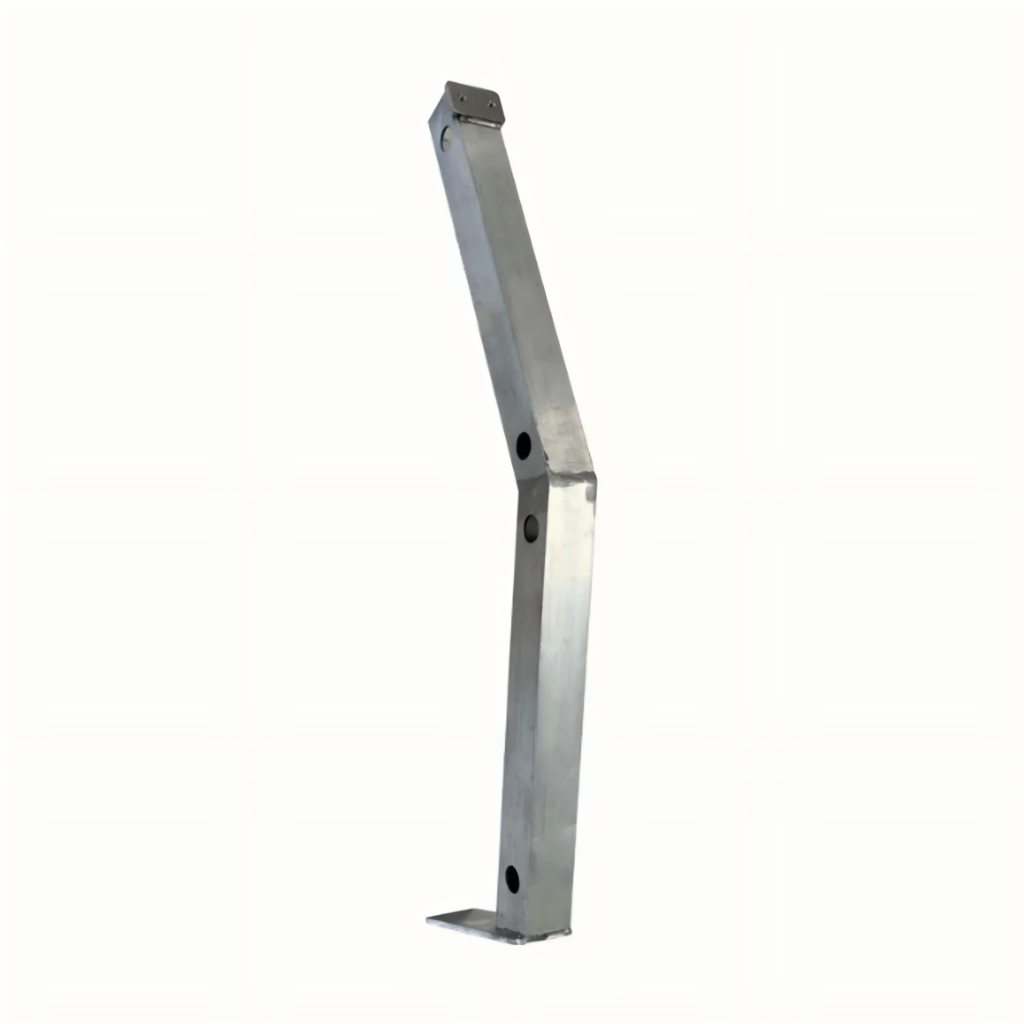
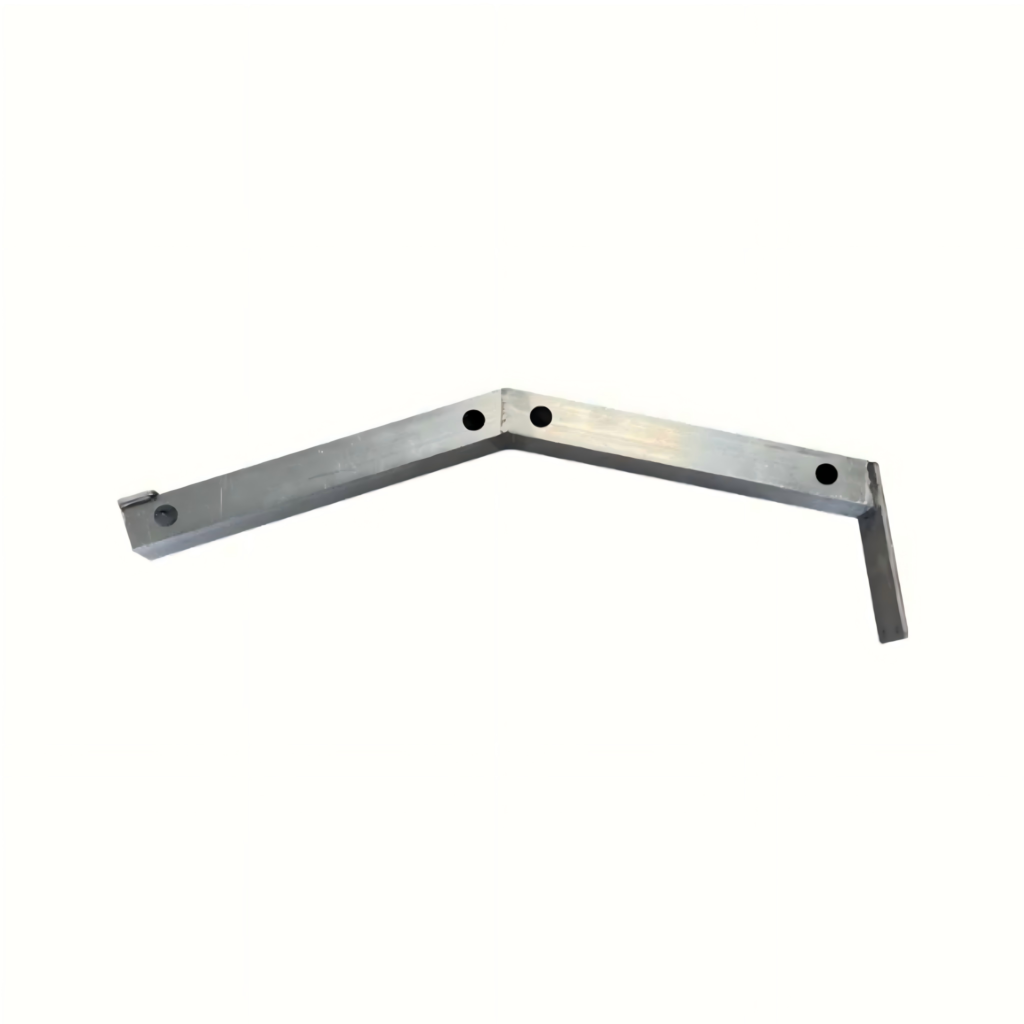
Square Tube Welding Service 6mm Wall Thickness with Ultimate Strength for Industrial Platforms
申请报价
输入您需要的数量,并将其添加到您的报价清单,以便查询价格。.
产品详情
Professional stainless steel square tube welding service for frames handrails and structural supports. Full penetration welds with distortion control. Custom sizes from 1 to 6 inches.
Why Professional Square Tube Welding Defines Structural Integrity?
Many structural failures in welded frames occur not at the center of the tube but at the joint where two sections meet. A poorly executed weld on square tubing creates stress risers, lack of fusion, or incomplete penetration. These defects are often invisible from the outside. Over time, cyclic loading causes them to propagate until the entire structure fails.
Proper square tube welding produces a joint as strong as the base metal. The filler metal can match or exceed parent material properties. For example, using 308L filler on 304 stainless square tube yields a joint that withstands thermal cycling and vibration better than the tube itself. Additionally, square tube offers superior bending resistance compared to round tube when welded into frames. Unlike round tube that requires complex fixturing to maintain alignment, square tube self-aligns on flat surfaces during welding operations.
Our shop has precision cold saws, CNC fixturing tables, and multiple welding stations to produce each assembly with consistent quality. For production runs of 100 pieces or more, we recommend robotic welding. Every square tube welding project begins with a thorough review of material grade, wall thickness, joint configuration, and end-use requirements.
What Is Stainless Steel Square Tube Welding?
This operation involves joining two or more pieces of square tubing at various angles to create frames, supports, or structural assemblies. Stainless steel contains at least 10.5% chromium, forming a passive oxide layer on the surface. Our technique uses shielding gas—typically argon or a helium-argon mix—to protect the molten weld pool from atmospheric oxygen.
A properly welded stainless steel square tube joint will resist rust at the weld line as effectively as the base metal. Heat input is carefully controlled because excessive heat causes chromium carbide precipitation, known as weld decay, which reduces corrosion resistance. Using low heat input and proper technique prevents this problem on every project.
Common Joint Configurations for Square Tube:
Butt Joint – Tube to Tube Straight Connection:
Two square tubes are aligned end to end and welded around the entire perimeter. Full penetration is required for structural integrity. A slight gap between tubes ensures complete root fusion. Common for handrails, long frames, and conveyor supports.
Corner Joint – 90 Degree Connection:
One tube end is cut square and butted against another tube. A fillet weld is applied to both visible sides. Used for frame corners, equipment stands, and machine bases. Offers good strength with simple preparation.
T Joint – Perpendicular Connection at Mid Span:
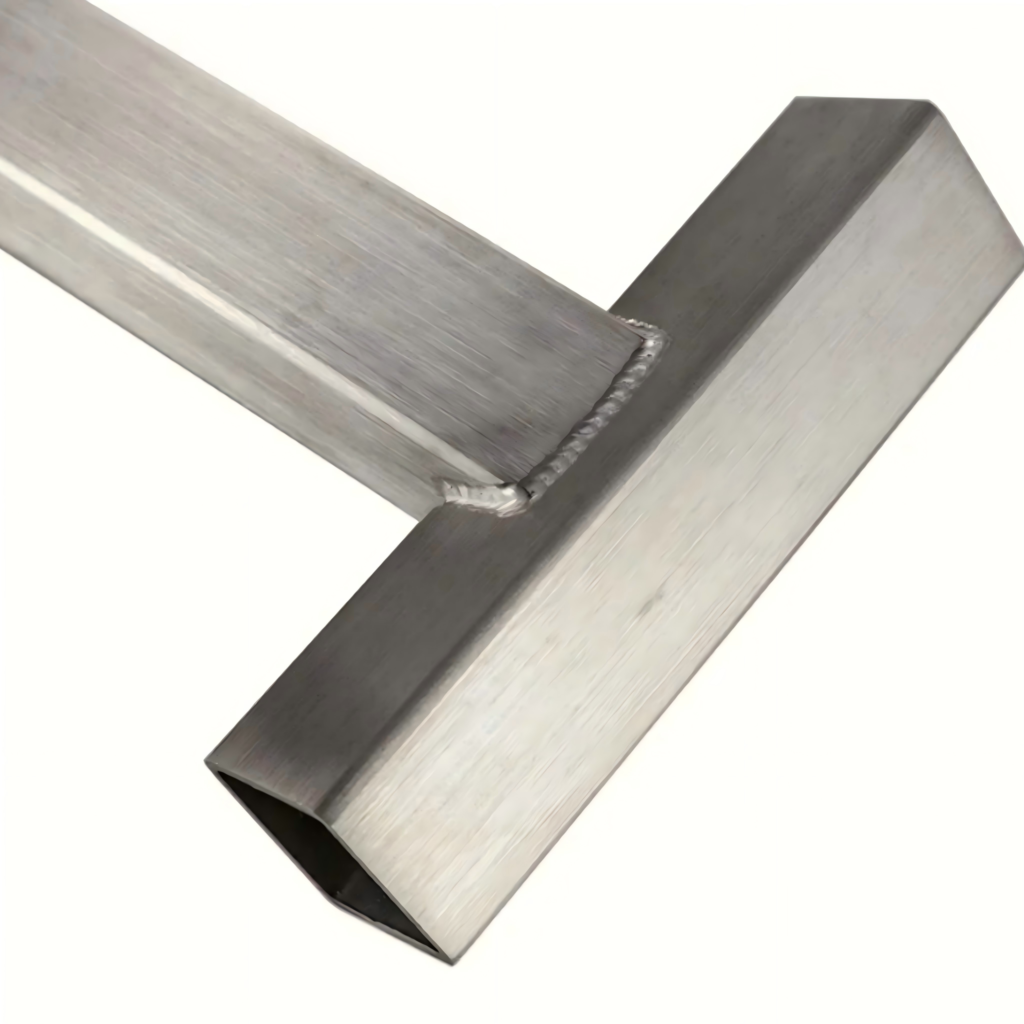
The end of one tube is prepared to fit against the side of another tube. Requires access to both sides for proper fusion. Used for cross bracing, internal frame members, and rack supports.
Miter Joint – 45 Degree Cut Corner:
Both tubes are cut at 45 degrees then joined at 90 degrees. Produces a cleaner appearance for architectural work such as furniture frames and display stands. Requires careful fixturing to maintain alignment.
Material Selection for Square Tube Welding:
Not all stainless steel square tube welds equally well. We stock three alloys for square tube welding projects:
304 Stainless Square Tube:
The workhorse alloy for most industrial and architectural applications. Good corrosion resistance and excellent weldability. Used in food equipment, handrails, structural frames, and architectural features. Handles temperatures up to 1200°F.
316 Stainless Square Tube:
For marine environments, chemical plants, or outdoor installations near salt water. Molybdenum addition improves pitting resistance. Recommended for boat lifts and seaside railings.
304L and 316L Low Carbon Grades:
Lower carbon content reduces the risk of weld decay. Recommended for high humidity or food processing environments. Not suitable for free-machining stainless grades.
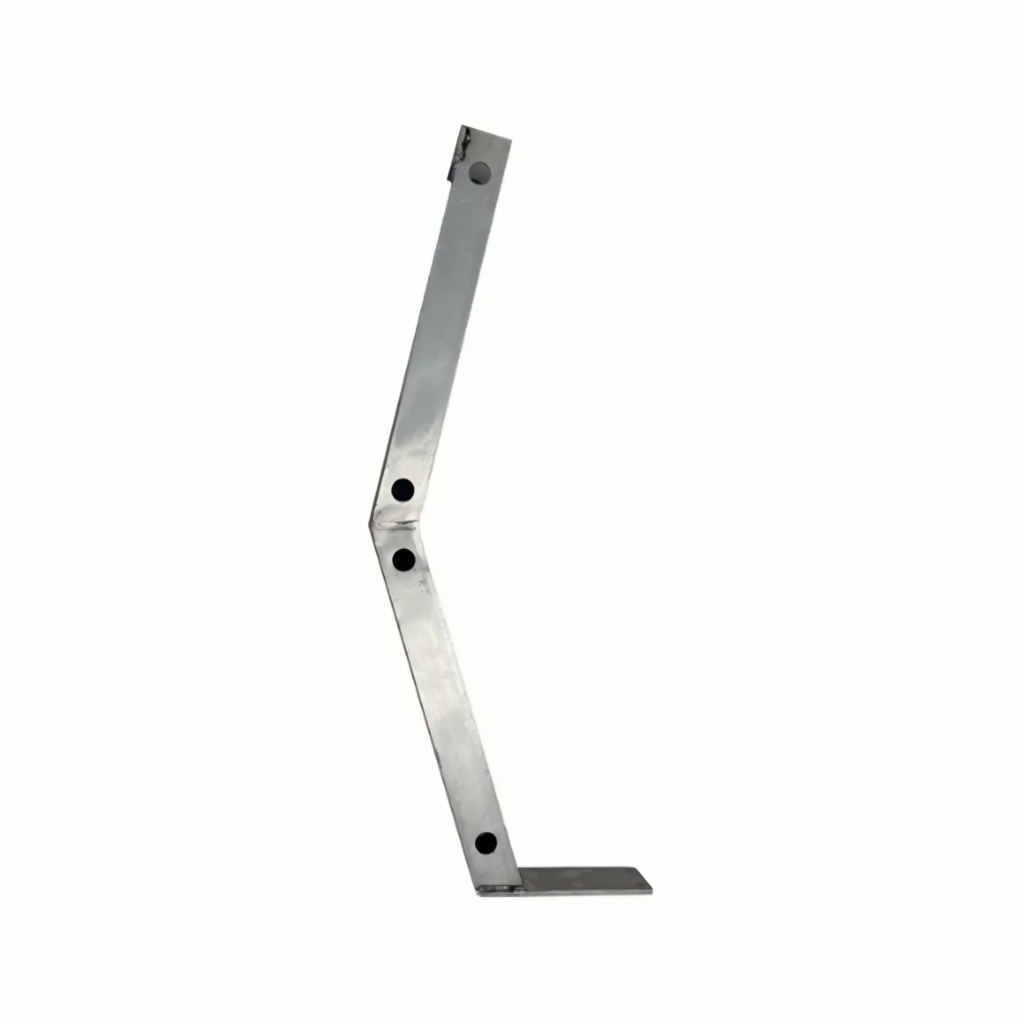
Tube End Cutting and Edge Preparation:
Precision Cold Saw:
Cold sawing produces burr-free square cuts with excellent surface finish. Ideal for tight fitting joints with zero to 1/16 inch gap. Tolerances hold to ±0.010 inch on length. Preferred for square tube welding.
Abrasive Cut Off Saw:
Faster than cold sawing and suitable for thicker walls. Leaves a small burr, which we deburr before welding. Suitable for material up to 1/4 inch wall thickness.
Horizontal Band Saw:
Best for tubes over 4 inches in diameter or lengths over 10 feet. Requires cleaning of cutting fluid residue before welding.
All cut ends are inspected for squareness using a precision protractor. Any tube end with more than 0.5° deviation from 90° is rejected.
Welding Processes for Different Wall Thicknesses:
GTAW for 1.5mm to 3mm Wall Thickness:
Manual TIG welding gives fine control and clean appearance. Uses 60–110 amps with 1/16 inch 308L filler rod. Copper backing bar prevents burn-through. Recommended for architectural applications.
Pulsed MIG for 2mm to 6mm Wall Thickness:
Pulsed spray transfer reduces spatter and allows out-of-position welding. Runs at 180–250 amps with 0.045 inch 309L wire. Most cost-effective for orders over 50 assemblies.
Robotic MIG for High Volume Production:
For 200+ identical assemblies, robotic welding ensures uniform size, penetration, and appearance. Weld paths are programmed from CAD files. Cycle time is 45–120 seconds per joint.
Multi Pass Welding for Tube Over 6mm Wall:
Thick wall square tube welding requires multiple passes: root, fill, and cap pass with weave technique. Interpass temperature kept below 250°F.
Distortion Control During Square Tube Welding:
Square tube warps due to weld shrinkage. Long assemblies with multiple welds are particularly vulnerable.
Balanced Welding Sequence:
Weld opposite sides alternately to minimize distortion.
Strongback Fixturing:
Clamp tubes securely to a precision flat steel table.
Copper Backup Bars:
Sink heat away from the weld zone.
Skip Welding:
Weld short 1-inch segments, then move to another area.
Post Weld Straightening:
Hydraulic press correction for long frames. Critical precision frames may receive post-weld stress relieving at 400°F for 1 hour.
Design Recommendations for Better Square Tube Welding:
- Wall Thickness Selection: Minimum 1.5mm for light duty, 3mm for structural applications up to 1000 lbs.
- Joint Access: Ensure torch can reach all sides.
- Gap Control: Tube ends fit within 1/16 inch for MIG and TIG welding.
- Drain Holes: 1/4 inch diameter holes for outdoor assemblies.
- Material Specification: Specify 304, 316, or 304L stainless steel.
- Avoid Sharp Internal Corners: Radius inside corners to at least 1/8 inch.
Free design reviews are offered for drawings or CAD files.
Common Applications and Industries:
Structural Frames and Building Supports:
Industrial building frames, mezzanines, equipment stands, machine bases.
Handrails and Guardrails:
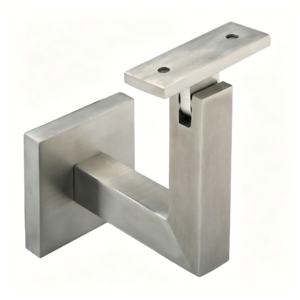
Stair rails, walkways, balcony guards. Welds are ground and blended for smooth appearance.
Architectural Metalwork:
Furniture frames, display stands, exhibit structures, decorative gates. Electropolished finishes available.
Food Processing Equipment:
Conveyor frames, washdown stations, stainless tables. Sanitary welds with no crevices or sharp corners.
Automotive and Truck Components:
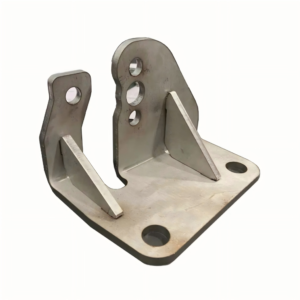
Exhaust support frames, battery trays, accessory brackets. Must withstand vibration, temperature extremes, and road salt.
Solar Panel Mounting Frames:
Rooftop racks and ground mount arrays require weather resistance and dimensional accuracy.