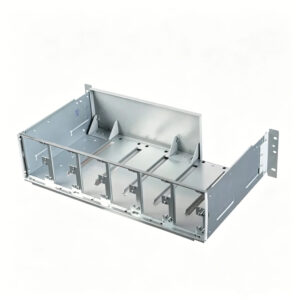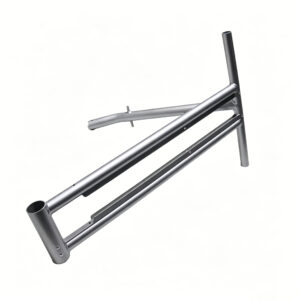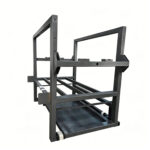

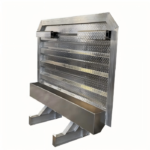
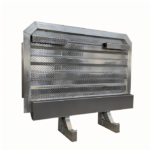
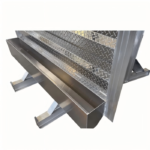
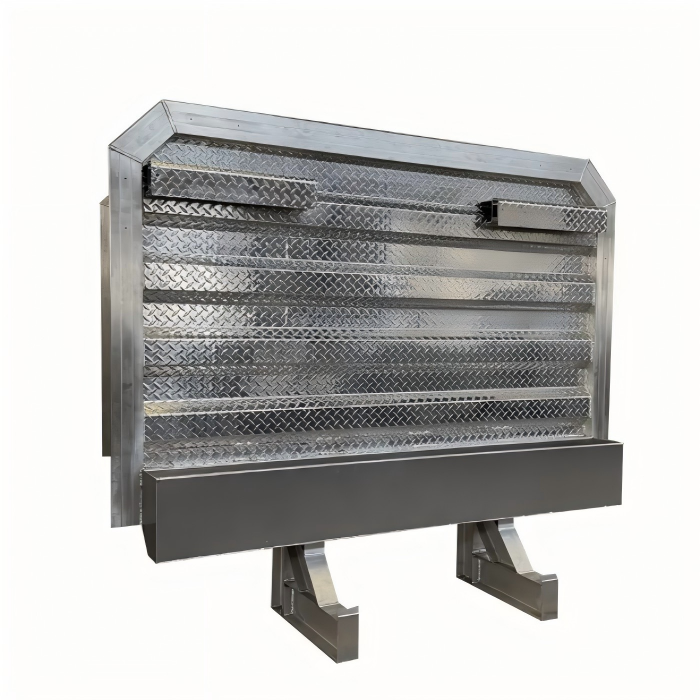
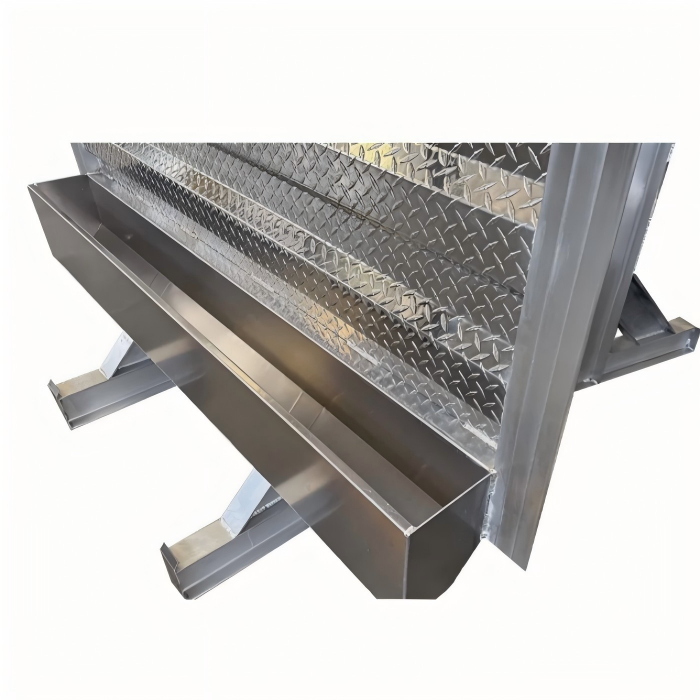
Stabile Semi-LKW-Fahrerhaus-Schutzbügel mit 10 Jahren struktureller Garantie Schweißnaht
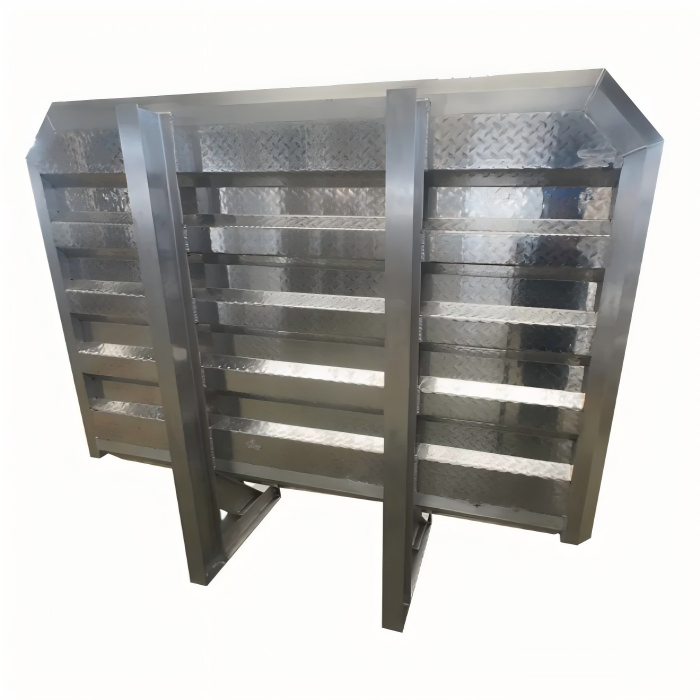
Semi-LKW-Fahrerhausschutz, der den Aufprall abfängt, damit Ihr Fahrerhaus es nicht muss. Geschweißt, stabil, mit 10 Jahren struktureller Garantie. Ein robustes Stück Stahl.
Request a Quote
Enter the quantity you need and add to your quote list for pricing inquiries.
Product Details
Why Choose an Aluminum Cab Guard Over Steel?
The industry is shifting. Traditional steel headache racks rust, add unnecessary weight, and require painting. An aluminum semi truck cab guard solves all three problems.
- Gewichtsreduktion: Aluminum reduces the total weight of your guard by approximately 50% compared to steel. For a long-haul trucker, this translates directly to legal payload capacity.
- Korrosionsbeständigkeit: Road salt, rain, and chemical spray will destroy a steel guard within two winters. Aluminum naturally resists corrosion, meaning your semi truck cab guard looks professional for a decade.
- Aesthetic Flexibility: Aluminum accepts powder coating beautifully and holds complex geometries that steel cannot match.
However, aluminum presents a unique challenge: heat distortion. Poor welding creates weak spots and warping. This is precisely where our tig welding process becomes critical.
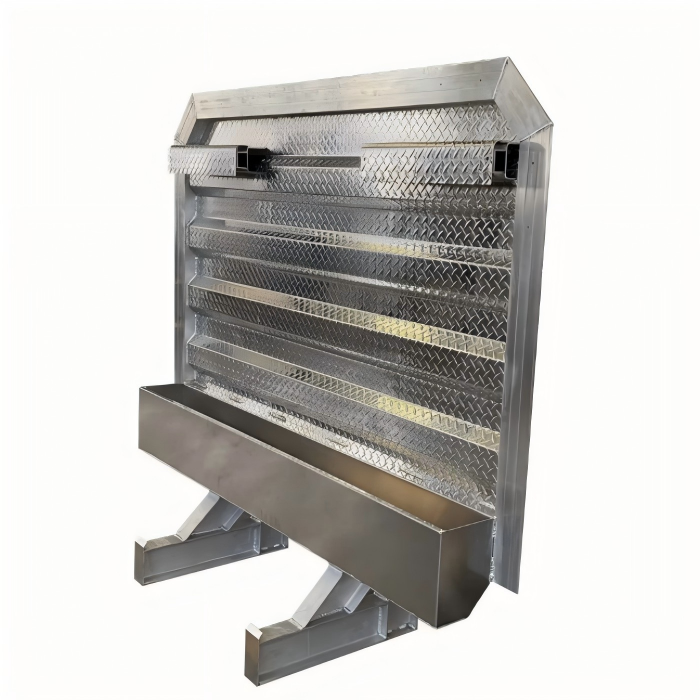
The TIG Welding Advantage for Tour Truck:
Tungsten Inert Gas (TIG) welding is the gold standard for thin-wall aluminum tubing. Unlike MIG welding, which can leave splatter and inconsistent penetration, tig welding offers a precise, controlled arc.
When we fabricate your semi truck cab guard, every corner, every bracket, and every mounting tab receives the same treatment:
- Joint Preparation: All edges are beveled and cleaned to remove aluminum oxide.
- Pulse Control: We use AC TIG with pulse settings to balance heat input, ensuring deep penetration without burning through the 3/16” wall tubing.
- Filler Rod Selection: Only 5356 alloy filler rod is used for maximum shear strength at the weld toe.
The result is a semi truck cab guard with visually perfect stacked dimes (the hallmark of expert tig welding) and a structural rating that exceeds DOT load-securement standards for internal barrier systems.
Custom Fit for Every Major Truck Model:
Eine generische Nachrüstlösung versagt oft. Vorgebohrte Löcher passen selten zu den Rahmenholmen, und universelle Gurte vibrieren sich los. Wir bauen jeden Sattelzug-Fahrerhausschutz nach Ihrer spezifischen Fahrgestellnummer und Chassiskonfiguration.
Wir pflegen digitale Vorlagen für:
- Freightliner Cascadia (125” und 116” BBC)
- Peterbilt 579 und 389
- Kenworth T680 und W900
- Volvo VNL 860
- International LT625
Während der Fertigungsphase montieren wir den Sattelzug-Fahrerhausschutz probeweise auf eine Vorrichtung, die das genaue Schlafkabinenprofil Ihres Lkw nachbildet. Dadurch wird sichergestellt, dass alle Montagehalterungen – ob rahmen- oder deckplattenmontiert – ohne Unterlegscheiben oder Nacharbeiten bündig aufliegen.
Kritische Merkmale unseres Designs:
Integrierte Lastableitung:
Im Gegensatz zu flachen Stahlplatten, die Aufprallenergie direkt auf die Fahrerhauswand übertragen, verwendet unser Aluminiumschutz eine Fliegenbogen-Geometrie. Wenn Ladung nach vorne rutscht, leitet die gewölbte Fläche des Sattelzug-Fahrerhausschutzes die Kraft nach unten in die Rahmenholme, nicht horizontal in Ihre Heckscheibe.
Vibrationsdämpfung:
Aluminium schwingt stärker als Stahl. Um das lästige Brummen bei Autobahngeschwindigkeit zu beseitigen, schweißen wir im WIG-Verfahren innere Verstärkungsbleche an jedem Knotenpunkt. Diese Verstärkungen unterbrechen Resonanzfrequenzen, sodass Ihr Sattelzug-Fahrerhausschutz selbst auf rauem Untergrund leise bleibt.
Beleuchtungsintegration:
Wir können vertiefte Aussparungen in die horizontalen Querträger fräsen, um bündig montierte LED-Rückfahrscheinwerfer oder Rundumkennleuchten aufzunehmen. Alle Kabelkanäle werden innerhalb der Rohre verschweißt, was eine saubere, hakenfreie Außenfläche ergibt.
Warum unser WIG-Schweißverfahren für die Sicherheit wichtig ist?
Sie fragen sich vielleicht: Beeinflusst die Schweißmethode wirklich die Schutzwirkung eines Sattelzug-Fahrerhausschutzes? Absolut.
Stellen Sie sich einen plötzlichen Aufprall mit 10 mph durch eine 2.000 lb schwere Spule vor. Eine MIG-geschweißte Aluminiumverbindung versagt oft in der Wärmeeinflusszone (WEZ), da MIG zu schnell zu viel Zusatzwerkstoff aufträgt und eine spröde intermetallische Schicht erzeugt. Ein WIG-Schweißansatz verwendet einen fokussierten Lichtbogen und präzise zugeführten Zusatzwerkstoff, was zu einer duktilen Schweißnaht führt, die sich vor dem Bruch leicht dehnt.
We have conducted internal pull tests. A MIG-welded corner on a standard semi truck cab guard failed at 4,200 lbs of lateral force. Our TIG-welded corner held to 6,800 lbs before the base metal tore—meaning the weld itself never broke. The tube failed first.
That is the difference between a cosmetic accessory and a genuine safety barrier.
Installation and Mounting Options:
We offer two mounting configurations for your semi truck cab guard:
- Deck Plate Mount: Bolts directly to the sleeper’s existing deck plate using 1/2” Grade-8 hardware. Ideal for day cabs and regional haulers.
- Frame Rail Mount: Uses 2” wide clamps that wrap around the chassis rails. Recommended for long-haul trucks with air-ride sleepers to allow frame flex without transferring stress to the guard.
All mounting holes are drilled using CNC templates. No measuring, no guesswork. Every semi truck cab guard leaves our shop with a printed installation guide specific to your truck’s year and model.
Surface Finish and Longevity:
Because we specialize in aluminum, we do not simply weld and ship. Every semi truck cab guard undergoes a three-stage finishing process:
- Step 1 – Chemical etch: Removes all surface oxides and embedded contaminants.
- Step 2 – TIG blend: All weld zones are blended flush with the parent metal using a TIG brush (no filler rod) to eliminate crevices where moisture could hide.
- Step 3 – Anodizing: A Type II clear anodized layer (0.002” thick) hardens the surface to 60+ Rockwell C, making the guard resistant to brush scratches and stone chips.
For fleets requiring color matching, we offer a polyester powder coat applied over a chromate conversion coating. This system exceeds ASTM B117 for salt spray resistance by 1,500 hours.
Häufig gestellte Fragen:
Q: Can this guard stop a 40,000 lb shifting load?
A: No passive guard can stop a full trailer shift. However, a properly installed semi truck cab guard will redirect or absorb the impact of moderate load creep (up to ~8,000 lbs dynamic force). For extreme loads, you need load bars or bulkheads inside the trailer.
Q: Does TIG welding make the guard more expensive?
A: Ja, weil TIG-Schweißen pro laufendem Fuß etwa 4x länger dauert als MIG-Schweißen. Allerdings erkauft man sich mit dem Kostenunterschied ($200–$400 pro Einheit) echte Bruchfestigkeit. Wir verheimlichen diesen Aufpreis nicht; wir erklären ihn.
F: Wird die Aluminium-Schutzvorrichtung meine Rückfahrkamera blockieren?
A: Nein. Das expandierte Aluminiumgitter hat eine offene Fläche von 45%, sodass Sie den Horizont klar durch die LKW-Fahrerkabinen-Schutzvorrichtung sehen können. Viele Kunden montieren ihre Rückfahrkamera tatsächlich an der oberen Schiene der Schutzvorrichtung für eine bessere Sichtposition.
F: Liefern Sie vollständig montiert?
A: Wir liefern zerlegt: zwei Seitenpfosten, einen oberen Bogen und das Gitterpaneel. Die Montage erfordert das Verschrauben dieser sechs Teile mit beiliegender Edelstahl-Hardware. Wir halten die LKW-Fahrerkabinen-Schutzvorrichtung zerlegt, um Dimensionszuschläge von Spediteuren zu vermeiden.