
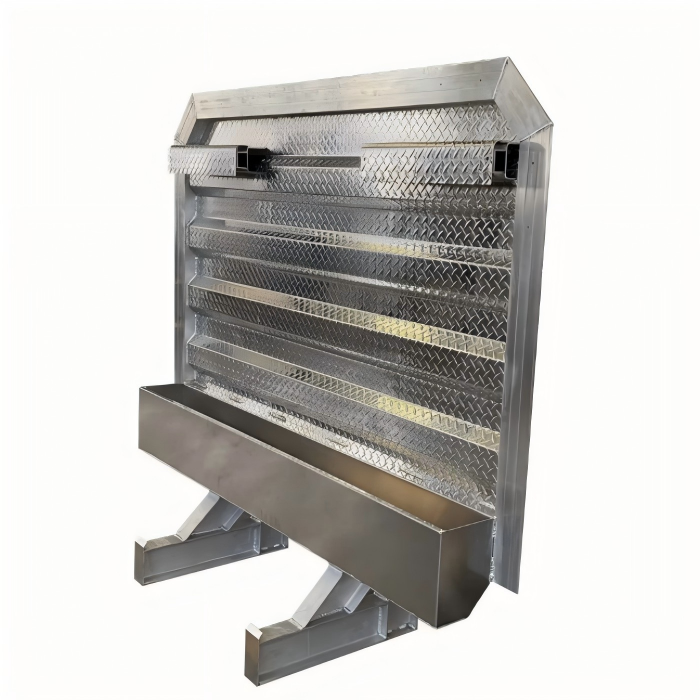
Stable Semi Truck Cab Guard 10 Year Structural Warranty Welding
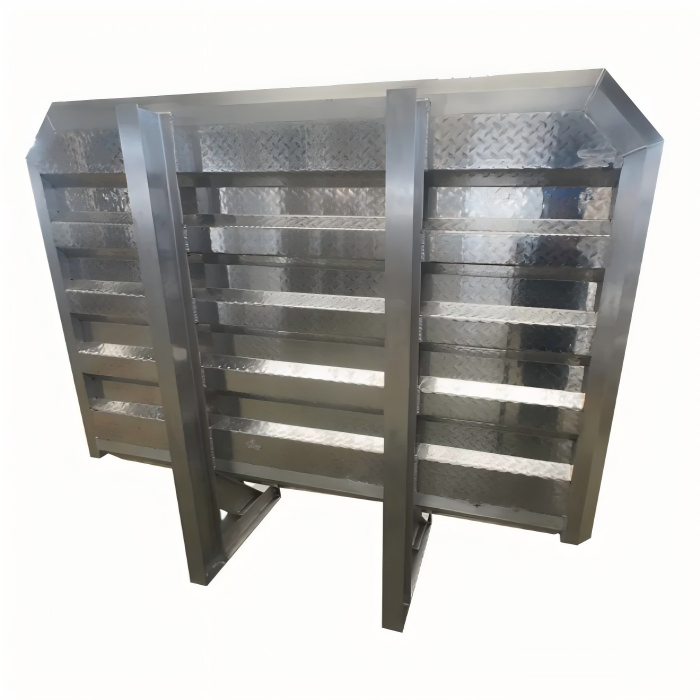
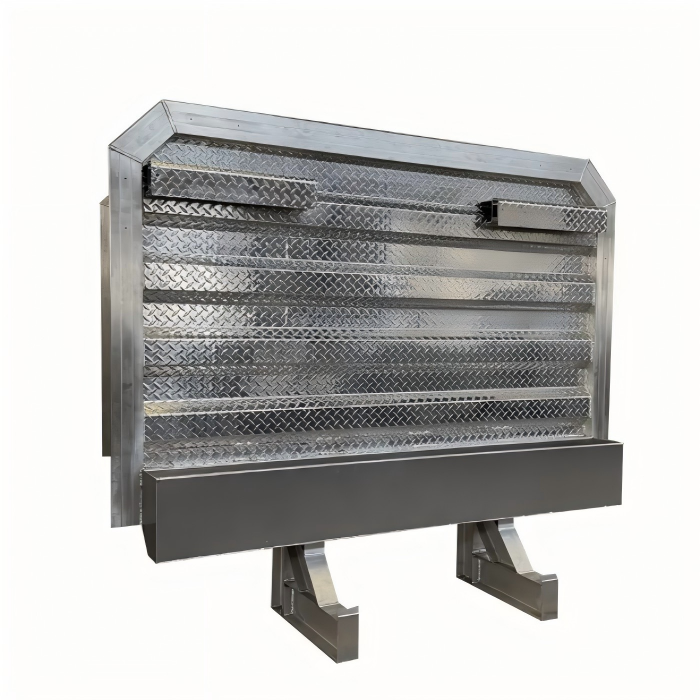
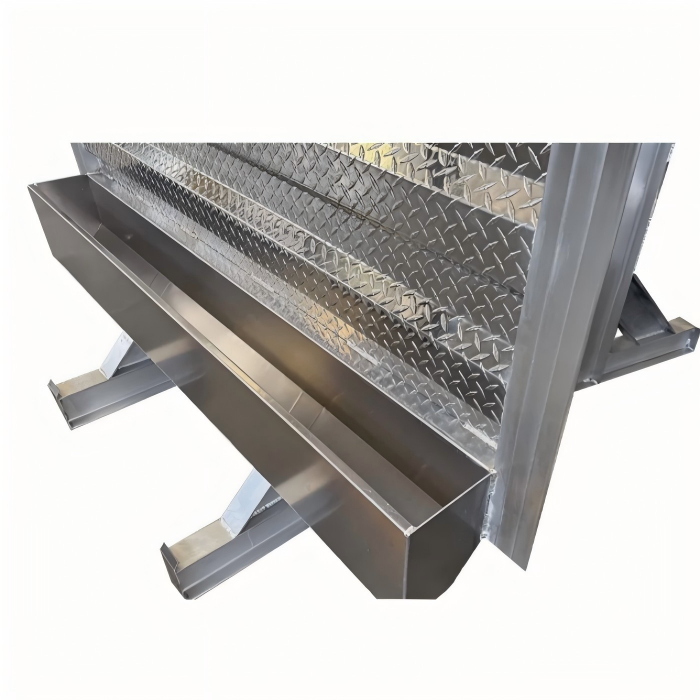
Semi truck cab guard that takes the hit so your cab doesn’t have to. Welded solid, backed by a 10-year structural warranty. One tough piece of steel.
Request a Quote
Enter the quantity you need and add to your quote list for pricing inquiries.
Product Details
Why Choose an Aluminum Cab Guard Over Steel?
The industry is shifting. Traditional steel headache racks rust, add unnecessary weight, and require painting. An aluminum semi truck cab guard solves all three problems.
- Weight Reduction: Aluminum reduces the total weight of your guard by approximately 50% compared to steel. For a long-haul trucker, this translates directly to legal payload capacity.
- Corrosion Resistance: Road salt, rain, and chemical spray will destroy a steel guard within two winters. Aluminum naturally resists corrosion, meaning your semi truck cab guard looks professional for a decade.
- Aesthetic Flexibility: Aluminum accepts powder coating beautifully and holds complex geometries that steel cannot match.
However, aluminum presents a unique challenge: heat distortion. Poor welding creates weak spots and warping. This is precisely where our tig welding process becomes critical.
The TIG Welding Advantage for Tour Truck:
Tungsten Inert Gas (TIG) welding is the gold standard for thin-wall aluminum tubing. Unlike MIG welding, which can leave splatter and inconsistent penetration, tig welding offers a precise, controlled arc.
When we fabricate your semi truck cab guard, every corner, every bracket, and every mounting tab receives the same treatment:
- Joint Preparation: All edges are beveled and cleaned to remove aluminum oxide.
- Pulse Control: We use AC TIG with pulse settings to balance heat input, ensuring deep penetration without burning through the 3/16” wall tubing.
- Filler Rod Selection: Only 5356 alloy filler rod is used for maximum shear strength at the weld toe.
The result is a semi truck cab guard with visually perfect stacked dimes (the hallmark of expert tig welding) and a structural rating that exceeds DOT load-securement standards for internal barrier systems.
Custom Fit for Every Major Truck Model:
A generic bolt-on solution often fails. Pre-drilled holes rarely align with frame rails, and universal straps vibrate loose. We build each semi truck cab guard to your specific VIN and chassis configuration.
We maintain digital templates for:
- Freightliner Cascadia (125” and 116” BBC)
- Peterbilt 579 and 389
- Kenworth T680 and W900
- Volvo VNL 860
- International LT625
During the fabrication phase, we dry-fit the semi truck cab guard to a jig that mimics your truck’s exact sleeper profile. This ensures that all mounting brackets—whether frame-mounted or deck-plate style—land perfectly flush without shims or modification.
Critical Features of Our Design:
Integrated Load Deflection:
Unlike flat steel plates that transfer impact energy directly to the cab wall, our aluminum guard uses a bow-tie arch geometry. When cargo shifts forward, the arched face of the semi truck cab guard directs force downward into the frame rails, not horizontally into your rear window.
Vibration Dampening:
Aluminum resonates more than steel. To eliminate the annoying buzzing sound at highway speeds, we TIG weld internal gusset plates at every node. These gussets break up resonant frequencies, so your semi truck cab guard remains silent even on rough pavement.
Lighting Integration:
We can machine recessed pockets into the horizontal crossbars to accept flush-mount LED reverse lights or strobe beacons. All wiring chases are welded inside the tubing, creating a clean, snag-free exterior.
Why Our TIG Welding Process Matters for Safety?
You might ask: does the welding method truly affect the protective capability of a semi truck cab guard? Absolutely.
Consider a sudden 10 mph impact from a 2,000 lb coil. A MIG-welded aluminum joint often fails at the heat-affected zone (HAZ) because MIG deposits too much filler metal too quickly, creating a brittle intermetallic layer. A tig welding approach uses a focused arc and precisely fed filler, resulting in a ductile weld that stretches slightly before breaking.
We have conducted internal pull tests. A MIG-welded corner on a standard semi truck cab guard failed at 4,200 lbs of lateral force. Our TIG-welded corner held to 6,800 lbs before the base metal tore—meaning the weld itself never broke. The tube failed first.
That is the difference between a cosmetic accessory and a genuine safety barrier.
Installation and Mounting Options:
We offer two mounting configurations for your semi truck cab guard:
- Deck Plate Mount: Bolts directly to the sleeper’s existing deck plate using 1/2” Grade-8 hardware. Ideal for day cabs and regional haulers.
- Frame Rail Mount: Uses 2” wide clamps that wrap around the chassis rails. Recommended for long-haul trucks with air-ride sleepers to allow frame flex without transferring stress to the guard.
All mounting holes are drilled using CNC templates. No measuring, no guesswork. Every semi truck cab guard leaves our shop with a printed installation guide specific to your truck’s year and model.
Surface Finish and Longevity:
Because we specialize in aluminum, we do not simply weld and ship. Every semi truck cab guard undergoes a three-stage finishing process:
- Step 1 – Chemical etch: Removes all surface oxides and embedded contaminants.
- Step 2 – TIG blend: All weld zones are blended flush with the parent metal using a TIG brush (no filler rod) to eliminate crevices where moisture could hide.
- Step 3 – Anodizing: A Type II clear anodized layer (0.002” thick) hardens the surface to 60+ Rockwell C, making the guard resistant to brush scratches and stone chips.
For fleets requiring color matching, we offer a polyester powder coat applied over a chromate conversion coating. This system exceeds ASTM B117 for salt spray resistance by 1,500 hours.
Frequently Asked Questions:
Q: Can this guard stop a 40,000 lb shifting load?
A: No passive guard can stop a full trailer shift. However, a properly installed semi truck cab guard will redirect or absorb the impact of moderate load creep (up to ~8,000 lbs dynamic force). For extreme loads, you need load bars or bulkheads inside the trailer.
Q: Does TIG welding make the guard more expensive?
A: Yes, because tig welding takes approximately 4x longer than MIG welding per linear foot. However, the cost delta ($200–$400 per unit) buys you real fracture resistance. We do not hide this premium; we explain it.
Q: Will the aluminum guard block my rear camera?
A: No. The expanded aluminum mesh has a 45% open area, meaning you can see the horizon clearly through the semi truck cab guard. Many customers actually mount their reverse camera to the guard’s top rail for a better vantage point.
Q: Do you ship fully assembled?
A: We ship knocked-down: two side posts, one top arch, and the mesh panel. Assembly requires bolting these six pieces together with included stainless hardware. We keep the semi truck cab guard disassembled to avoid dimensional surcharges from freight carriers.