
12 Configuraciones de Accesorios de Tubería de Aluminio para Barandillas Personalizadas
Los accesorios de barandilla de tubería de aluminio ofrecen conexiones duraderas y resistentes a la corrosión para sistemas de barandilla personalizados, soportando diseños flexibles y una fácil instalación.
Request a Quote
Enter the quantity you need and add to your quote list for pricing inquiries.
Product Details
¿Por qué es importante la experiencia en soldadura de aluminio para las conexiones?
Dado que nuestro negocio principal es la soldadura de aluminio, no diseñamos conexiones de forma aislada. Muchos proveedores de componentes para barandillas nunca han realizado un arco eléctrico sobre aluminio. Diseñan para fundición de bajo costo, no para un ajuste en el mundo real. ¿El resultado? Huecos que superan los 3 mm, ángulos de bisel desiguales y trampas de porosidad.
Cada lote de conexiones para barandillas de tubería de aluminio que producimos se inspecciona utilizando los mismos estándares de calidad que aplicamos a los marcos estructurales soldados. Verificamos la concentricidad del orificio, la planitud de la brida y la consistencia de la rosca del tornillo. Cuando un soldador coloca dos tuberías en nuestro codo o conexión en T, el espacio de raíz cae dentro de las tolerancias recomendadas por AWS D1.2. Esto significa que puede lograr una penetración completa sin exceso de alambre de aporte ni resoldadura por el reverso.
Para los contratistas que sueldan en el sitio, esto es enormemente importante. Unos pocos milímetros de desalineación en diez uniones se convierten en centímetros de error al final de un tramo. Al usar nuestras conexiones para barandillas de tubería de aluminio, mantiene la rectitud y la verticalidad con menos calzas y retrabajo.
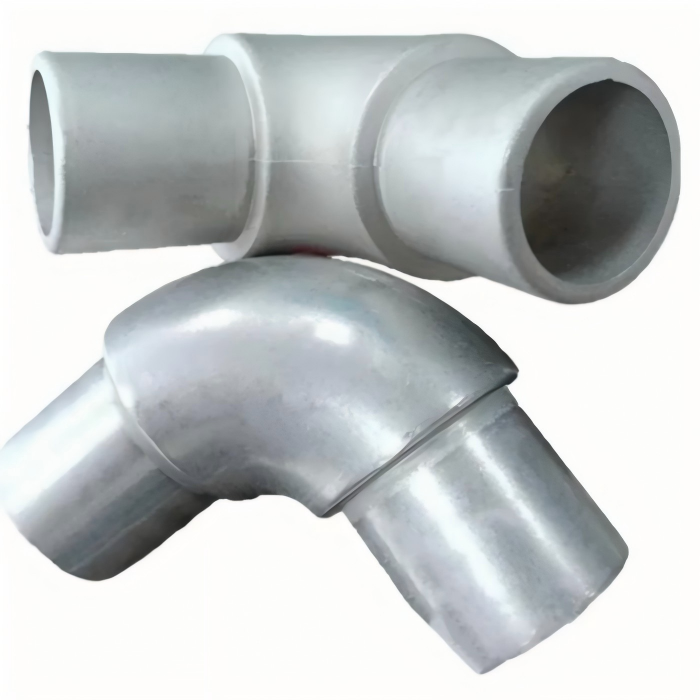
Tipos de conexiones para barandillas de tubería de aluminio que ofrecemos:
Almacenamos una gama completa de configuraciones para manejar casi cualquier geometría de barandilla. A continuación, se muestra un desglose de los perfiles estándar.
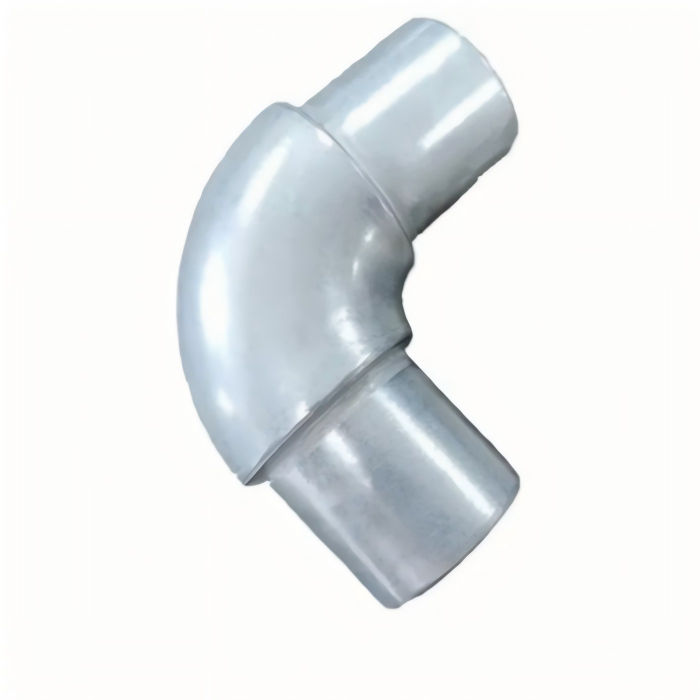
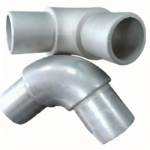
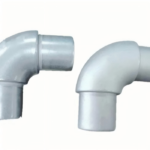
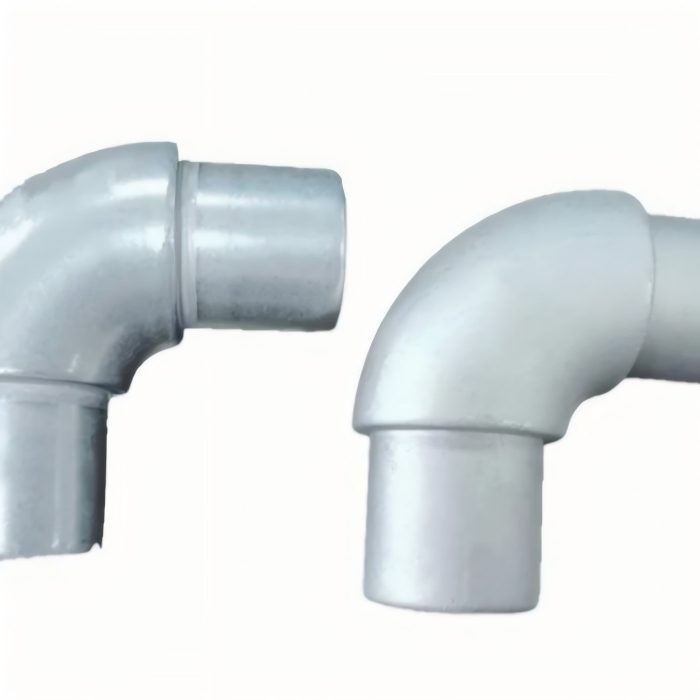
Conexiones de codo (90° y 45°)
Se utilizan para esquinas y cambios de dirección. Nuestros codos de 90° tienen un radio interior suave que reduce la concentración de tensión. La versión de 45° funciona para cubiertas inclinadas o escaleras. Ambos estilos incluyen un pequeño borde de soldadura en la entrada del casquillo, lo que le da al soldador una guía visual para la profundidad de inserción adecuada.
Conexiones en T y en cruz
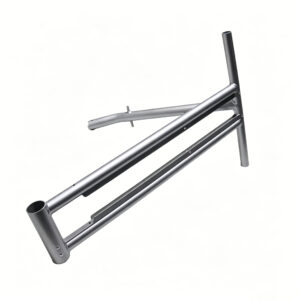
Las conexiones en T conectan un poste vertical a un riel horizontal, o empalman dos tramos horizontales con una caída vertical. Las conexiones en cruz se utilizan en barandillas estilo pérgola donde un miembro horizontal a media altura se encuentra con otro a 90°. Nuestras conexiones en T y en cruz para barandillas de tubería de aluminio tienen nervaduras reforzadas en la parte inferior para evitar grietas bajo carga lateral.
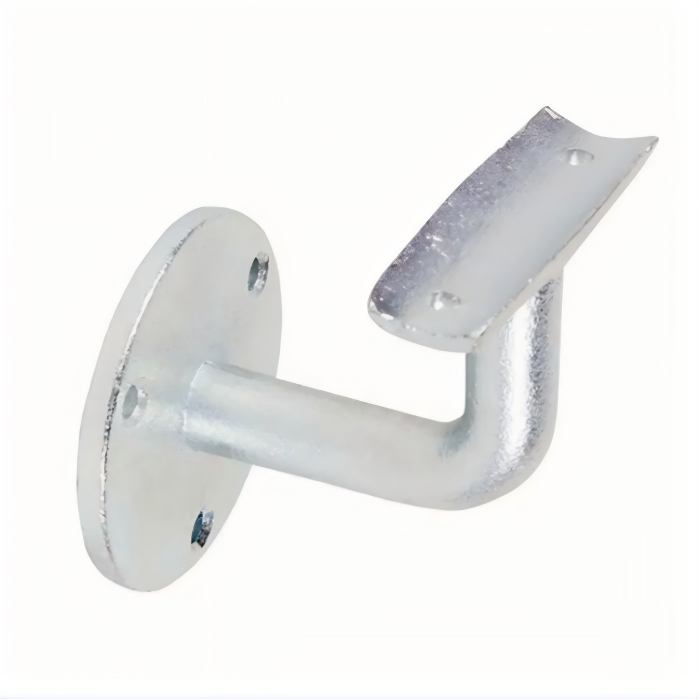
Montajes de brida (piso y pared)
Una conexión de brida ancla un poste de barandilla a concreto, plataforma de madera o viga de acero. Producimos tanto bridas de fondo plano para superficies horizontales como bridas de montaje lateral para largueros o bordes de escalones. Cada base de brida está mecanizada en lugar de fundida, lo que garantiza un contacto completo con la superficie de montaje.
Conexiones de ángulo ajustable
Para escaleras de caracol o rampas con pendiente variable, los ángulos fijos no funcionan. Nuestras conexiones ajustables utilizan un mecanismo de bloqueo dentado con un perno de acero inoxidable. El rango de movimiento abarca de 0° a 30° en cualquier dirección. Una vez que se establece el ángulo correcto, puede apretar el perno o aplicar un punto de soldadura.
Tapas de extremo y manguitos de empalme
Las tapas de extremo cierran las aberturas de la tubería por seguridad y estética. Los manguitos de empalme son tubos internos o externos que unen dos longitudes de tubería de extremo a extremo. Nuestros manguitos de empalme para barandillas de tubería de aluminio tienen 150 mm de largo con dos ventanas de acceso para soldadura.
Opciones de acabado superficial:
El aluminio crudo es naturalmente resistente a la corrosión, pero puede desarrollar una capa de óxido blanco (óxido de aluminio) con el tiempo. Para aplicaciones arquitectónicas, ofrecemos tres niveles de acabado en todas las conexiones para barandillas de tubería de aluminio.
- Acabado de fábrica (sin recubrimiento): Costo más bajo, adecuado para estructuras temporales o barandillas de servicio interior.
- Anodizado transparente: Proceso electroquímico que endurece la superficie. Resiste huellas dactilares y productos químicos suaves.
- Recubrimiento en polvo (cualquier color RAL): Agrega una capa de polímero duradera. Mejor para áreas de alta visibilidad, instalaciones públicas y proyectos costeros.
También proporcionamos un acabado mecánico cepillado o pulido bajo pedido. Sin embargo, tenga en cuenta que los acabados mecánicos requieren más cuidado durante la soldadura para evitar marcas de quemadura cerca de la zona de calor.
Compatibilidad con ensamblaje soldado vs. mecánico:
Una pregunta que los clientes hacen con frecuencia: “¿Debo soldar estas conexiones o usar tornillos de fijación?” La respuesta depende de sus requisitos de carga, el código de construcción local y si se necesita desmontaje más adelante.
Ensamblaje soldado (recomendado para instalaciones permanentes):
Cuando suelda nuestras conexiones para barandillas de tubería de aluminio, la unión se vuelve monolítica. No hay tornillos que se aflojen por vibración, ni juntas que se degraden. Para pasamanos en escaleras de incendios, escaleras escolares o plataformas industriales, la soldadura es el método más seguro. Recomendamos usar varilla de aporte 4043 o 5356 y precalentar secciones gruesas a 150°F para reducir la distorsión.
Ensamblaje mecánico (tornillos de fijación o pernos pasantes):
Para barandillas temporales, cabinas de exhibición o propiedades residenciales de alquiler, puede preferir la fijación mecánica. Nuestras conexiones para barandillas de tubería de aluminio vienen con dos tornillos de fijación empotrados (acero inoxidable) o agujeros pretaladrados para pernos pasantes. La recomendación de par máximo es de 18 N·m. Exceder esto puede pelar las roscas porque el aluminio es más blando que el acero.
Clasificaciones de carga y cumplimiento de código:
Probamos cada familia de productos según ASTM E985 (especificación estándar para componentes de barandillas de aluminio). La carga última mínima para un ensamblaje de pasamanos que utiliza nuestras conexiones para barandillas de tubería de aluminio es de 200 lbs de fuerza hacia abajo y 200 lbs de fuerza horizontal hacia afuera, por sección de 36 pulgadas. Para barandillas de protección, el requisito aumenta a 200 lbs aplicadas en cualquier punto a lo largo del riel superior.
Nuestro equipo de ingeniería puede proporcionar informes de cálculo de carga sellados para solicitudes de permiso. Los valores típicos para un sistema de tubería de calibre 40 de 1.9″ con conexiones soldadas:
- Momento flector en la unión: 850 in-lbs
- Resistencia al corte en la brida: 2100 lbs
- Deflexión bajo carga de 200 lbs: menos de 0.25 pulgadas
Si su proyecto requiere clasificaciones más altas, por ejemplo, barandillas de graderías o barreras para vehículos, podemos aumentar el tamaño a tubería de 2.5″ y usar conexiones para barandillas de tubería de aluminio doblemente soldadas con cartelas.
Estudio de caso: Reemplazo de barandilla en condominio costero
Un condominio en Florida reemplazó 320 pies lineales de barandilla de acero corroída. El nuevo diseño utilizó nuestro tubo de aluminio cédula 40 de 1.9″ y codos, tes y montajes de brida correspondientes. Las 107 conexiones de barandilla de tubo de aluminio se soldaron en el sitio durante cuatro días por dos soldadores certificados. El peso total del material fue un 62% menor que el sistema de acero anterior, reduciendo la carga estructural en balcones de concreto envejecidos.
Después de 14 meses, una inspección de seguimiento no mostró picaduras ni aflojamiento. La asociación de propietarios ha ordenado desde entonces una segunda fase para la terraza de la piscina.
Comparación: Nuestras Conexiones vs. Productos de la Competencia
| Característica | Nuestras Conexiones de Barandilla de Tubo de Aluminio | Conexiones Importadas Típicas |
|---|---|---|
| Grado de aleación | 6061-T6 o 6063-T5 (certificado) | Mezcla reciclada desconocida |
| Superficie de soldadura | Sí, mecanizada | Ninguna o fundición rugosa |
| Orificio de ventilación | Sí, para escape de gas | No |
| Espesor de pared | 4 mm a 6 mm según el tamaño | Tan bajo como 2.5 mm |
| Consistencia del acabado | ±5 micras en recubrimiento en polvo | ±25 micras |
| Trazabilidad del lote | Sí, código grabado con láser | No |