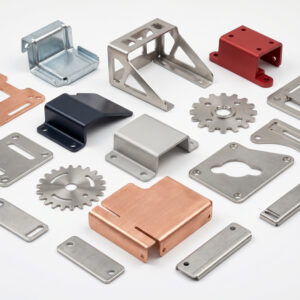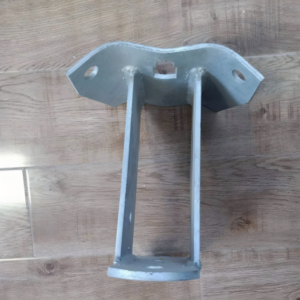
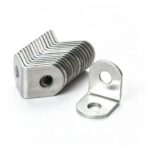
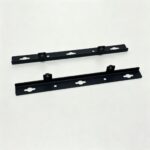
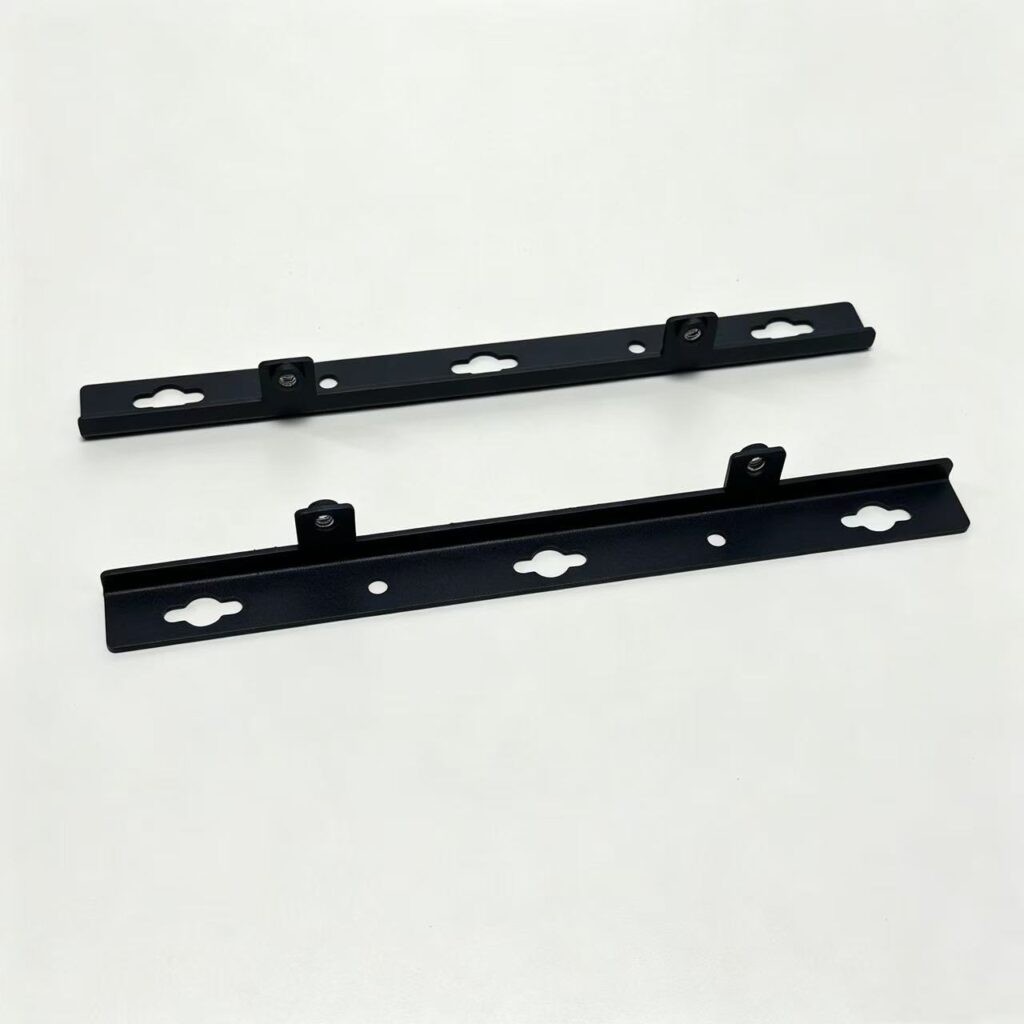
Supports d'emboutissage fiables en SS316, supports métalliques emboutis de qualité médicale
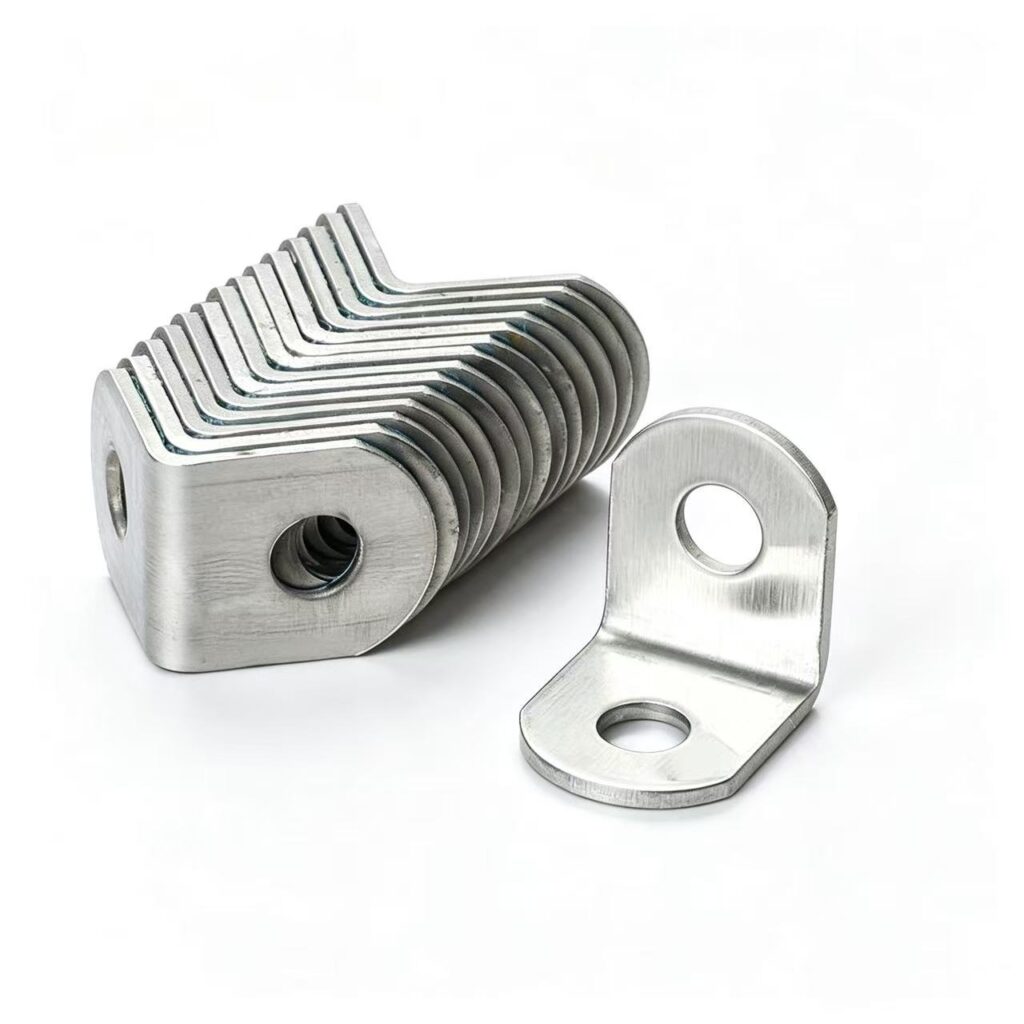
Les supports d'emboutissage utilisent l'emboutissage de tôle de précision pour la production en grande série, offrant une résistance constante, des tolérances serrées et des performances durables.
Request a Quote
Enter the quantity you need and add to your quote list for pricing inquiries.
Product Details
Supports de brackets pour instruments médicaux en 316L estampés par matrice progressive :
Client : MT,Instruments (certifié ISO 13485 ; États-Unis)
Industrie : Fabrication de dispositifs médicaux
Défi :
Le client avait besoin de 250 000 unités par an de petits supports estampés (65 mm × 38 mm × 12 mm) pour un rack de stérilisation d'instruments chirurgicaux réutilisables.
Le support maintenait des broches d'alignement critiques et était exposé à :
Stérilisation quotidienne à l'autoclave (vapeur à 134 °C / 273 °F ; humidité élevée).
Désinfectants de qualité hospitalière (eau de Javel et composés d'ammonium quaternaire).
Impact physique dû au chargement répété de lourds plateaux chirurgicaux.
La pièce d'origine était usinée à partir d'une barre pleine en 316L.
Bien que fonctionnel, l'usinage présentait trois problèmes majeurs :
Coût : $4,20 par unité (trop cher pour un support semi-consommable).
Délai de livraison : 8 semaines pour 5 000 unités (l'usinage était trop lent).
Gaspillage de matière : 65% de la barre en 316L étaient transformés en copeaux et rebuts.
MT a demandé : une alternative de supports estampés à ≤$1,80 par unité, avec une porosité nulle, une résistance à la corrosion égale à celle du 316L usiné, et une surface lisse et nettoyable (pas de crevasses pour la croissance bactérienne).
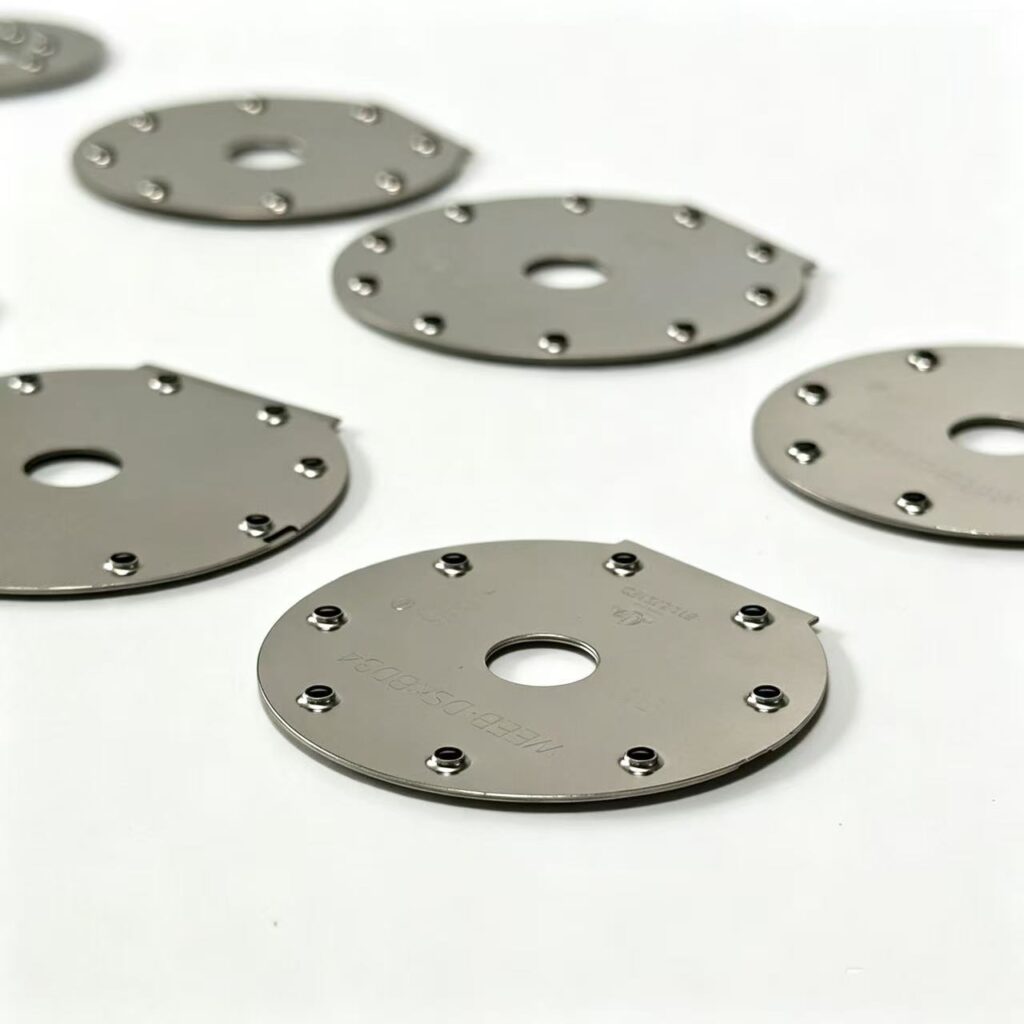
L'Exécution Métallique Flow Wing:
Étape 1 : Ingénierie de Conception pour l'Estampage (DFS)
L'équipe d'ingénierie de Flow Wing Metal a examiné le modèle 3D et a reconçu les supports estampés :
Changement de matière supprimé : Remplacé la barre usinée par une bobine en acier inoxydable 316L de 1,2 mm d'épaisseur (trempe dure pour le contrôle du retour élastique, puis recuit après estampage).
Optimisation de la géométrie : Ajout de congés de 0,5 mm à tous les coins internes (auparavant à 90° vifs) pour éviter les fissures de contrainte lors du formage.
Tolérances des trous : Trous poinçonnés spécifiés à +0,05 mm / 0,00 mm pour un alignement de précision des broches (réalisable avec des techniques de découpage fin).
Étape 2 : Fabrication de l'Outillage
Type de matrice : Matrice progressive à 8 postes.
Matériau de la matrice : Acier à outils métallurgique des poudres (CPM 10V) avec revêtement en nitrure de titane et d'aluminium (TiAlN) pour la résistance à l'usure contre l'écrouissage du 316L.
Presse : Presse à estamper à grande vitesse Bruderer de 200 tonnes.
Postes inclus :
Perçage des trous pilotes
Perçage des trous principaux (×4)
Entaille : coupe partielle pour la fonction de dégagement
Premier pliage à 45°
Deuxième pliage à 90°
Matriçage : aplatissement de la surface de montage.
Découpage : pièce coupée de la bande porteuse
Coupe des déchets
Étape 3 : Développement du Processus et Tests
Essai préliminaire : 500 pièces produites en acier doux (pour la validation de la matrice).
Essai en inox : 1 000 pièces en 316L avec un lubrifiant d'estampage spécialisé à pression extrême chloré pour éviter le grippage.
Ajustements : Augmentation de la vitesse de la presse de 40 à 55 CPM (coups par minute) ; ajout d'un soufflage d'air pour dégager les petits noyaux des postes de perçage.
Étape 4 : Opérations Après Estampage des Supports
Dégraissage : Laveuse à pulvérisation automatique à trois étages (lavage alcalin → rinçage → rinçage inhibiteur de rouille).
Ébavurage : Léger culbutage vibratoire avec des triangles en céramique (15 minutes) pour éliminer les bavures d'entrée de poinçon (<0,05 mm restant).
Passivation : Bain d'acide citrique (concentration de 20%, 25 minutes à 55 °C) pour restaurer la couche d'oxyde de chrome – critique pour la résistance à l'autoclave.
Inspection : Calibre passe/ne passe pas à 100% pour les trous de broches ; micromètre laser pour la tolérance d'angle de pliage (±0,5°).
Étape 5 : Validation de la Qualité
| Exigence | Spécifié | Résultat Flow Wing | Réussite/Échec |
| Matériau | 316L | 316L (rapport d'essai en usine certifié) | Réussite |
| Planéité | ≤0,15 mm sur 65 mm | 0,08 mm | Réussite |
| Tolérance de position des trous | ±0,05 mm | ±0,03 mm Cpk 1,67 | Réussite |
| Rayon de coin interne | Pas de fissures (test par ressuage) | Aucune indication | Réussite |
| Résistance au brouillard salin (ASTM B117) | ≥1 000 heures | 1 200 heures (pas de rouille rouge) | Réussite |
| Durabilité des cycles d'autoclave | 500 cycles | 800 cycles (pas de décoloration ni de piqûres) | Réussite |
| Coût unitaire cible | ≤$1,80 | $1.52 | Réussite |
Le Résultat :
Économies de coûts : Réduction de 64% par unité ($4,20 → $1,52) = $670 000 d'économies annuelles pour le client.
Vitesse de production : De 8 semaines pour 5 000 unités (usinées) à 2 semaines pour 25 000 unités (estampées).
Utilisation de la matière : Augmentée de 35% (usinée) à 82% (estampée à partir de la bobine).
Qualité : Aucun défaut signalé sur le terrain après 18 mois d'utilisation hospitalière. Les supports estampés survivent aux cycles d'autoclave sans piqûres, et la couche passive reste intacte.
Résultat pour le client : MT a converti 14 supports estampés usinés supplémentaires en conceptions estampées Flow Wing Metal au cours des 12 mois suivants.
Témoignage client :
> “ Flow Wing Metal n'a pas seulement estampé des supports – ils ont réingénieré toute notre structure de coûts. L'outillage de matrice progressive s'est remboursé dès la première série de production. Et la qualité de la pièce ? Meilleure que notre version usinée d'origine. ”,
> – Responsable Achats Senior, MT Instruments Chirurgicaux
Pourquoi Choisir Flow Wing Metal pour les Supports Estampés ?
| Capacité | Flow Wing Brossé, décapé, poli ou personnalisé |
| Capacité de presse | Jusqu'à 400 tonnes (progressive, transfert et découpage fin) |
| Taille maximale de pièce | 600 mm × 900 mm (plus grand sur demande) |
| Plage d'épaisseur de matière | 0,1 mm (feuille) à 8,0 mm (plaque) |
| Tolérances (standard) | ±0,10 mm (découpage), ±0,05 mm (trous poinçonnés), ±0,5° (pliage) |
| Tolérances (précision) | ±0,025 mm avec découpage fin ou matriçage secondaire |
| Capacité de volume annuel | 100 à 10 000 000+ pièces |
| Matériaux | Acier au carbone, acier inoxydable (304/316/410/430), aluminium (5052/6061), cuivre, laiton, galvanisé, HALE, métaux préplaqués |
| Finition en interne | Dégraissage, culbutage/vibratoire, passivation, électropolissage, revêtement par poudre |
| Certifications | ISO 9001:2015, ISO 13485 (dispositifs médicaux en cours) |
| Délai de livraison (outillage) | 4-8 semaines (matrice progressive), 2-3 semaines (matrices à poste unique) |
Flow Wing Metal transforme la tôle en composants de précision – plus rapides, plus solides et plus économiques que l'usinage.