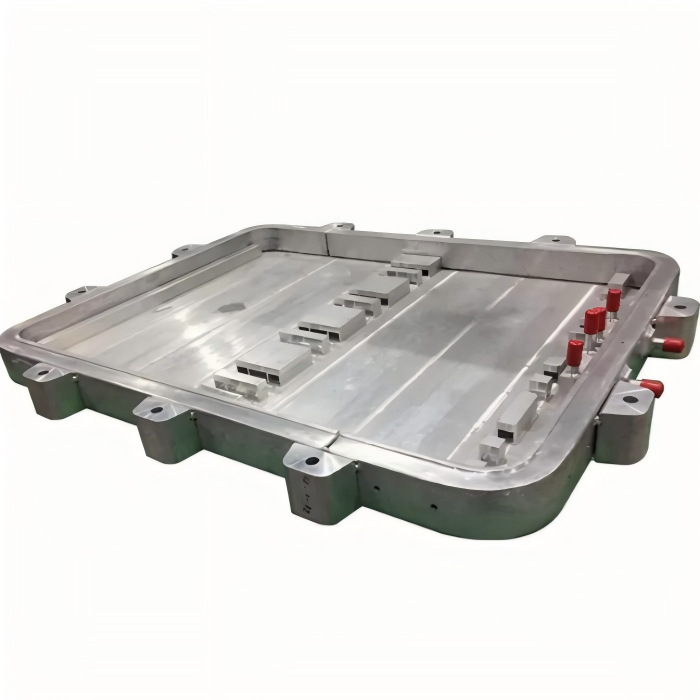

Battery Tray for Car 3X Stronger Mounts for Secure EV Installation
Der Schweißdienst für Autobatteriehalterungen liefert robotergeschweißte, 3-fach stärkere Halterungen für eine sichere, vibrationsresistente Installation und automobilen Zuverlässigkeit.
Request a Quote
Enter the quantity you need and add to your quote list for pricing inquiries.
Product Details
Battery Tray for Car: Why Titanium Welding Delivers Unmatched Performance
Batterieablage für Autoanwendungen ist eine der kritischsten und dennoch unterschätzten Komponenten beim Bau oder der Restaurierung eines Fahrzeugs. Dieses wesentliche Teil unterstützt das elektrische System des Fahrzeugs und hält gleichzeitig ständigen Vibrationen, extremen Temperaturen, korrosiver Batteriesäure und Feuchtigkeitseinwirkung stand. Eine defekte Batterieablage für den Autoeinsatz kann einen Fahrer strandet lassen oder, schlimmer noch, gefährliche elektrische Kurzschlüsse verursachen. Während viele Hersteller geprägten Stahl oder Kunststoffablagen verwenden, wenden sich eine wachsende Zahl von Automobil-Enthusiasten, Restauratoren und EV-Bauern Titan zu. In Kombination mit Präzisionsschweißen bietet eine Titan-Batterieablage für Autoinstallationen Festigkeit, Gewichtseinsparung und Korrosionsbeständigkeit, die herkömmliche Materialien nicht erreichen können.
The Titanium Advantage for a Battery Tray for Car:
Titanium solves nearly every weakness of conventional battery trays. First, titanium is completely immune to battery acid corrosion. Unlike steel, which requires paint or powder coating for protection, titanium does not react with sulfuric acid. A titanium battery tray for car use will outlast the vehicle itself.
.
Second, titanium offers an exceptional strength-to-weight ratio. A titanium battery tray for car installation weighs approximately 40 percent less than a steel tray of equal strength. For performance vehicles and electric cars, every kilogram saved improves acceleration, handling, and range.
.
Third, titanium handles vibration exceptionally well. Its fatigue resistance exceeds that of steel and aluminum. A titanium battery tray for car applications will not crack from road vibration or engine shake, even after decades of use.
.
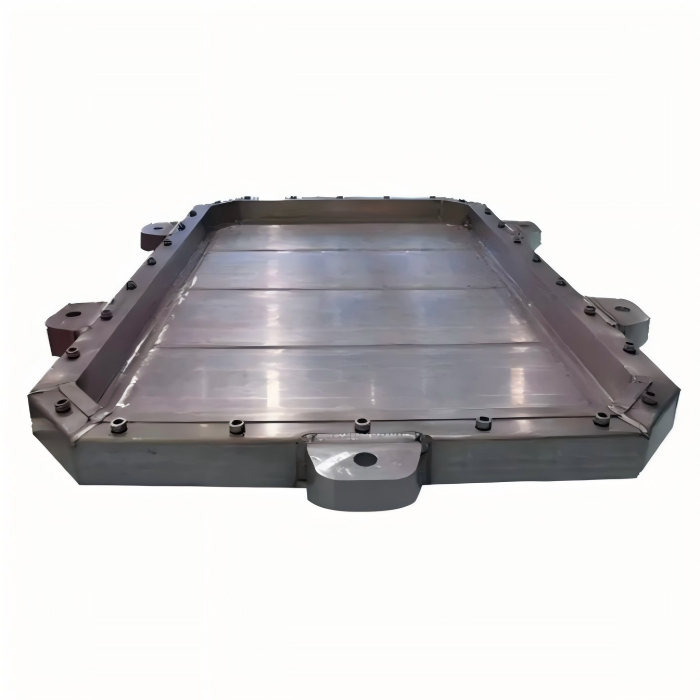
Challenges of Welding a Titanium Battery Tray for Car:
Trotz seiner Vorteile stellt Titan Herausforderungen bei der Herstellung dar. Titan ist beim Erhitzen hochreaktiv. Beim Schweißen einer Batterieablage für ein Auto muss das Metall vor Sauerstoff, Stickstoff und Wasserstoff geschützt werden. Verunreinigungen führen zu Versprödung und Schweißversagen.
Zusätzlich besteht eine Batterieablage für ein Auto typischerweise aus dünnem Blech, oft 1 mm bis 2 mm dick. Dünnes Titan erfordert präzise Hitzekontrolle, um Durchbrennen oder Verzug zu vermeiden. Die Ablage umfasst auch komplexe Merkmale: Montageflansche, Ablauflöcher und Haltebügel. Jede Verbindung muss korrekt geschweißt werden, um die strukturelle Integrität zu erhalten.
Aus diesen Gründen sollte eine Titan-Batterieablage für ein Auto nur von Schweißern gefertigt werden, die Erfahrung mit reaktiven Metallen haben. Allgemeine Schweißwerkstätten verfügen möglicherweise nicht über die Schutzgasaufbauten, sauberen Arbeitsbereiche und spezielle Schulung, die für Titan erforderlich sind.
Kritische Schritte zum Schweißen einer Titan-Batterieablage für ein Auto:
Eine erfolgreiche Fertigung einer Titan-Batterieablage für ein Auto beginnt lange bevor der Lichtbogen gezündet wird. Jeder Schritt ist wichtig:
Materialauswahl: Verwenden Sie handelsübliches Reintitan (Grad 1 oder Grad 2) für eine Batterieablage für ein Auto. Diese Güten bieten ausgezeichnete Umformbarkeit und Korrosionsbeständigkeit. Für Rennsportanwendungen, bei denen maximale Festigkeit erforderlich ist, kann Grad 5 (6Al-4V) verwendet werden, ist jedoch schwieriger zu formen.
Reinigung: Das Titanblech muss frei von Ölen, Fetten und Oxiden sein. Verwenden Sie Aceton oder Isopropylalkohol, gefolgt von einer speziellen Edelstahlbürste, die nur für Titan verwendet wird. Verwenden Sie niemals Bürsten, die Stahl berührt haben.
Passung: Erforderlich sind enge Verbindungen mit minimalen Spalten. Jeder Spalt über 0,5 mm kann zu Durchbrennen führen. Verwenden Sie Klemmen oder Vorrichtungen, um die Teile in Position zu halten.
Rückspülung: Für eine Titan-Batterieablage für ein Auto benötigen beide Seiten der Schweißnaht Schutzgasabdeckung. Die Rückseite jeder Verbindung muss mit reinem Argon (99,999 Prozent Reinheit) gespült werden. Ohne Rückspülung oxidiert die Unterseite und wird spröde.
Additionally, a battery tray for car typically involves thin sheet metal, often 1mm to 2mm thick. Thin titanium requires precise heat control to avoid burn-through or distortion. The tray also includes complex features: mounting flanges, drainage holes, and hold-down brackets. Each joint must be welded correctly to maintain structural integrity.
For these reasons, a titanium battery tray for car should only be fabricated by welders experienced with reactive metals. General welding shops may lack the shielding gas setups, clean work areas, and specialized training required for titanium.
Critical Steps for Welding a Titanium Battery Tray for Car:
Successful fabrication of a titanium battery tray for car begins long before the arc is struck. Every step matters:
Material selection: Use commercially pure titanium (Grade 1 or Grade 2) for a battery tray for car. These grades offer excellent formability and corrosion resistance. For racing applications where maximum strength is needed, Grade 5 (6Al-4V) may be used, but it is more difficult to form.
Cleaning: The titanium sheet must be free of oils, grease, and oxides. Use acetone or isopropyl alcohol followed by a dedicated stainless steel brush used only on titanium. Never use brushes that have touched steel.
Fit-up: It requires tight joints with minimal gaps. Any gap over 0.5mm can cause burn-through. Use clamps or fixtures to hold pieces in position.
Back-purging: For a titanium battery tray for car, both sides of the weld need inert gas coverage. The back side of each joint must be purged with pure argon (99.999 percent purity). Without back-purging, the underside oxidizes and becomes brittle.
Torch setup: Use gas tungsten arc welding (GTAW/TIG) with a 2 percent ceriated tungsten electrode. A gas lens improves coverage. Set post-flow to at least 15 seconds to protect the cooling weld.
2. Design Considerations for a Titanium Battery Tray for Car:
3. A well-designed battery tray for car includes several features that affect weld quality and performance. Drainage holes prevent acid pooling. These holes can be drilled before welding, but edges must be deburred and cleaned. Alternatively, holes can be left as unwelded cutouts, which avoids creating thin sections.
4. Mounting flanges should be wide enough to distribute clamping force without bending the titanium sheet. For it, flanges of 15mm to 20mm width work well. Hold-down brackets should be welded to the tray with full penetration welds.
5. Ventilation is also important. A battery tray for car should allow airflow around the battery to dissipate heat. Slots or gaps in the tray design serve this purpose while reducing weight.
6. Common Defects in Titanium Battery Tray Welding:
7. Even experienced welders may encounter defects when fabricating a battery tray for car from titanium. The most frequent issues include:
8. Oxidation and discoloration: Silver or light straw welds indicate proper shielding. Blue, purple, or grey means contamination. To prevent this, check gas flow rates and ensure back-purging covers the entire weld path.
9. Burn-through: Excessive heat creates holes in thin titanium. Reduce amperage or increase travel speed. A battery tray for car with burn-through is usually scrapped, as repair welding often causes further damage.
10. Undercut: A groove along the weld edge weakens the joint. This results from high amperage or incorrect torch angle. Adjust technique before continuing.
11. Warpage: Titanium expands and contracts significantly during heating. A battery tray for car can twist out of flatness if welds are made in the wrong sequence. Use tack welds and alternating weld passes to control distortion.
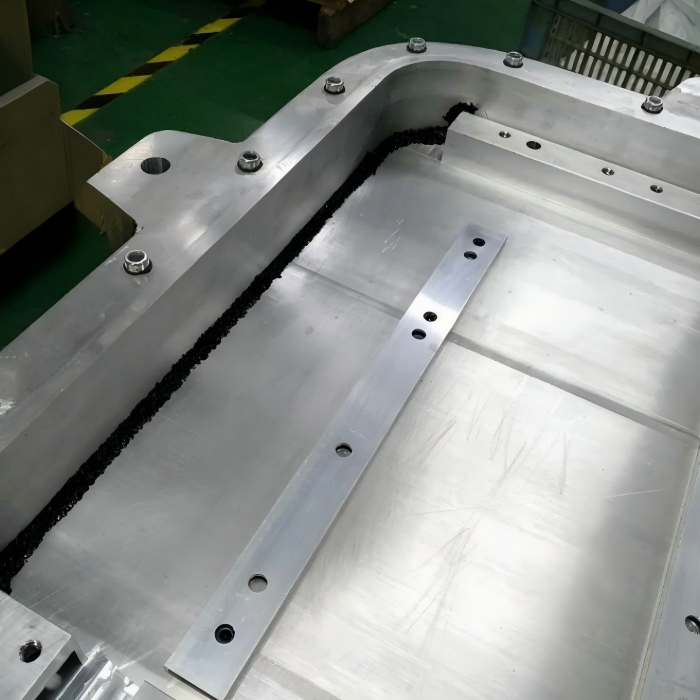
Design Considerations for a Titanium Battery Tray for Car:
A well-designed battery tray for car includes several features that affect weld quality and performance. Drainage holes prevent acid pooling. These holes can be drilled before welding, but edges must be deburred and cleaned. Alternatively, holes can be left as unwelded cutouts, which avoids creating thin sections.
Mounting flanges should be wide enough to distribute clamping force without bending the titanium sheet. For it, flanges of 15mm to 20mm width work well. Hold-down brackets should be welded to the tray with full penetration welds.
Ventilation is also important. A battery tray for car should allow airflow around the battery to dissipate heat. Slots or gaps in the tray design serve this purpose while reducing weight.
Common Defects in Titanium Battery Tray Welding:
Even experienced welders may encounter defects when fabricating a battery tray for car from titanium. The most frequent issues include:
Oxidation and discoloration: Silver or light straw welds indicate proper shielding. Blue, purple, or grey means contamination. To prevent this, check gas flow rates and ensure back-purging covers the entire weld path.
Burn-through: Excessive heat creates holes in thin titanium. Reduce amperage or increase travel speed. A battery tray for car with burn-through is usually scrapped, as repair welding often causes further damage.
Undercut: A groove along the weld edge weakens the joint. This results from high amperage or incorrect torch angle. Adjust technique before continuing.
Warpage: Titanium expands and contracts significantly during heating. A battery tray for car can twist out of flatness if welds are made in the wrong sequence. Use tack welds and alternating weld passes to control distortion.
Warum Titan-Schweißspezialisten für Ihr Batteriefach wählen?
Die Herstellung einer Titan-Batterieablage für das Auto ist keine Aufgabe für eine allgemeine Schweißerei. Ein Spezialist nutzt einen sauberen Arbeitsbereich, der von Stahl und Aluminium isoliert ist. Er führt Gasreinheitsprotokolle und verwendet Nachschleppschilde für eine verlängerte Gasabdeckung. Er versteht die einzigartige Wärmeausdehnung von Titan und reiht Schweißnähte so aneinander, dass Verformungen minimiert werden.
Darüber hinaus kann ein Spezialist Designunterstützung anbieten. Die Umstellung eines Stahlablage-Designs auf Titan erfordert die Anpassung von Dicken, Flanschbreiten und Schweißdetails. Ein erfahrener Partner hilft Ihnen, häufige Fehler zu vermeiden.
Fazit:
Die Batterieablage für das Auto ist eine kleine Komponente mit einer großen Aufgabe. Während Stahl rostet und Kunststoff bricht, bietet Titan eine dauerhafte Lösung. Wenn sie von erfahrenen Fachleuten korrekt geschweißt wird, bietet eine Titan-Batterieablage für das Auto unübertroffene Korrosionsbeständigkeit, reduziertes Gewicht und jahrzehntelangen zuverlässigen Dienst. Für Fahrzeugbesitzer, die das Beste verlangen, ist Titan die Antwort.