Servicio de Soldadura TIG para Aluminio con Control de Calor de 3 Zonas para Chapa Metálica
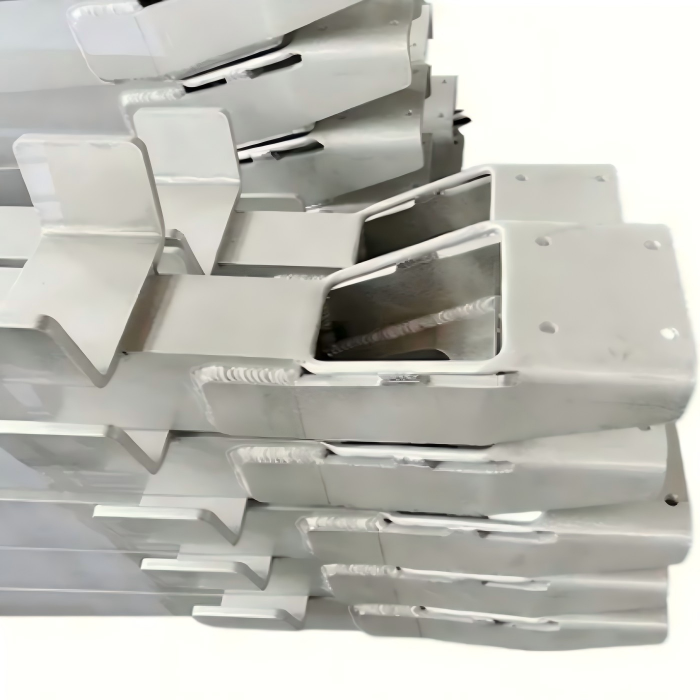
La soldadura TIG para aluminio ofrece soldaduras precisas y de baja distorsión en chapa fina con control de calor de 3 zonas para componentes ligeros y de calidad.
Request a Quote
Enter the quantity you need and add to your quote list for pricing inquiries.
Product Details
¿Por qué el aluminio requiere TIG?
Para entender por qué la soldadura TIG para aluminio es el proceso preferido, primero debe comprender la metalurgia del aluminio. El aluminio forma una capa de óxido de aluminio instantáneamente cuando se expone al aire. Este óxido se funde a más de 3700°F, mientras que el metal base se funde cerca de los 1200°F. Si intenta soldar aluminio sin soldadura TIG para aluminio, el metal base se funde primero y fluye, dejando una unión débil y contaminada.
La soldadura TIG de CA para aluminio resuelve este problema. La corriente alterna invierte la polaridad 120 veces por segundo. Durante la porción de electrodo positivo del ciclo, el arco elimina la capa de óxido de la superficie, una acción de limpieza única de la soldadura TIG para aluminio. Durante la porción de electrodo negativo, calienta el metal base. Esta acción de autolimpieza es lo que hace que la soldadura TIG para aluminio sea tan efectiva.
Nuestro proceso de soldadura TIG para aluminio también se beneficia del control preciso del amperaje mediante pedal. Al realizar soldadura TIG para aluminio, el soldador puede comenzar con bajo amperaje para establecer un charco, luego aumentar el calor según sea necesario y reducir instantáneamente al acercarse a un borde o completar un pase. Este nivel de control en la soldadura TIG para aluminio es imposible con soldadura MIG o de electrodo.
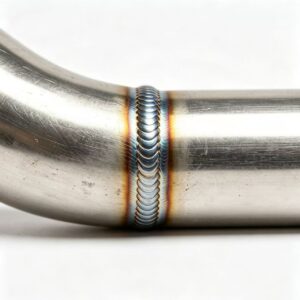
Además, la soldadura TIG para aluminio no produce salpicaduras. Las salpicaduras de MIG se incrustan en la superficie del aluminio, crean puntos de corrosión y requieren una limpieza tediosa. La soldadura TIG para aluminio deja un cordón limpio que está listo para anodizado o recubrimiento en polvo con un tratamiento posterior a la soldadura mínimo. Es por eso que los profesionales eligen la soldadura TIG para aluminio para aplicaciones críticas.
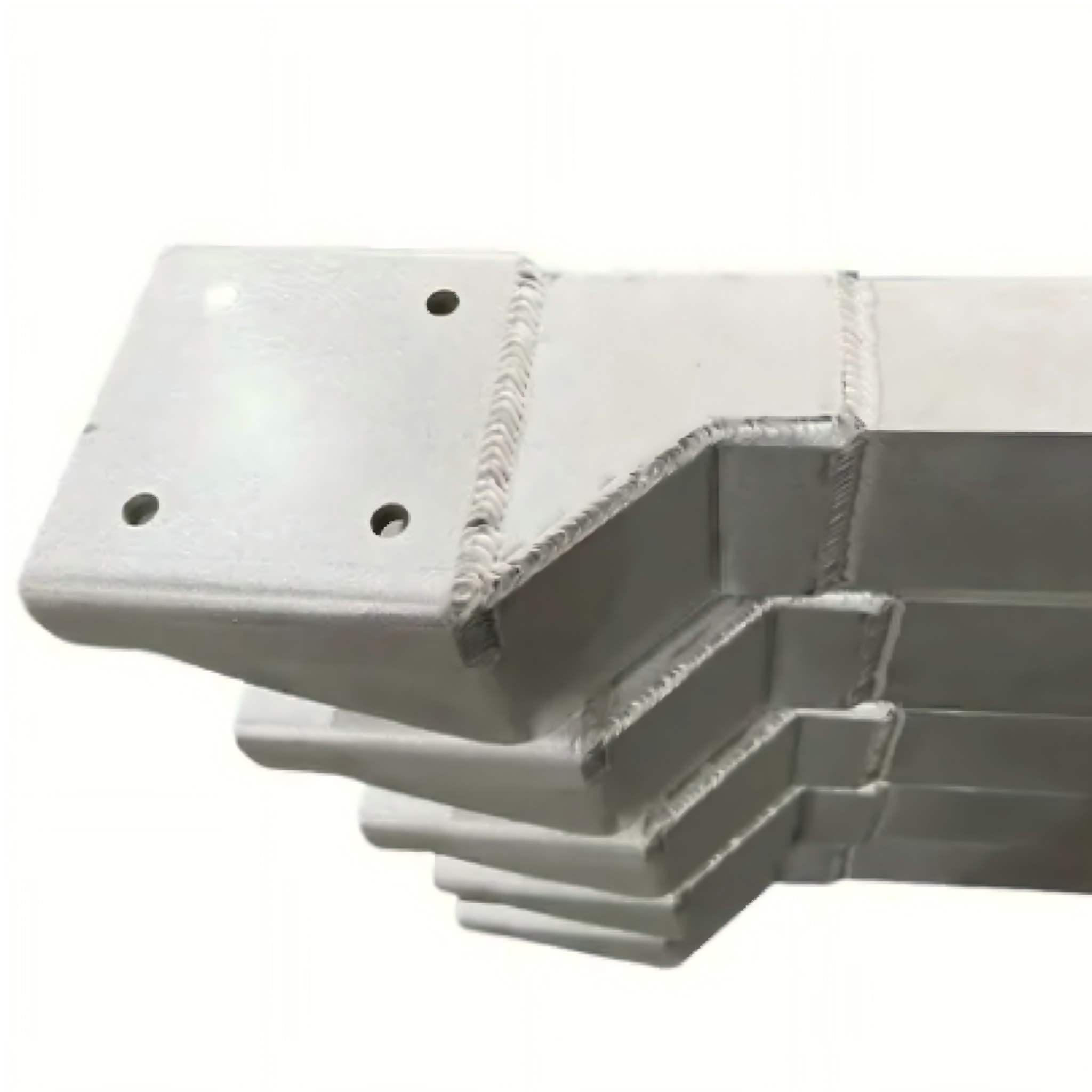
Espesores de material que soldamos:
Nuestro servicio de soldadura TIG para aluminio cubre una amplia gama de espesores.
040 a 0.063 pulgadas (calibre 18 a 16) – Gabinetes livianos, conductos y paneles decorativos. Soldamos de 35 a 60 amperios con varilla de aporte 4043 de 1/16 de pulgada. Las barras de respaldo de cobre evitan la perforación.
080 a 0.125 pulgadas (calibre 14 a 12) – Paneles automotrices, tanques de combustible pequeños y protectores de equipos. Los parámetros van de 60 a 90 amperios con varilla de aporte de 1/16 o 3/32 de pulgada.
160 a 0.250 pulgadas (calibre 8 a 1/4 de pulgada) – Componentes marinos, soportes estructurales y gabinetes pesados. Soldamos de 90 a 150 amperios con varilla de aporte de 3/32 de pulgada.
313 a 0.500 pulgadas (5/16 a 1/2 pulgada) – Marcos estructurales, placas de montaje y componentes de maquinaria. Técnica de múltiples pases con varilla de aporte de 1/8 de pulgada a 150 a 220 amperios.
500 a 1.000 pulgada – Placa pesada para equipos industriales. Usamos precalentamiento a 200°F y de 3 a 5 pases de soldadura dependiendo del espesor.
Para cada espesor, nuestro procedimiento de soldadura TIG para aluminio especifica parámetros exactos, aleación de aporte y secuencia de pases.
Aleaciones de aluminio que soldamos:
Diferentes aleaciones requieren diferentes metales de aporte y técnicas.
1100 – Aluminio comercialmente puro. Muy blando y maleable. Se utiliza para equipos químicos. Use varilla de aporte 1100 o 4043.
3003 – Aleación de uso general. Excelente maleabilidad. Común para tanques de combustible y conductos. Use varilla de aporte 4043.
5052 – Grado marino con excelente resistencia a la corrosión. Mayor resistencia que 3003. Use varilla de aporte 5356 para la mejor resistencia a la corrosión.
5083 – Aleación marina de alta resistencia. Se utiliza para cascos de barcos y tanques de combustible pesados. Use varilla de aporte 5356.
6061 – Aleación estructural más común. Buena resistencia y soldabilidad. Use 4043 para trabajos generales o 5356 para mayor resistencia al corte.
6063 – Aleación para extrusión. Se utiliza para tuberías, tubos y formas arquitectónicas. Use varilla de aporte 4043.
Nuestros técnicos de soldadura TIG para aluminio seleccionan el metal de aporte según la aleación base, el entorno de servicio y los requisitos de tratamiento posterior a la soldadura.
Tipos de juntas y preparación:
El diseño adecuado de la junta es esencial para soldaduras fuertes.
Juntas a tope – Dos piezas borde con borde. Para material de menos de 1/8 de pulgada, deje un espacio de la mitad del espesor. Use una barra de respaldo de cobre. Para material más grueso, agregue un bisel de 30 a 45 grados en cada lado.
Juntas en esquina – Dos piezas que se encuentran a 90 grados. Las soldaduras de filete exteriores son las más fáciles. Las soldaduras de esquina interiores requieren buen acceso del soplete.
Juntas traslapadas – Piezas superpuestas. Suelde solo desde el lado superior. La superposición mínima es 3 veces el espesor del material más delgado.
Juntas en T – Una pieza perpendicular a otra. Bisel la pieza vertical cuando el espesor supere 3/16 de pulgada.
Juntas de borde – Dos piezas planas una contra la otra. Suelde solo a lo largo del borde superior.
Para cada proyecto de soldadura TIG para aluminio, limpiamos el área de la junta con acetona seguido de un cepillo de acero inoxidable usado solo para aluminio. La limpieza se realiza inmediatamente antes de soldar porque el óxido se reforma en horas.
Métodos de control de distorsión:
El aluminio se expande aproximadamente el doble que el acero por grado de aumento de temperatura. Sin control, un panel de 36 pulgadas puede combarse 1/2 pulgada o más.
Nuestro proceso de soldadura TIG para aluminio incluye varias estrategias de control de distorsión.
Soldadura por retroceso – Suelde segmentos de 1 a 2 pulgadas en orden inverso a lo largo de la junta. Esto distribuye el calor de manera más uniforme que la soldadura continua.
Strongback Fixturing – Nuestras mesas de fijación tienen orificios ranurados que permiten la expansión lateral mientras evitan la distorsión fuera del plano.
Barras de enfriamiento – Bloques de cobre o aluminio colocados detrás de la zona de soldadura extraen el exceso de calor. Para costuras largas, usamos barras de enfriamiento enfriadas por agua.
TIG pulsado – Nuestras máquinas ofrecen capacidad de pulsación. Una corriente de fondo del 50 por ciento reduce la entrada total de calor hasta en un 40 por ciento.
Interpass Cooling – Entre pases de soldadura, enfriamos la pieza con aire comprimido hasta que alcanza la temperatura ambiente.
Weld Sequence Planning – Para ensamblajes grandes, soldamos lados opuestos alternativamente para equilibrar la contracción térmica.
Usando estos métodos, mantenemos la planicidad dentro de 1/32 de pulgada por pie para la mayoría de los trabajos de soldadura TIG para aluminio.
Preparación de la superficie y limpieza:
El óxido de aluminio es el enemigo de una buena soldadura. Nuestro proceso de limpieza lo elimina por completo.
Paso 1 – Desengrasado – Limpiamos la zona de soldadura con acetona. Esto elimina aceites, huellas dactilares y fluidos de corte.
Paso 2 – Abrasión mecánica – Un cepillo de acero inoxidable dedicado al aluminio elimina la capa de óxido. Cepillamos en una sola dirección para evitar incrustar contaminación.
Paso 3 – Limpieza final – Un paño limpio sin pelusa con acetona elimina cualquier partícula restante.
Paso 4 – Soldadura inmediata – Soldamos dentro de las 4 horas posteriores a la limpieza. Después de 4 horas, la capa de óxido comienza a reformarse.
También nos aseguramos de que las ruedas de esmeril, cepillos y otras herramientas nunca hayan tocado acero. La contaminación cruzada introduce partículas de hierro, que causan corrosión galvánica y contaminan el baño de soldadura.
Para la soldadura TIG de aluminio que requiere la más alta calidad, también ofrecemos limpieza química utilizando una solución cáustica suave seguida de un enjuague con ácido nítrico. Esto elimina todos los óxidos sin abrasión mecánica.
Quality Inspection Methods:
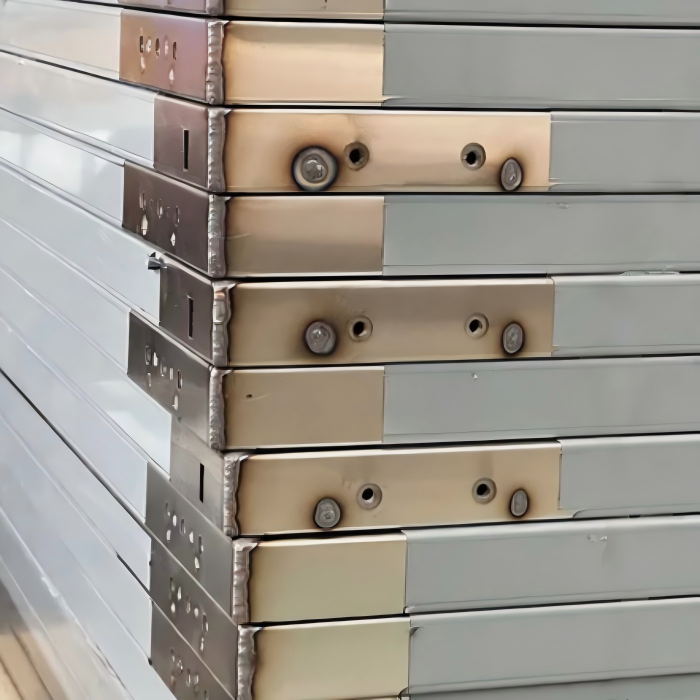
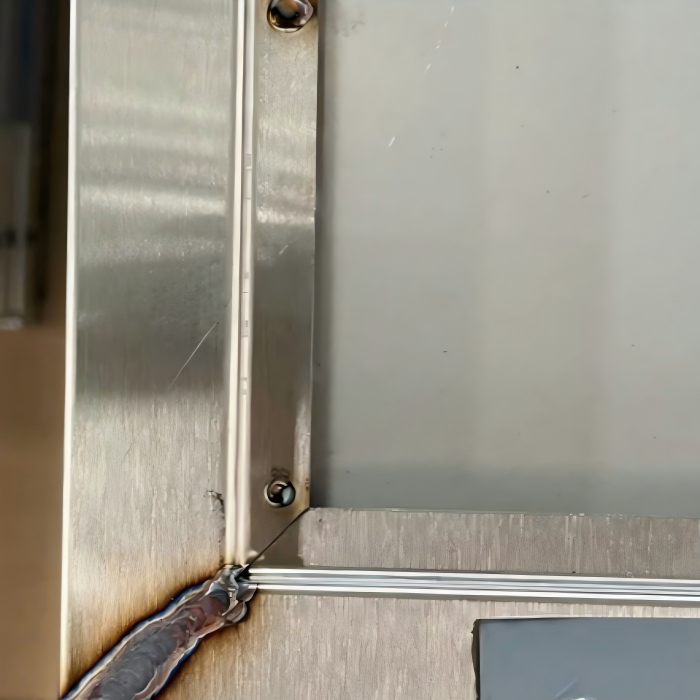
Cada proyecto de soldadura TIG de aluminio recibe una inspección adecuada a la aplicación.
Inspección visual – Todas las soldaduras se examinan en busca de grietas, porosidad, socavación, falta de fusión y apariencia superficial.
Dimensional Inspection –
Verificamos la planitud, escuadra, ubicaciones de agujeros y dimensiones generales según su dibujo.
Prueba de Penetrantes Líquidos – Revela grietas superficiales invisibles a simple vista. Se utiliza para aplicaciones estructurales y que contienen presión.
Prueba de Doblez – Se dobla una probeta de muestra 180 grados. No se permiten grietas. Se realiza en la primera pieza para nuevos procedimientos de soldadura.
Prueba Radiográfica – La inspección por rayos X revela falta de fusión interna y porosidad. Requerida para trabajos aeroespaciales y de recipientes a presión.
Prueba Ultrasónica – Para placas de más de 1/2 pulgada de espesor. Mide la fusión en la cara de la raíz y detecta defectos internos.
Pruebas de Fugas – Para tanques y recintos sellados, realizamos pruebas de inmersión en agua o detección de fugas con helio.
Conservamos todos los registros de inspección durante un mínimo de 7 años. Los informes de prueba certificados están disponibles por un costo adicional.
Usos habituales:
Nuestro servicio de soldadura TIG de aluminio respalda muchas industrias.
Automotriz – Paneles de carrocería personalizados, carcasas de baterías, protectores térmicos, tubos de admisión, tuberías de intercooler y componentes de autos de carrera.
Marina – Tanques de combustible, tanques de agua, placas de cubierta, tapas de escotillas, T-tops, arcos de radar y soportes personalizados. Los entornos de agua salada requieren relleno 5356.
Aeroespacial – Conductos, paneles de instrumentos, cubiertas de acceso y componentes prototipo. Nuestro trabajo cumple con los requisitos AS9100.
Arquitectónico – Barandillas de escaleras, paneles de muro cortina, accesorios de iluminación, señalización y pantallas decorativas. La apariencia estética es crítica.
Industrial – Industrial Protectores de máquinas, carcasas de equipos, componentes de transportadores y marcos estructurales.
Equipos Alimenticios – Alternativa de acero inoxidable para requisitos no magnéticos. Las soldaduras lisas evitan el crecimiento bacteriano.
Para cada industria, ajustamos los protocolos de limpieza, los parámetros de soldadura y los estándares de inspección en consecuencia.
Servicios Posteriores a la Soldadura:
La soldadura es a menudo solo una parte de la historia. Ofrecemos servicios adicionales para completar su proyecto.
Tratamiento Térmico Posterior a la Soldadura – Para estructuras de 6061, ofrecemos tratamiento térmico de solución T6 y envejecimiento artificial. Esto restaura la resistencia perdida en la zona afectada por el calor.
Enderezamiento – Para piezas con distorsión menor, utilizamos prensas hidráulicas y accesorios de enderezamiento para restaurar la planitud.
Acabado de Superficie – Granallado abrasivo, abrillantado químico, pulido mecánico y recubrimiento en polvo.
Recorte CNC – Mecanizado posterior a la soldadura de agujeros de montaje, bordes y ranuras de sellado.
Ensamblaje – Podemos instalar herrajes, fijar soportes y realizar trabajos de subensamblaje.
Nuestro servicio de soldadura TIG de aluminio incluye coordinación con estos procesos posteriores a la soldadura para garantizar un flujo de proyecto fluido.