
Saldatura Orbital Automatizzata Affidabile per Tubi in Titanio
Servizio di saldatura di tubi in titanio con saldatura TIG orbitale automatizzata che garantisce giunti precisi e senza contaminazioni, tempi di consegna rapidi e qualità costante.
Request a Quote
Enter the quantity you need and add to your quote list for pricing inquiries.
Product Details
Titanium Pipe Welding: Engineering Precision for High-Performance Piping Systems:
When industries demand a material that combines exceptional strength with remarkable corrosion resistance, titanium stands alone. From chemical plants handling aggressive acids to offshore platforms battling saltwater erosion, titanium pipe welding has become a critical capability for modern engineering. However, titanium is not forgiving. Its reactivity at elevated temperatures means that titanium pipe welding requires specialized knowledge, rigorous cleanliness protocols, and precise control over every variable. This article explores the essential techniques, common pitfalls, and quality standards that define successful titanium pipe welding.
.
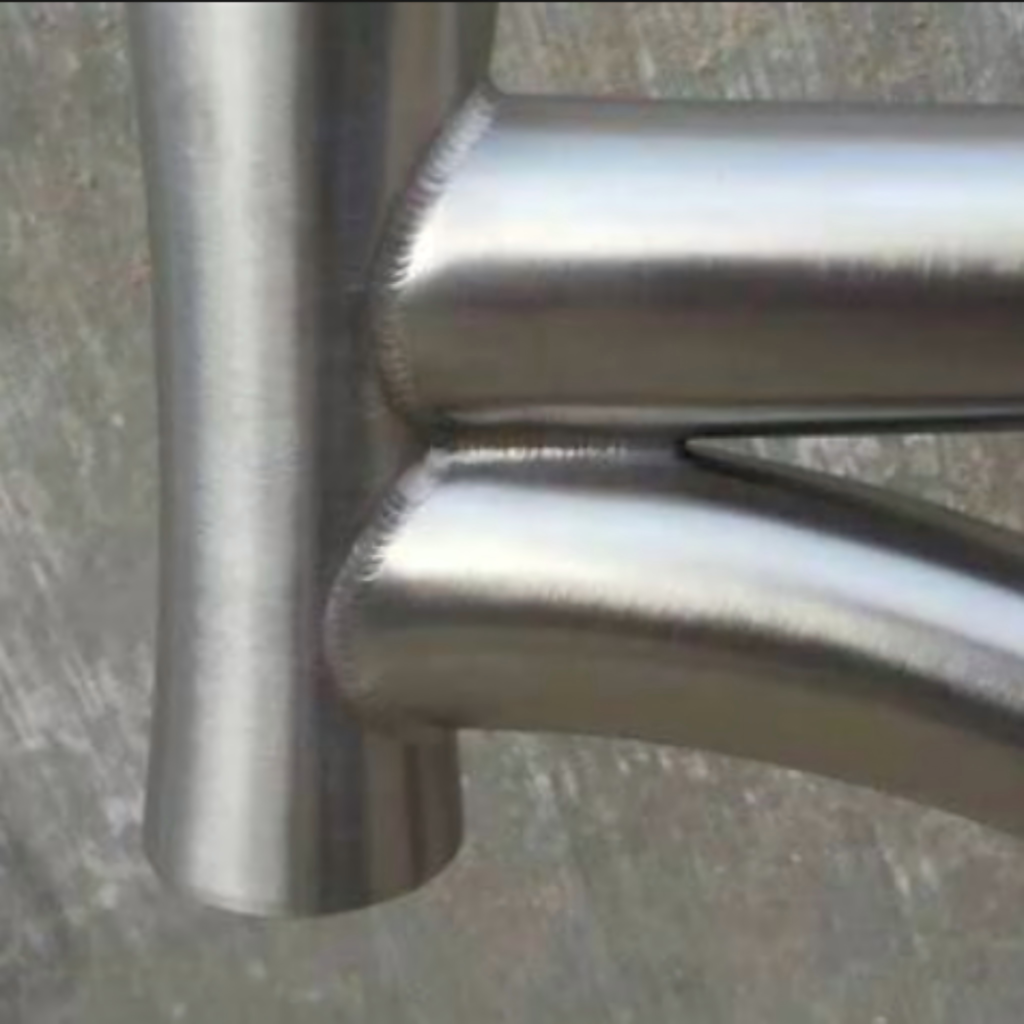
Why Titanium Pipe Welding Demands Special Attention?
Titanium is highly reactive with oxygen, nitrogen, and hydrogen when heated above approximately 400°C (750°F). During the process, the molten weld pool and the surrounding heat-affected zone must be completely shielded from atmospheric contamination. If the shielding gas fails or turbulence introduces air, the titanium absorbs these elements, resulting in embrittlement, cracking, and loss of corrosion resistance.
.
Unlike carbon steel or even stainless steel, titanium cannot be “cleaned up” after oxidation occurs. A discolored weld—yellow, blue, purple, or grey—is typically rejected because the metallurgical damage is permanent. This is why titanium pipe welding is often performed in controlled environments with extended gas pre-flow and post-flow, trailing shields, and meticulous back-purging of the pipe interior.
.
Critical Preparation Steps for Titanium Pipe Welding:
Preparation is the foundation of reliable titanium pipe welding. Every surface that will be heated must be free of oils, grease, dust, and oxide layers. Use stainless steel wire brushes designated exclusively for titanium—never used on other metals—or chemical cleaning agents that leave no residue. After cleaning, handle the pipe ends with clean, lint-free gloves.
.
Fit-up is equally important. For titanium pipe welding, the joint should have minimal gap, typically 0 to 0.5 mm (0 to 0.020 inches), with tight alignment to avoid burn-through or lack of fusion. The pipe ends must be cut square, and any burrs removed with non-contaminating tools.
.
Back-purging is non-negotiable in titanium pipe welding. The inside of the pipe must be filled with inert gas—usually argon at 99.999% purity—to protect the root side of the weld. Without proper purging, the inner surface will oxidize, creating a brittle layer that can initiate cracks under service stress. For larger diameter pipes, custom purging dams or dissolvable purge foams may be used to reduce gas volume while maintaining protection.
.
Best Welding Processes:
Several processes can be applied to titanium, but gas tungsten arc welding (GTAW), commonly known as TIG, remains the gold standard for titanium pipe welding. GTAW offers precise heat control, clean arc characteristics, and excellent shielding gas coverage. For thin-wall pipes or root passes, GTAW allows the welder to manage heat input carefully, preventing overheating.
.
In high-production or critical applications, orbital GTAW systems are increasingly used for titanium pipe welding. Orbital welding automates arc travel speed, tungsten positioning, and gas flow, eliminating human variability. This is especially valuable in pharmaceutical, semiconductor, and aerospace industries where every weld must be identical and fully documented.
.
Plasma arc welding (PAW) can also be applied to titanium pipe welding, particularly for thicker wall sections, as it provides deeper penetration with a narrower heat-affected zone. However, the equipment cost and setup complexity make PAW less common than GTAW for general titanium pipe welding.
.
When performing GTAW for titanium pipe welding, use a 2% ceriated or lanthanated tungsten electrode, ground to a sharp point with a slight land. Shielding gas should be pure argon or an argon-helium mix, delivered at 15 to 25 cubic feet per hour. A gas lens or trailing shield is highly recommended to extend coverage over the solidifying weld.
.

Common Defects in Titanium Pipe Welding and How to Avoid Them:
Even skilled welders encounter challenges in titanium pipe welding. The most frequent defects include:
Oxidation and discoloration: This is the most common failure. It results from insufficient shielding gas coverage, excessive heat input, or turbulent gas flow. Prevention includes checking all gas hoses for leaks, increasing post-flow time to at least 15 seconds, and ensuring the trailing shield fully covers the cooling weld zone.
.
Cracking: Typically caused by hydrogen embrittlement or residual stresses. Ensure that all cleaning solvents are fully evaporated before welding. Also, clamp the pipe securely to minimize movement during cooling.
.
Porosity: Often traced to contaminated base material, damp filler metal, or inadequate gas purity. Double-clean the pipe ends and store filler rods in a clean, dry container. Verify that the argon cylinder is certified for titanium pipe welding (99.999% purity or higher).
.
Incomplete penetration or underfill: Arises from low amperage, excessive travel speed, or poor fit-up. Adjust parameters to ensure full root fusion without burning through.
.
Visual inspection standards for titanium pipe welding are strict. A silver or light straw color is acceptable for some applications, but any blue, purple, or grey color means rejection in most aerospace and chemical specifications.
.
Industries That Rely on Titanium Pipe Welding:
The demand for high-quality titanium pipe welding spans multiple sectors:
Chemical processing: Titanium pipes handle chlorine, bromine, hydrochloric acid, and other aggressive media where stainless steel would fail within weeks.
Ingegneria marina: Piattaforme offshore, impianti di desalinizzazione e sistemi di bordo utilizzano la saldatura di tubi in titanio per il raffreddamento con acqua di mare e le linee antincendio grazie all'immunità del titanio alla corrosione da cloruri.
Aerospaziale: Le linee idrauliche e del carburante negli aeromobili beneficiano dell'elevato rapporto resistenza-peso del titanio, riducendo il peso complessivo della cellula.
Generazione di energia: Impianti geotermici e strutture nucleari specificano il titanio per le tubazioni di condensatori e scambiatori di calore grazie alla sua resistenza all'erosione e alla corrosione.
Medico e farmaceutico: I sistemi di acqua ad alta purezza e le linee di lavorazione sterili utilizzano spesso la saldatura di tubi in titanio per evitare la contaminazione metallica.
Perché scegliere uno specialista per la saldatura di tubi in titanio?
I laboratori di saldatura generici spesso mancano delle attrezzature dedicate e della formazione necessarie per una saldatura affidabile di tubi in titanio. I fornitori specializzati utilizzano aree di lavoro dedicate al solo titanio o camere bianche per prevenire la contaminazione incrociata da ferro o altri metalli. Investono inoltre in sistemi di controllo del gas di precisione, avviatori ad arco ad alta frequenza e teste di saldatura orbitale progettate specificamente per metalli reattivi.
Inoltre, uno specialista comprende l'importanza della tracciabilità. Ogni lavoro può essere ricondotto all'operatore, al numero di lotto del metallo d'apporto e alla bombola del gas. Questa responsabilità è essenziale per i settori regolamentati come l'aerospaziale e il farmaceutico.