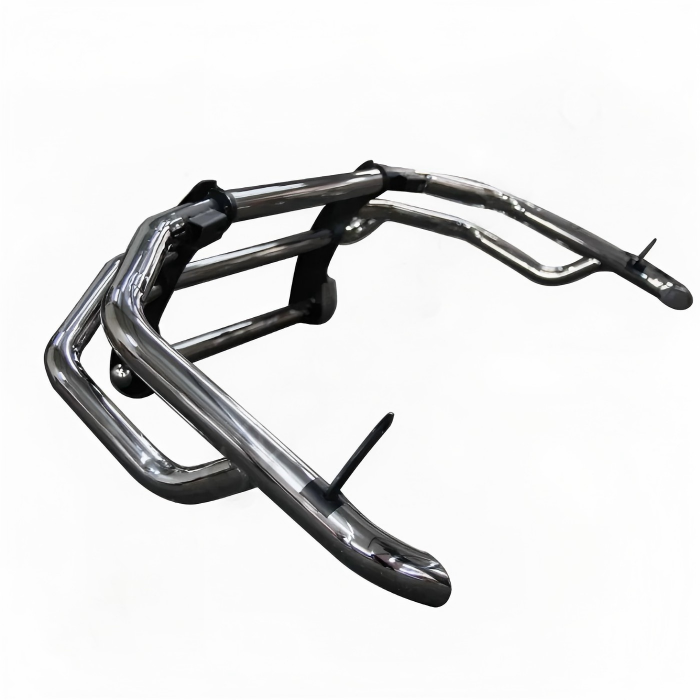
ブルバー トラック カスタム CNC チューブ ベンディング サービス フォー 4×4 ピックアップ パーツ
ブルバートラックは、CNCチューブベンディングと3インチODマンドレルベント鋼管を使用して設計され、4×4ピックアップに優れたフロントエンド保護を提供します。.
Request a Quote
Enter the quantity you need and add to your quote list for pricing inquiries.
Product Details
Why Tube Bending Defines Bull Bar Truck Quality?
The term bull bar truck encompasses a wide range of products — from simple grille guards to full-frontal replacement bumpers with brush guards. Regardless of design complexity, all bull bars contain tubular sections that form the main hoop, wing guards, and lower bash plates. How those tubes are bent directly affects four key performance indicators:
- Structural integrity
– A continuously bent tube has no weld seams at corners, eliminating weak points that could fail under high-stress impacts.
. - Weight optimization
– Precision bending allows engineers to use thinner walls where possible without sacrificing strength, reducing total vehicle front-end weight.
. - Aesthetic consistency
– Symmetrical bends and smooth radii create a professional, OEM-grade appearance that retail customers demand.
. - Installation accuracy
– Accurate bend angles ensure mounting points align perfectly with truck chassis rails, avoiding costly modifications during fitting.
.
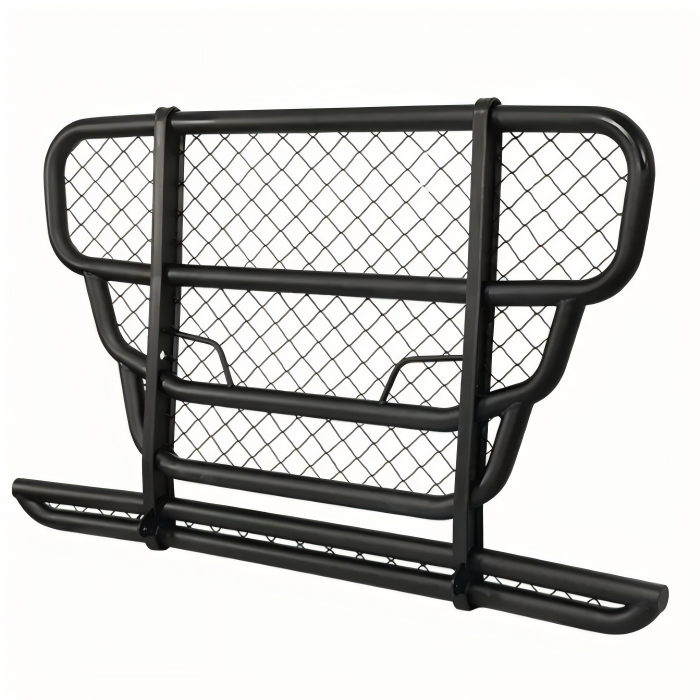
Common Tube Bending Methods for Bull Bar Truck Manufacturing:
Different production volumes and design complexities require different bending techniques. As a tube bending service provider, you should guide your bull bar truck clients toward the most suitable method.
.
Rotary Draw Bending:
Rotary draw bending is the industry standard for producing high-precision bends in steel and aluminum tubing. Using a fixed-radius die and pressure die, the process forms consistent bends while minimizing tube distortion. It is widely used for main hoops, center sections, and side protection bars with diameters ranging from 1.5 to 3 inches.
.
Mandrel Bending:
For tight-radius bends or thin-wall tubing, mandrel bending provides superior dimensional control. An internal mandrel supports the tube during forming, preventing wrinkles and excessive ovality. This technique is particularly beneficial for lightweight designs that require a clean surface finish prior to powder coating or chrome plating.
.
Roll Bending:
When large sweeping curves are required, roll bending offers an efficient solution. The process produces gradual radius transitions and is commonly used for wraparound brush guards and outer wing sections that follow vehicle body contours.
.
Induction Bending:
Heavy-duty commercial, industrial, and military applications often utilize induction bending for thick-wall tubing. Localized heating allows precise forming while minimizing springback, making it suitable for DOM tubing with wall thicknesses exceeding 0.25 inches.
.
Key Design Considerations for Bull Bar Truck Tube Bending:
To deliver a top-tier bull bar truck product, your engineering team must evaluate several parameters before beginning the bending process.
.
材料の選択:
Common materials include AISI 1020/1026 mild steel, DOM steel, and 6061 aluminum. Steel offers superior impact resistance, while aluminum reduces vehicle weight and improves corrosion resistance. Material selection should be based on load requirements, vehicle type, and performance objectives.
.
Bend Radius vs. Tube Diameter:
A widely accepted guideline is maintaining a centerline bend radius of at least three times the tube diameter (R ≥ 3D). However, compact designs may require tighter radii. With mandrel bending, radii as low as 1.5D can often be achieved without significant deformation.
.
Wall Thinning and Springback:
During bending, the outer wall stretches while the inner wall compresses. For components designed to withstand impact loading, wall thinning should generally remain below 15%. Springback must also be considered, with over-bending adjustments typically ranging from 1° to 3% depending on material properties and tube geometry.
.
Weld Preparation After Bending:
Although precision bending reduces the number of welded joints, fabrication still requires the attachment of mounting brackets, support plates, and auxiliary protection bars. Proper weld seam orientation should be planned before bending so that seam-welded tubing is positioned along a neutral axis, reducing the risk of cracking during forming operations.
.
Quality Control Metrics for Bull Bar Truck Tube Bending:
Customers who order bull bar truck components in bulk expect consistent quality across thousands of units. As a specialist tube bending workshop, you should implement these quality checks:
- Ovality measurement
– The cross-section of the bent tube should remain at least 90% circular. Acceptable ovality for structural bull bars is typically below 8%.
. - Angle tolerance
– Critical bend angles (e.g., 45° or 90°) must be within ±0.5° of specification.
. - Surface condition
– No wrinkles, kinks, or scoring on either the inner or outer bend radius.
. - Dimensional inspection
– Using a coordinate measuring machine (CMM) or custom go/no-go gauges to verify mounting hole locations and overall symmetry.
.
Why Outsource Bull Bar Truck Tube Bending to a Specialist?
Many aftermarket bull bar brands start with in-house press brakes and manual benders, but as order volumes grow, the limitations become obvious. Manual bending leads to inconsistent radii, slower cycle times, and higher scrap rates. By outsourcing bull bar truck tube bending to a dedicated service provider, manufacturers gain:
- Access to multi-axis CNC benders
– Programmable machines repeat complex bend sequences with no operator error.
. - Material cost savings
– Specialists often buy tube stock in larger quantities and can pass volume pricing to clients.
. - Faster prototyping
– Reduced tooling costs for one-off or small-batch test runs.
. - Secondary operations
– 多くのチューブベンディング工場では、完全なブルバー製造に必要なレーザー切断、ノッチング、端部成形サービスも提供しています。.
ケーススタディ: フルサイズピックアップトラック用ブルバーデザインの最適化
米国を拠点とするオフロードブランド向けの最近のプロジェクトを考えてみましょう。このプロジェクトでは、2,000ユニットの ブルバートラック キットをFord F-250 Super Dutyトラック用に必要としていました。初期設計では、2.5インチ外径、0.120インチ肉厚の軟鋼管を使用し、片側に4つの複合曲げがありました。元のメーカーは溶接によるコーナー製作を試みましたが、その結果、亀裂による12%の現場故障率が発生しました。.
専用のチューブベンディングサービスに切り替えた後:
- メインフープは、単一の連続マンドレルベンドチューブに変換されました。.
- 楕円率は15%から5%に低減されました。.
- 曲げ半径から4インチ以内に溶接部は配置されませんでした。.
- 完成したブルバーは40,000ポンドの圧壊試験に合格しました。.
- 生産スクラップ率は9%から2%未満に低下しました。.
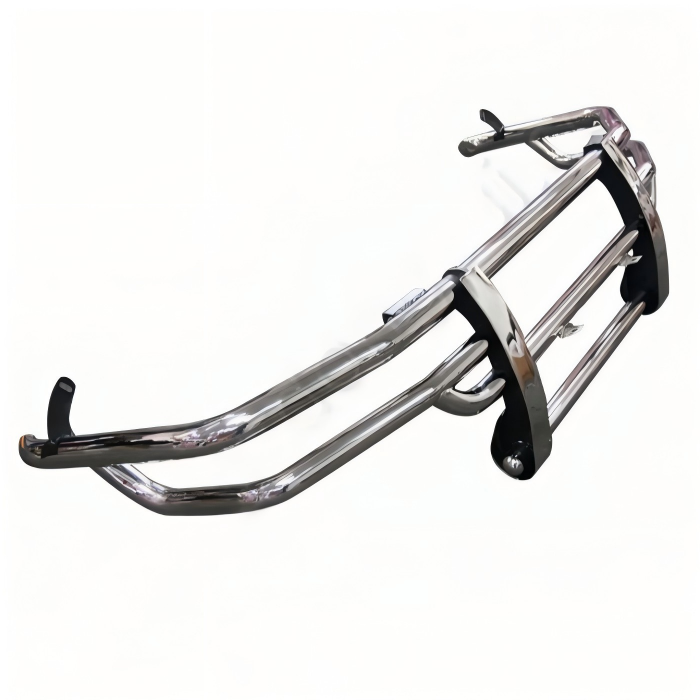
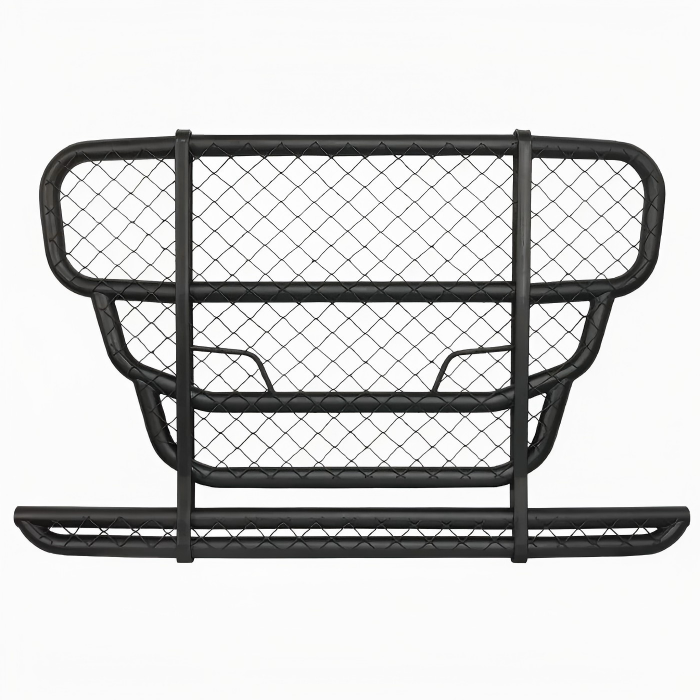
ブルバートラックライン向けチューブベンディングパートナーの選び方:
独立系ブランドで、次のブルバートラック製品用の曲げチューブを調達しようとしている場合、以下の基準で潜在的なベンディング工場を評価してください:
- 最大曲げ能力 – 3インチ外径、0.25インチ肉厚のチューブを扱えますか?
- CNCドキュメンテーション – 実際の測定値と公称値を比較した曲げデータシートを提供していますか?
- 材料認証 – トレーサビリティのためにミルテストレポート(MTR)が利用可能ですか?
- リードタイムの柔軟性 – 生産スケジュールを維持しながら、緊急のプロトタイピングに対応できますか?
- 仕上げの互換性 – 曲げチューブが粉体塗装オーブンや電気めっきラインに適合する必要があることを理解していますか?
将来のトレンド: ブルバートラックのデザインとチューブベンディング
電気トラック(例: Ford Lightning、Rivian R1T、Tesla Cybertruck)が市場シェアを拡大するにつれて、ブルバートラックのデザインは進化しています。これらの車両は、より低い空力抵抗目標と異なるシャシー構造を持っています。チューブベンディングサービスは、以下によって適応する必要があります:
- アルミニウム押出材やハイドロフォームチューブでの作業。.
- センサーマウント(フロントカメラ、レーダー、超音波センサー用)を曲げチューブアセンブリに統合。.
- 非重要ゾーンから材料を除去するシミュレーション駆動の曲げ設計による軽量化。.
これらのトレンドに先んじることで、チューブベンディングサービスはブルバーメーカーにとって単なるベンダーではなく、戦略的パートナーとして位置づけられます。.
よくある質問:
ブルバートラックのチューブベンディングプロジェクトには、どの肉厚をお勧めしますか?
ヘビーデューティ用途にはDOM鋼で0.120~0.250インチ、軽量設計には0.083~0.095インチをお勧めします。.
ブルバートラック注文用に3インチ外径のチューブを曲げられますか?
はい、当社のCNCマンドレルベンダーは、1~4インチ外径を8パーセント未満の楕円率で、しわなしで処理します。.
ブルバートラックのメインフープの最小曲げ半径は?
当社の最小中心線半径は、チューブ直径の1.5倍です。2インチ外径のチューブの場合、3インチ半径に相当します。.
ブルバートラックのチューブベンディングのプロトタイピングを提供していますか?
はい、本生産に拡大する前に、1~5ユニットの少量プロトタイピングを提供しています。.
ブルバートラック用の急な半径を曲げる際、チューブの潰れを防ぐにはどうすればよいですか?
曲げ加工中にチューブ壁を支えるために、精密研磨マンドレル、ワイパーダイ、プレッシャーダイを使用します。.