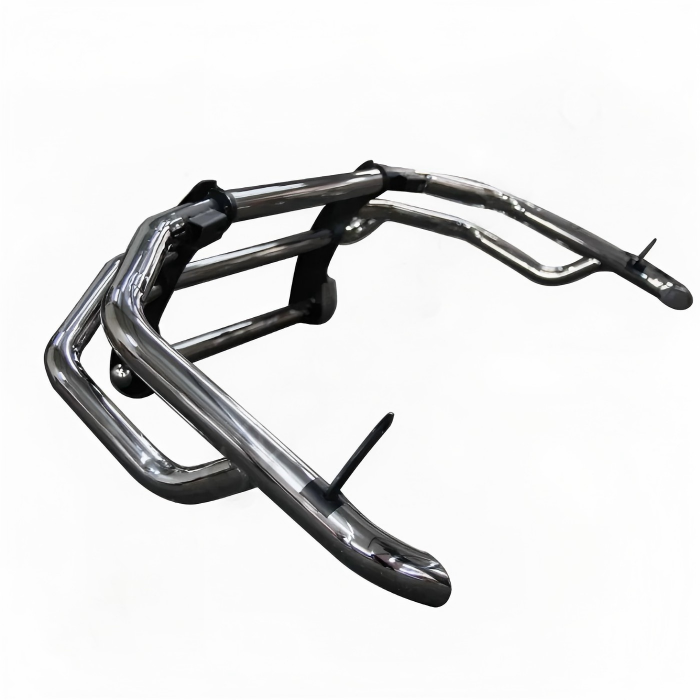
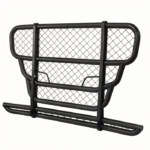
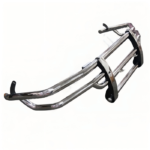
Bull Bar Truck Custom CNC Tube Bending Service For 4×4 Pickup Parts
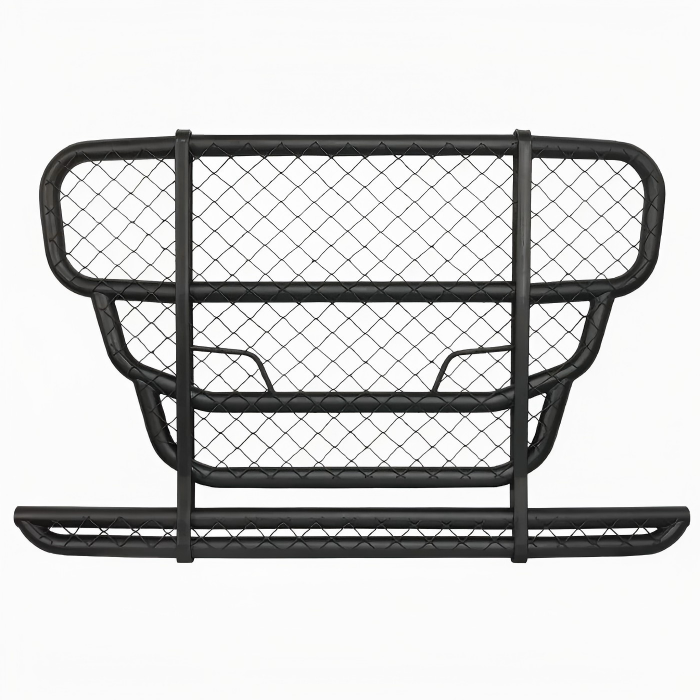
The Bull Bar Truck is engineered using CNC tube bending and 3 inch OD mandrel bent steel pipe to provide superior front end protection for 4×4 pickups.
Request a Quote
Enter the quantity you need and add to your quote list for pricing inquiries.
Product Details
Why Tube Bending Defines Bull Bar Truck Quality?
The term bull bar truck encompasses a wide range of products — from simple grille guards to full-frontal replacement bumpers with brush guards. Regardless of design complexity, all bull bars contain tubular sections that form the main hoop, wing guards, and lower bash plates. How those tubes are bent directly affects four key performance indicators:
- Structural integrity – A continuously bent tube has no weld seams at corners, eliminating weak points that could fail under high-stress impacts.
- Weight optimization – Precision bending allows engineers to use thinner walls where possible without sacrificing strength, reducing total vehicle front-end weight.
- Aesthetic consistency – Symmetrical bends and smooth radii create a professional, OEM-grade appearance that retail customers demand.
- Installation accuracy – Accurate bend angles ensure mounting points align perfectly with truck chassis rails, avoiding costly modifications during fitting.
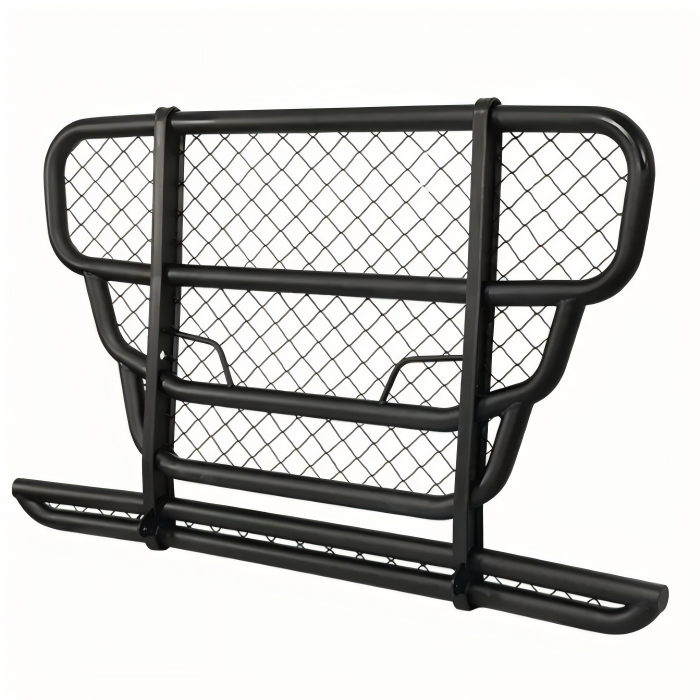
Common Tube Bending Methods for Bull Bar Truck Manufacturing:
Different production volumes and design complexities require different bending techniques. As a tube bending service provider, you should guide your bull bar truck clients toward the most suitable method.
Rotary Draw Bending:
Rotary draw bending is the industry standard for producing high-precision bends in steel and aluminum tubing. Using a fixed-radius die and pressure die, the process forms consistent bends while minimizing tube distortion. It is widely used for main hoops, center sections, and side protection bars with diameters ranging from 1.5 to 3 inches.
Mandrel Bending:
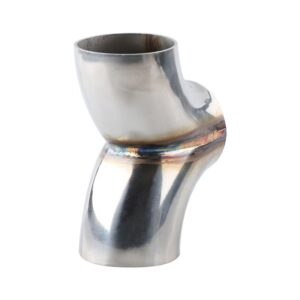
For tight-radius bends or thin-wall tubing, mandrel bending provides superior dimensional control. An internal mandrel supports the tube during forming, preventing wrinkles and excessive ovality. This technique is particularly beneficial for lightweight designs that require a clean surface finish prior to powder coating or chrome plating.
Roll Bending:
When large sweeping curves are required, roll bending offers an efficient solution. The process produces gradual radius transitions and is commonly used for wraparound brush guards and outer wing sections that follow vehicle body contours.
Induction Bending:
Heavy-duty commercial, industrial, and military applications often utilize induction bending for thick-wall tubing. Localized heating allows precise forming while minimizing springback, making it suitable for DOM tubing with wall thicknesses exceeding 0.25 inches.
Key Design Considerations for Bull Bar Truck Tube Bending:
To deliver a top-tier bull bar truck product, your engineering team must evaluate several parameters before beginning the bending process.
Material Selection:
Common materials include AISI 1020/1026 mild steel, DOM steel, and 6061 aluminum. Steel offers superior impact resistance, while aluminum reduces vehicle weight and improves corrosion resistance. Material selection should be based on load requirements, vehicle type, and performance objectives.
Bend Radius vs. Tube Diameter:
A widely accepted guideline is maintaining a centerline bend radius of at least three times the tube diameter (R ≥ 3D). However, compact designs may require tighter radii. With mandrel bending, radii as low as 1.5D can often be achieved without significant deformation.
Wall Thinning and Springback:
During bending, the outer wall stretches while the inner wall compresses. For components designed to withstand impact loading, wall thinning should generally remain below 15%. Springback must also be considered, with over-bending adjustments typically ranging from 1° to 3% depending on material properties and tube geometry.
Weld Preparation After Bending:
Although precision bending reduces the number of welded joints, fabrication still requires the attachment of mounting brackets, support plates, and auxiliary protection bars. Proper weld seam orientation should be planned before bending so that seam-welded tubing is positioned along a neutral axis, reducing the risk of cracking during forming operations.
Quality Control Metrics for Bull Bar Truck Tube Bending:
Customers who order bull bar truck components in bulk expect consistent quality across thousands of units. As a specialist tube bending workshop, you should implement these quality checks:
- Ovality measurement – The cross-section of the bent tube should remain at least 90% circular. Acceptable ovality for structural bull bars is typically below 8%.
- Angle tolerance – Critical bend angles (e.g., 45° or 90°) must be within ±0.5° of specification.
- Surface condition – No wrinkles, kinks, or scoring on either the inner or outer bend radius.
- Dimensional inspection – Using a coordinate measuring machine (CMM) or custom go/no-go gauges to verify mounting hole locations and overall symmetry.
Why Outsource Bull Bar Truck Tube Bending to a Specialist?
Many aftermarket bull bar brands start with in-house press brakes and manual benders, but as order volumes grow, the limitations become obvious. Manual bending leads to inconsistent radii, slower cycle times, and higher scrap rates. By outsourcing bull bar truck tube bending to a dedicated service provider, manufacturers gain:
- Access to multi-axis CNC benders – Programmable machines repeat complex bend sequences with no operator error.
- Material cost savings – Specialists often buy tube stock in larger quantities and can pass volume pricing to clients.
- Faster prototyping – Reduced tooling costs for one-off or small-batch test runs.
- Secondary operations – Many tube bending shops also offer laser cutting, notching, and end-forming services needed for complete bull bar fabrication.
Case Study: Optimizing a Full-Size Pickup Bull Bar Design
Consider a recent project for a US-based off-road brand that required 2,000 units of a bull bar truck kit for Ford F-250 Super Duty trucks. The initial design used a 2.5-inch OD, 0.120-inch wall mild steel tube with four compound bends per side. The original manufacturer attempted weld-fabricated corners, resulting in a 12% field failure rate due to cracking.
After switching to a dedicated tube bending service:
- The main hoop was converted to a single continuous mandrel-bent tube.
- Ovality was reduced from 15% to 5%.
- No welds were placed within 4 inches of any bend radius.
- The finished bull bar passed a 40,000-pound crush test.
- Production scrap dropped from 9% to under 2%.
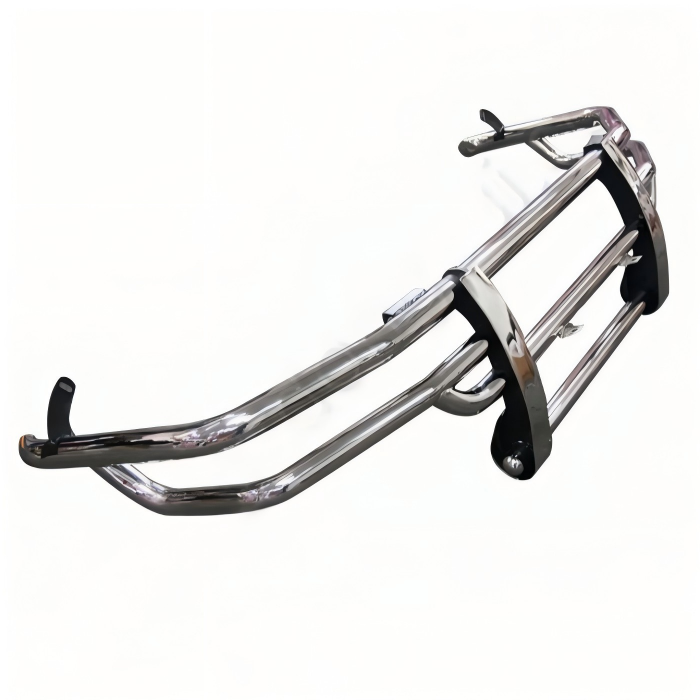
How to Select a Tube Bending Partner for Your Bull Bar Truck Line:
If you are an independent brand looking to source bent tubing for your next bull bar truck product, evaluate potential bending shops on these criteria:
- Maximum bending capacity – Can they handle 3-inch OD tubes with 0.25-inch walls?
- CNC documentation – Do they provide bend data sheets with actual vs. nominal measurements?
- Material certifications – Are mill test reports (MTRs) available for traceability?
- Lead time flexibility – Can they accommodate rush prototyping while maintaining production schedules?
- Finishing compatibility – Do they understand that bent tubes may need to fit into powder coating ovens or electroplating lines?
Future Trends: Bull Bar Truck Design and Tube Bending
As electric trucks (e.g., Ford Lightning, Rivian R1T, Tesla Cybertruck) gain market share, bull bar truck designs are evolving. These vehicles have lower aerodynamic drag targets and different chassis structures. Tube bending services must adapt by:
- Working with aluminum extrusions and hydroformed tubes.
- Integrating sensor mounts (for front cameras, radar, ultrasonic sensors) into bent tube assemblies.
- Reducing weight through simulation-driven bend designs that remove material from non-critical zones.
Staying ahead of these trends positions your tube bending service as a strategic partner — not just a vendor — to bull bar manufacturers.
Frequently Asked Questions:
1. What wall thickness do you recommend for a bull bar truck tube bending project?
We recommend 0.120 to 0.250 inches for DOM steel on heavy duty applications, and 0.083 to 0.095 inches for light duty designs.
2. Can you bend a 3 inch OD tube for my bull bar truck order?
Yes, our CNC mandrel bender handles 1 to 4 inches OD with less than 8 percent ovality and no wrinkling.
3. What is the minimum bend radius for a bull bar truck main hoop?
Our minimum centerline radius is 1.5 times the tube diameter. For a 2 inch OD tube, that equals a 3 inch radius.
4. Do you offer prototyping for bull bar truck tube bending?
Yes, we offer low volume prototyping from 1 to 5 units before scaling to full production.
5. How do you prevent tube collapse when bending tight radii for a bull bar truck?
We use a precision ground mandrel, wiper die, and pressure die to support the tube wall during bending.