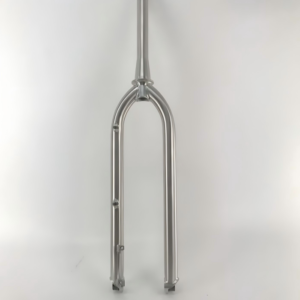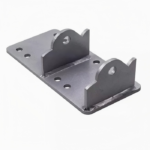
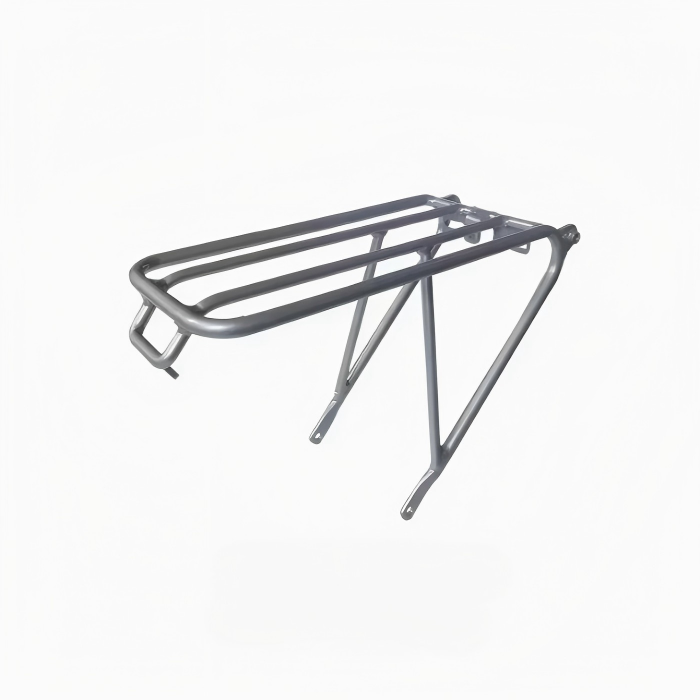

Услуга сварки заднего титанового багажника для велосипеда, в 3 раза прочнее стали, с прецизионной TIG-сваркой титановой конструкции
Этот задний титановый багажник для велосипеда изготовлен на заказ с использованием технологии прецизионной TIG-сварки для высокопроизводительных велосипедов. Благодаря легкой титановой конструкции он обеспечивает отличную прочность, устойчивость к коррозии и надежную грузоподъемность для велопрогулок на открытом воздухе.
Request a Quote
Enter the quantity you need and add to your quote list for pricing inquiries.
Product Details
Titanium Bike Rack Rear Welding Service 4 Key Features for Ultralight Rustproof Rear Racks Ideal for touring and commuting.
.
Why Traditional Rear Bike Racks Fall Short?
Most rear bike racks are made from aluminum or steel. Aluminum racks are lightweight but prone to fatigue cracking. After a few years of carrying loads over rough roads, these racks develop cracks at weld joints. Steel racks are strong but heavy. A steel rear rack can add three to five pounds to a bicycle, affecting climbing performance and handling.
.
Both materials rust or corrode over time. Steel racks require paint or powder coating, which chips and allows rust to form. Aluminum does not rust but does corrode in salty or coastal environments. A titanium rear rack solves all these problems. This material combines the strength of steel with the weight of aluminum, and it never corrodes.
.
The Titanium Advantage for Rear Bike Racks:
Titanium offers four distinct advantages for rear rack applications.
.
First, weight.
. A titanium rear rack typically weighs 40 to 60 percent less than a steel rack of equal strength. For a touring or commuting cyclist, saving two to three pounds at the rear of the bike improves acceleration and handling.
.
Second, strength.
. Titanium has an exceptional strength-to-weight ratio. A properly designed titanium rack can carry loads exceeding 50 pounds without permanent deflection. The material also has excellent fatigue resistance, meaning it will not crack after thousands of miles of vibration.
.
Third, corrosion resistance.
. Titanium forms a stable oxide layer that protects against all forms of corrosion. A titanium rack will never rust, even after years of exposure to rain, road salt, or coastal air. No paint, powder coating, or anodizing is required.
.
Fourth, durability.
. A titanium rack, when welded correctly, will outlast the bicycle. Many cyclists consider titanium racks to be lifetime purchases.
.
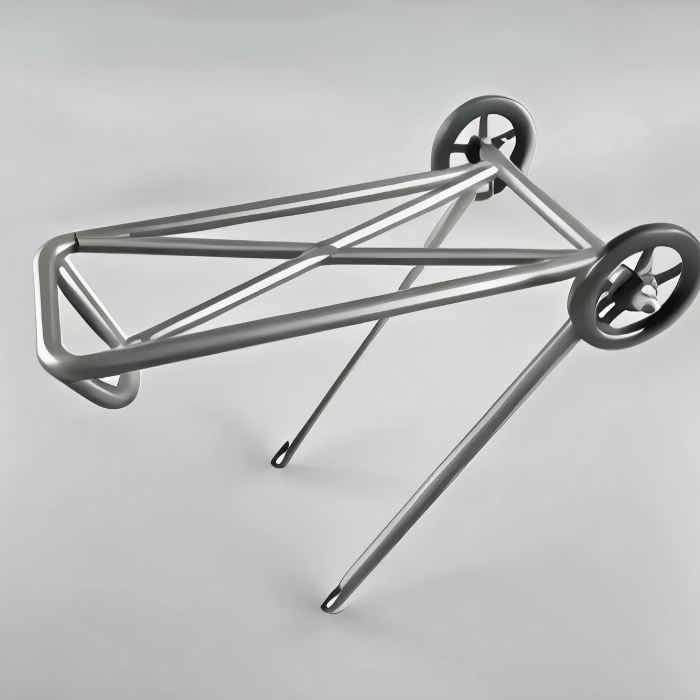
Design Features of a Quality Titanium Bike Rack Rear:
A well-designed titanium bike rack rear includes several important features. The platform should be wide enough to accept standard panniers and trunk bags. Typical width ranges from 120mm to 160mm. The length should accommodate various trunk bag sizes while clearing the rear wheel.
.
Mounting points are critical. A titanium bike rack rear must attach securely to the bicycle frame. Common mounting locations include seat stay braze-ons, seatpost clamps, and dropout eyelets. The rack should include multiple mounting options to fit different frame geometries.
.
The struts or support arms transfer load from the platform to the frame. For a titanium bike rack rear, these struts should be made from the same titanium alloy as the main structure. Strut diameter typically ranges from 8mm to 12mm depending on load rating.
.
Welded joints are the most vulnerable points on any rack. On a titanium bike rack rear, every weld must be fully penetrated and properly shielded to prevent oxidation. Poor welds will fail under load.
.
Challenges of Welding a Titanium Bike Rack Rear:
Titanium presents serious fabrication challenges. Titanium is highly reactive when exposed to oxygen, nitrogen, and hydrogen at elevated temperatures. During welding of a titanium bike rack rear, the weld zone must be completely shielded from atmospheric contamination. If shielding fails, the titanium absorbs these elements, resulting in embrittlement and cracking.
.
Rear racks involve thin-walled tubing, typically 0.8mm to 1.5mm thick. Thin titanium requires precise heat control to avoid burn-through. Additionally, a titanium bike rack rear has multiple joints: platform to struts, struts to mounting tabs, and mounting tabs to the main structure. Each weld must be sound to withstand vibration and load cycling.
.
For these reasons, a titanium bike rack rear should only be fabricated by welders experienced with reactive metals. General welding shops rarely have the equipment or training for titanium.
.
Critical Steps for Welding a Titanium Bike Rack Rear:
Successful fabrication of a titanium bike rack rear begins long before the arc is struck:
Material selection: Grade 2 commercially pure titanium or Grade 9 (3Al-2.5V) titanium is commonly used for a titanium bike rack rear. Grade 2 offers excellent formability and weldability. Grade 9 provides higher strength while maintaining good ductility.
.
Tube preparation: Titanium tubes must be cut square, deburred, and cleaned inside and out. Use acetone or isopropyl alcohol followed by a dedicated stainless steel brush used only on titanium. Never use tools that have touched steel.
.
Fit-up: For a titanium bike rack rear, joint gaps should not exceed 0.5mm. Use fixtures to maintain alignment. Poor fit-up leads to burn-through or incomplete fusion.
.
Back-purging: For critical joints, the inside of tubes should be purged with pure argon at 99.999 percent purity. Without back-purging, the root side of the weld oxidizes, creating a brittle layer that cracks under load.
.
Torch setup: Gas tungsten arc welding (GTAW/TIG) is the only process recommended for a titanium bike rack rear. Use a 2 percent ceriated or lanthanated tungsten electrode. A gas lens improves coverage. Set post-flow to at least 15 seconds.
.
Common Defects in Titanium Bike Rack Rear Welding:
Even experienced welders may encounter defects when fabricating a titanium bike rack rear:
Oxidation and discoloration: Silver or light straw welds indicate proper shielding. Blue, purple, or grey means contamination requiring weld rejection. A titanium bike rack rear with oxidized welds will fail under load.
.
Burn-through: Excessive heat creates holes in thin tubing. Reduce amperage or increase travel speed. Burn-through typically means scrapping the part.
.
Incomplete penetration: The weld does not fully bond through the tube wall. This results in weak joints. Adjust parameters and refit the joint.
.
Cracking: Hydrogen embrittlement or rapid cooling causes cracks. Ensure thorough cleaning and adequate post-flow.
.
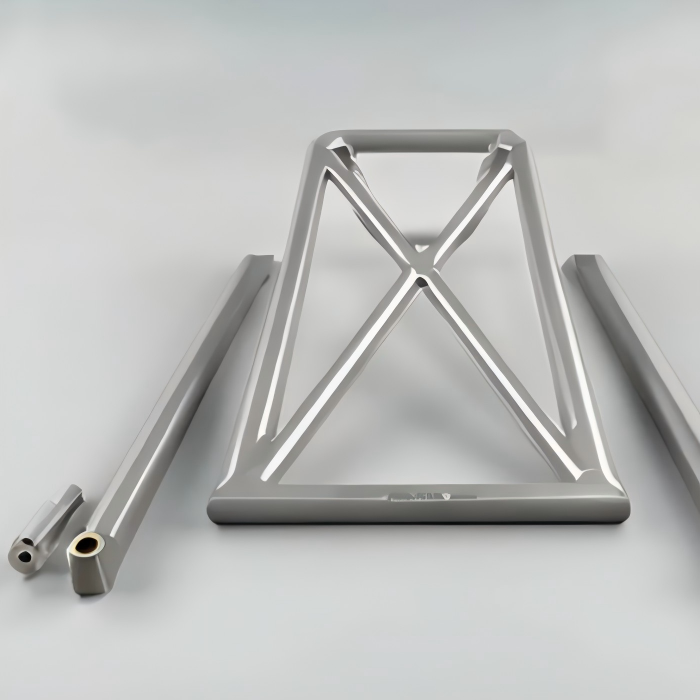
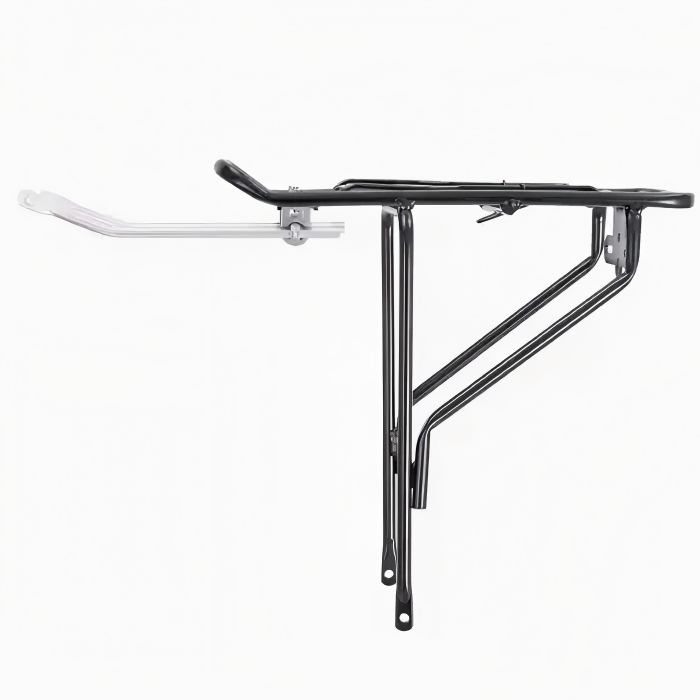
Применения и рыночный спрос:
Спрос на премиальный задний багажник из титана для велосипеда охватывает несколько рынков. Туристическим велосипедистам нужны багажники, способные выдерживать тяжелые грузы на протяжении тысяч миль без отказов. Городским велосипедистам нужны легкие багажники, которые не ржавеют от ежедневного воздействия погоды. Велосипедистам-бикепакерам и любителям приключений требуются багажники, выдерживающие сложный рельеф.
Владельцы электровелосипедов также выигрывают от использования заднего багажника из титана. Электровелосипеды изначально тяжелые, поэтому экономия веса на багажнике помогает. Коррозионная стойкость также ценна для электровелосипедов, используемых во влажных условиях.
Заключение:
Задний багажник из титана представляет собой высшее выражение утилитарности велосипеда. При правильной сварке опытными профессионалами он обеспечивает непревзойденную экономию веса, постоянную коррозионную стойкость и десятилетия надежной службы. Для велосипедистов, требующих лучшего, титан является очевидным выбором.
Часто задаваемые вопросы о заднем багажнике из титана для велосипеда:
Вопрос 1: Стоит ли задний багажник из титана дополнительных затрат по сравнению с алюминием или сталью?
Ответ: Да, для серьезных велосипедистов. Задний багажник из титана служит всю жизнь, никогда не ржавеет и весит на 40–60 процентов меньше стали, будучи при этом прочнее алюминия.
Вопрос 2: Какой вес может безопасно выдержать задний багажник из титана?
Ответ: Правильно сваренный задний багажник из титана может безопасно выдерживать от 50 до 70 фунтов в зависимости от конструкции и конфигурации крепления.
Вопрос 3: Подойдет ли задний багажник из титана для любого велосипеда?
Ответ: Большинство задних багажников из титана рассчитаны на стандартные точки крепления. Для рам с нестандартной геометрией доступно изготовление на заказ.
Вопрос 4: Требует ли задний багажник из титана специального обслуживания?
Ответ: Обслуживание не требуется. Титан никогда не ржавеет и не подвергается коррозии, поэтому покраска или покрытие никогда не нужны.
Вопрос 5: Можно ли отремонтировать поврежденный задний багажник из титана?
Ответ: Да, но только сварщиком, имеющим опыт работы с тонкостенными титановыми трубками. Обычные сварочные мастерские не могут выполнять ремонт титана.