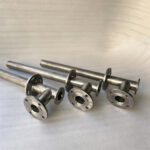
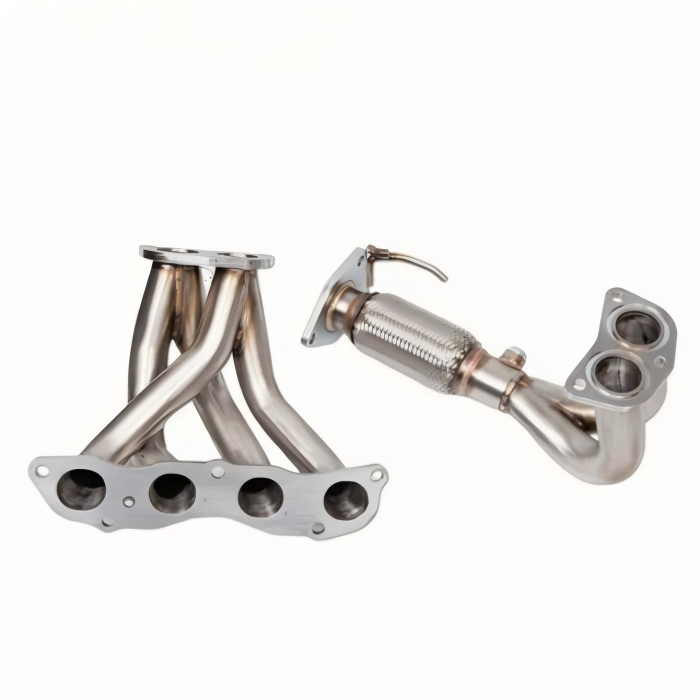
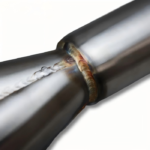
Pipe Exhaust Manifold Welding Service 3 Inch 304 Stainless with Ultimate Heat Resistance for Turbo Engines

Pipe Exhaust Manifold Welding Service 3 Inch 304 Stainless with Ultimate Heat Resistance for Turbo Engines

Request a Quote

Enter the quantity you need and add to your quote list for pricing inquiries.

Product Details

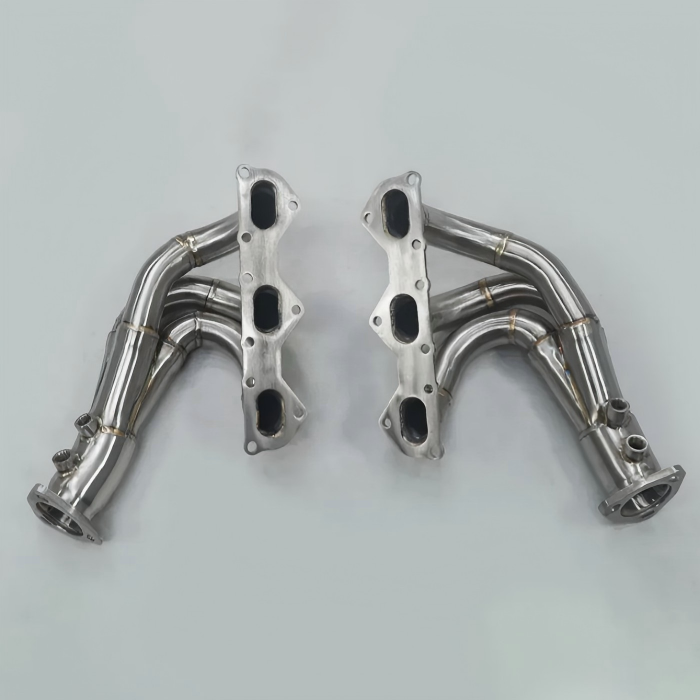
Professional stainless steel pipe exhaust manifold welding service for 3 4 6 8 cylinder turbo engines. Custom equal length and twin scroll designs with full penetration TIG welds.

Why Professional Pipe Exhaust Manifold Welding Defines Engine Performance?

Many exhaust system failures occur not at the turbocharger or downpipe but at the manifold that connects the engine to the turbo. A poorly fabricated manifold creates exhaust leaks, uneven cylinder flow, or cracking under heat. These defects are often invisible until the engine is under full load. Over time, thermal cycling causes cracks to propagate until the manifold fails completely.

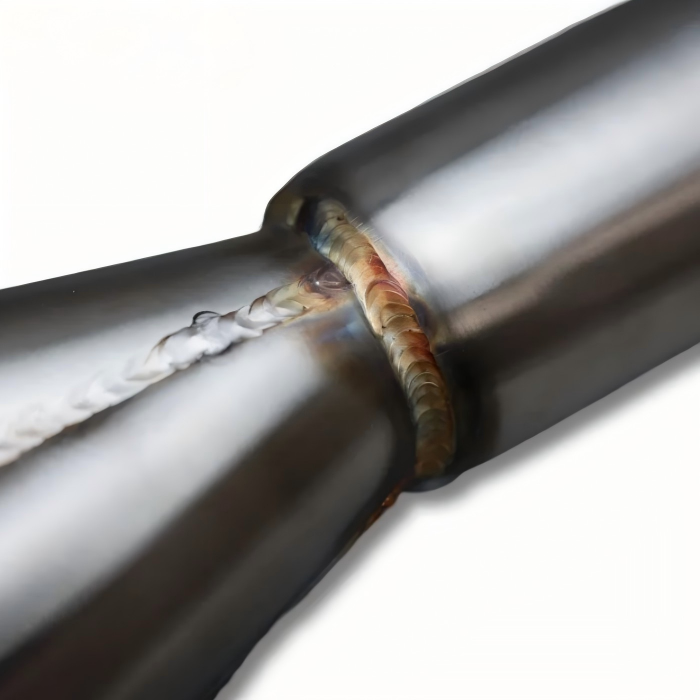
Properly manufactured components equalize exhaust flow from each cylinder while withstanding extreme temperatures. The stainless steel base material resists corrosion from exhaust gases and thermal fatigue. Our welding process ensures each primary tube joint achieves full penetration, preventing the hidden weaknesses that plague lower quality manifolds. Additionally, this component is critical for turbo response as any leak before the turbo reduces boost pressure.

Our shop has invested in precision mandrel bending equipment, CNC fixturing, and multiple TIG welding stations to produce each assembly with consistent quality. Dedicated tooling ensures correct primary tube length and collector alignment for every unit. For production runs of 20 pieces or more, we recommend robotic TIG welding. Every pipe exhaust manifold project we undertake begins with a thorough review of engine cylinder count, horsepower goals, and turbo flange type.

What Is a Pipe Exhaust Manifold?

This component is a fabricated stainless steel assembly that collects exhaust gases from each engine cylinder and directs them to the turbocharger inlet. These manifolds consist of individual primary tubes welded to cylinder head flanges and a collector that mounts to the turbo. Stainless steel contains at least 10.5 percent chromium, which forms a passive oxide layer on the surface.

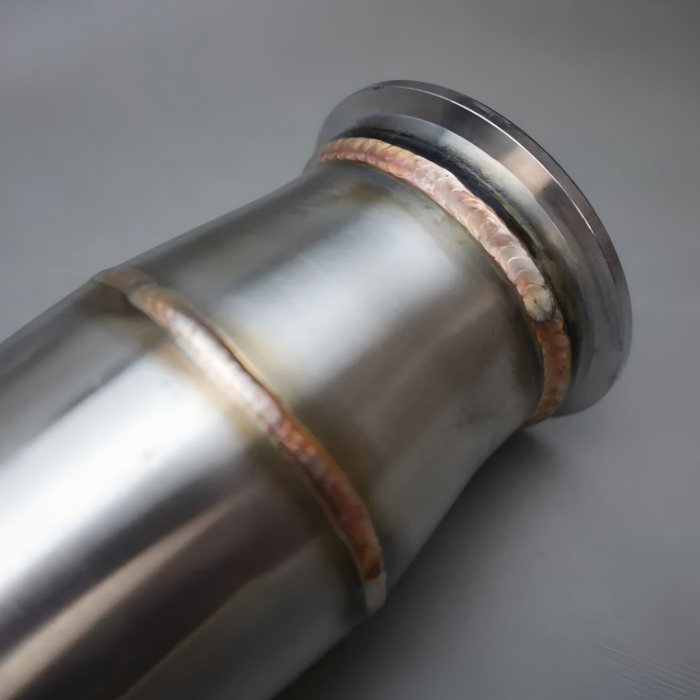
Our welding technique uses shielding gas—pure argon—to protect the molten weld pool from atmospheric oxygen. This allows the chromium to re form its protective layer as the weld cools. Properly welded pipe exhaust manifold will resist rust at the weld line as effectively as the base metal. We also control heat input carefully because too much heat causes chromium carbide precipitation, a condition known as weld decay. By using low heat input and proper technique with back purging, we prevent this problem on every project.

pipe-exhaust-manifold

Common Pipe Exhaust Manifold Configurations:

We produce several configurations of this component to suit different engine types and performance goals.

Equal Length Manifold – For Optimal Flow:

All primary tubes are cut to the same length before merging at the collector. This pipe exhaust manifold design ensures each cylinder’s exhaust pulse arrives at the turbo at evenly spaced intervals. Maximizes turbo response and reduces exhaust drone.

Log Style Manifold – For Compact Spaces:

A simple single pipe with individual cylinder runners welded into it. This pipe exhaust manifold configuration is compact and cost effective. Used in tight engine bays and entry level turbo kits.

Twin Scroll Manifold – For Divided Turbo Inlet:

Primary tubes are grouped into two separate passages that feed a divided turbo inlet. This pipe exhaust manifold design keeps exhaust pulses separated for improved boost response. Recommended for high performance applications above 500 horsepower.

Merge Collector Manifold – For Maximum Flow:

Primary tubes merge into a carefully designed tapered collector. This pipe exhaust manifold configuration minimizes turbulence at the turbo inlet. Used in professional racing and competition engines.

For each order, we document the configuration and dimensions.

Material Selection for Pipe Exhaust Manifold;

Not all stainless steel performs equally in exhaust manifold environments. We stock three primary alloys.

304 Stainless Steel – The standard choice for most turbo manifold applications. Good corrosion resistance and excellent weldability. Used for pipe exhaust manifold in street cars and mild performance builds. Handles continuous operation at 1200°F.

316 Stainless Steel – For marine and high corrosion environments. Molybdenum addition improves high temperature strength and pitting resistance. A 316 pipe exhaust manifold is recommended for boats and coastal vehicles.

321 Stainless Steel – For extreme heat racing applications. Titanium stabilization prevents carbide precipitation at sustained high temperatures. Used for pipe exhaust manifold in competition racing and high boost applications above 25 PSI.

We do not recommend mild steel for pipe exhaust manifold applications as it rusts rapidly and cracks under thermal cycling.

Turbo Flange Types:

T3 Flange – Standard Small-Frame Turbo:

A rectangular four-bolt flange designed for Garrett T3 and many other small-frame turbochargers. This configuration is widely used on four-cylinder engines and moderate-performance applications.

T4 Flange – Large-Frame Turbo:

Featuring a larger four-bolt mounting pattern, the T4 flange is compatible with Garrett T4 and similar large-frame turbochargers. It is commonly selected for high-horsepower six-cylinder and V8 engine builds.

V-Band Flange – Quick-Release Connection:

A circular flange secured with a V-band clamp provides a strong, leak-resistant seal while simplifying turbocharger installation and removal. This style is particularly popular in motorsport and high-performance applications.

T25 Flange – Compact Turbo Mounting:

Designed for GT25 and other similarly sized turbochargers, the T25 flange offers a compact mounting solution for smaller displacement engines where space is limited.

Primary Tube Bending and Fabrication:

We use mandrel bending to maintain full pipe diameter through every curve in the pipe exhaust manifold.

Mandrel Bending – A bending process that uses an internal mandrel to prevent pipe collapse. This pipe exhaust manifold method maintains full diameter through the bend for maximum flow. Required for performance applications.

Segmented Welded Bends – Individual curved segments welded together. This pipe exhaust manifold method allows tight radius bends that cannot be mandrel bent. Used for complex custom shapes.

Stainless Schedule 10 Weld Els – Pre formed 90 and 45 degree elbows. This pipe exhaust manifold method is consistent and strong. Common in high end custom manifolds.

Welding Process for Pipe Exhaust Manifold:

We use TIG welding exclusively for all manifold fabrication due to the need for precision and back purging.

GTAW for All Primary Tube Joints:

Manual TIG welding provides exceptional control over the weld pool and creates smooth internal transitions that promote efficient exhaust flow. Our operators typically weld between 70 and 130 amps using 3/32-inch 308L or 309L filler rod. Argon back purging is applied to every joint to prevent internal oxidation and maintain weld quality.

Robotic TIG for High-Volume Production:

For customers requiring multiple identical assemblies, robotic TIG welding delivers outstanding consistency in weld size, penetration, and appearance. Automated weld paths ensure repeatable quality across every production batch.

Multi-Pass Welding for Thick Flanges:

Connections between thick flanges and primary tubes may require multiple welding passes to achieve full strength and proper fusion. A root pass is typically completed with 1/16-inch filler rod, followed by a cover pass using 3/32-inch filler rod to create a smooth, professional finish.

Common Applications:

Our clients use this welding service for many performance applications.

Turbo 4-Cylinder Engines:

Common applications include Honda, Subaru, Mitsubishi, Ford, and Volkswagen turbocharged platforms. These systems are typically configured with T3 or T4 turbo flanges and can support power levels up to 800 horsepower.

Turbo 6-Cylinder Engines:

Popular platforms include the Toyota Supra, Nissan RB and VR series, as well as BMW B58 and S58 engines. Equal-length runner designs are often preferred to improve exhaust pulse management and turbocharger efficiency.

Turbo 8-Cylinder Engines:

Chevrolet LS, Ford Coyote, and Dodge Hemi builds frequently utilize twin-scroll configurations to enhance turbo response and optimize performance on larger displacement engines.

Diesel Trucks:

Applications such as Cummins, Duramax, and Power Stroke engines require heavy-duty construction to withstand continuous load and vibration. These assemblies commonly feature reinforced collectors and thicker 3 mm wall tubing for added durability.

Frequently Asked Questions About Pipe Exhaust Manifolds:

Q1: What size primary tube do I need for my pipe exhaust manifold?
A: For under 400 horsepower, 1.5 inch primary tubes are sufficient. For 400-700 horsepower, 1.75 inch is recommended. For 700-1000 horsepower, 2 inch is ideal. Above 1000 horsepower, 2.25 inch or larger is required.

Q2: Is equal length design worth it for a pipe exhaust manifold?
A: Yes. Equal length manifolds improve turbo response by 300-500 RPM and reduce exhaust drone. The performance benefit is noticeable on both street and track cars.

Q3: Why does my pipe exhaust manifold keep cracking?
A: Cracking is usually caused by lack of stress relief, insufficient material thickness, or no back purging during welding. Our back purging and proper filler metal prevent these issues.

Q4: Can you make a custom pipe exhaust manifold for my engine swap?
A: Yes. We specialize in custom fabrication. Send us your cylinder head, turbo, and engine bay dimensions, and we will design a perfect fitting manifold.

Q5: What is the difference between a log and equal length manifold?
A: Log manifolds have short unequal runners and are compact but less efficient. Equal length manifolds have carefully measured runner lengths for optimal exhaust pulse timing and better turbo response.

メッセージを残す
電話 +86 512 57981567
電子メール sales@tigweldingaluminum.com
WhatsApp +86 17751226056
トップに戻る

すべての製品

お問い合わせ

メッセージを残す