Radiador de Alumínio com Soldagem TIG Confiável para a Indústria Automotiva
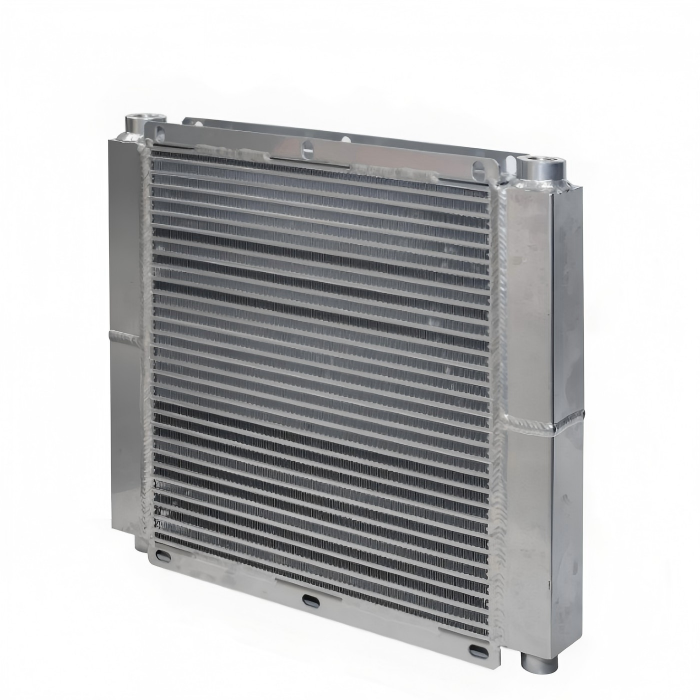
O serviço de Soldagem TIG de Radiador de Alumínio oferece reparos rápidos e à prova de vazamentos com soldas de precisão, restaurando o desempenho e a durabilidade dos sistemas de refrigeração.
Request a Quote
Enter the quantity you need and add to your quote list for pricing inquiries.
Product Details
Por que os Radiadores de Alumínio Falham?
A soldagem TIG de radiador de alumínio exige uma compreensão clara dos modos de falha para aplicar a estratégia de reparo correta. Os radiadores de alumínio normalmente falham de várias maneiras.
Trincas por Vibração – A vibração constante do motor causa trincas por fadiga perto dos suportes de montagem e das fixações do suporte do núcleo. Essas trincas geralmente começam pequenas e crescem com o tempo.
Corrosão por Pites – O líquido de arrefecimento que não é trocado regularmente torna-se ácido. Ele corrói o alumínio fino por dentro. Vazamentos puntiformes se desenvolvem nos tubos do núcleo ou nas paredes do tanque.
Danos Físicos – Detritos da estrada, contato com o ventilador ou manuseio inadequado podem perfurar o núcleo ou amassar os tanques. Conexões de entrada e saída entortadas também se enquadram nesta categoria.
Soldas Originais Ruins – Alguns radiadores do mercado de reposição saem da fábrica com fusão incompleta na junção do tanque com o núcleo. Esses pontos fracos falham sob pressão.
Superaquecimento – A pressão excessiva de um sistema de arrefecimento entupido ou de uma tampa com defeito estressa o radiador além dos limites de projeto. As juntas se separam ou os tanques incham.
Para cada tipo de falha, nossa técnica de soldagem TIG em radiador de alumínio varia. Uma trinca por vibração requer perfuração de parada e solda de ranhura completa. Uma área corroída pode precisar de fabricação de remendo. Danos físicos podem envolver cortar uma seção do núcleo e soldar novo material.
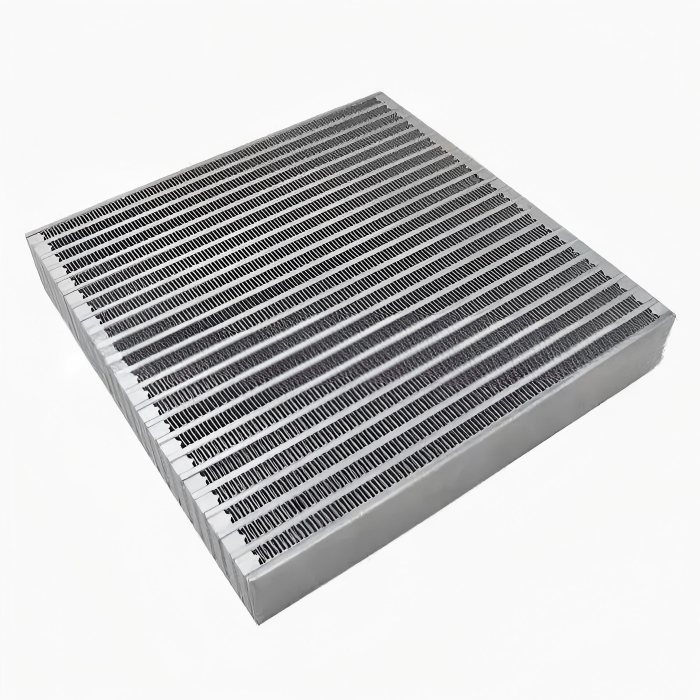
Nosso Processo de Reparo:
Isto não é soldagem estrutural. O trabalho em radiador exige uma mentalidade diferente. O material geralmente tem 0,020 a 0,060 polegadas de espessura. Calor demais empena o tanque ou derrete completamente. Calor de menos não funde. Nosso processo de soldagem TIG em radiador de alumínio segue estas etapas.
Etapa 1 – Drenagem e Limpeza
Drenamos todo o líquido de arrefecimento e lavamos o radiador. O glicol residual contamina as soldas e cria porosidade. A área de reparo é então desengordurada com acetona.
Etapa 2 – Preparação do Acesso
Para trincas internas, podemos cortar um tanque, reparar o lado do núcleo e depois soldar o tanque novamente. Para trincas externas, limpamos a área com uma escova de aço inoxidável dedicada apenas ao alumínio.
Etapa 3 – Preparação da Trinca
Perfuramos um furo de 1/16 de polegada em cada extremidade da trinca para interromper a propagação. A trinca é então lixada em um chanfro raso em V. Não é necessário bisel para material tão fino.
Etapa 4 – Soldagem
Usamos TIG CA de 40 a 80 amperes, dependendo da espessura do material. Um eletrodo de tungstênio cariado 2% de 1/16 de polegada com lente de gás proporciona excelente controle do arco. A vareta de adição é 4043 com diâmetro de 1/16 de polegada. Soldamos em segmentos curtos de 1/4 de polegada, permitindo resfriamento entre cada um. Esta abordagem define nosso método de soldagem TIG em radiador de alumínio.
Etapa 5 – Resfriamento
Após a soldagem, resfriamos imediatamente a área com ar comprimido. Isso evita que a zona afetada pelo calor cresça e distorça o tanque.
Etapa 6 – Teste de Pressão
Cada radiador é testado a pressão de 15 a 20 PSI antes de ser devolvido ao cliente. Tapamos todas as aberturas e submergimos o radiador em água enquanto aplicamos pressão de ar. Quaisquer bolhas indicam um vazamento remanescente.
Uma vantagem chave do nosso serviço de soldagem TIG em radiador de alumínio é que realizamos este trabalho especializado regularmente. Uma oficina geral pode ver um radiador por ano. Nós vemos vários por semana.
Reparos Comuns que Realizamos:
Nossa experiência cobre uma ampla gama de problemas em radiadores através do nosso trabalho de soldagem TIG em radiador de alumínio.
Substituição de Tanque de Plástico Trincado – Alguns radiadores têm tanques de plástico que trincam. Podemos fabricar um tanque de alumínio de reposição e soldá-lo ao núcleo original.
Reparo de Entrada e Saída – Conexões quebradas ou corroídas são cortadas e substituídas por novos tubos de alumínio. Combinamos o diâmetro e o ângulo originais.
Junta do Núcleo com o Tanque – A junta enrolada de fábrica pode desenvolver vazamentos com o tempo. Soldamos toda a junta para um reparo permanente.
Soldagem de Suporte de Montagem – Abas e suportes quebrados são recolocados ou substituídos.
Reparo do Núcleo – Para tubos do núcleo perfurados, podemos cortar a seção danificada e soldar um remendo. Danos extensos ao núcleo podem exigir um recore completo.
Modificações Personalizadas – Mover entradas para o tanque oposto, adicionar conexões AN, instalar buchas de drenagem ou fabricar um radiador totalmente personalizado às suas dimensões.
Para radiadores antigos e raros, temos cuidado extra para preservar a aparência original enquanto restauramos a função. Cada reparo de soldagem TIG em radiador de alumínio é documentado com fotos de antes e depois.
Soldagem de Núcleo vs. Tanque do Radiador:
Esses dois componentes exigem abordagens diferentes dentro do nosso serviço de soldagem TIG em radiador de alumínio.
Soldagem de Tanque – Os tanques do radiador são tipicamente de alumínio 3003 ou 6061 com 0,040 a 0,080 polegadas de espessura. Esta espessura permite técnica TIG normal com amperagem moderada. Usamos uma barra de apoio de cobre dentro do tanque ao soldar perto da interface do núcleo. A barra absorve o excesso de calor e evita a queima.
Soldagem de Núcleo – Os tubos do núcleo são tão finos quanto 0,010 a 0,020 polegadas. Soldar diretamente no núcleo só é possível com amperagem muito baixa e extremo cuidado. Para a maioria dos vazamentos no núcleo, preferimos cortar a seção danificada e soldar um novo pedaço de material do núcleo, em vez de tentar soldar o tubo fino original.
Por esta razão, aconselhamos os clientes de que os reparos no núcleo têm uma taxa de sucesso menor do que os reparos no tanque. Se mais de 20 por cento do núcleo estiver danificado, a substituição geralmente é mais econômica do que o reparo. Nossos técnicos de soldagem TIG em radiador de alumínio podem aconselhá-lo sobre a melhor abordagem.
As habilidades necessárias para esta distinção vêm de anos de prática focada. Aprendemos quais reparos duram e quais não duram.
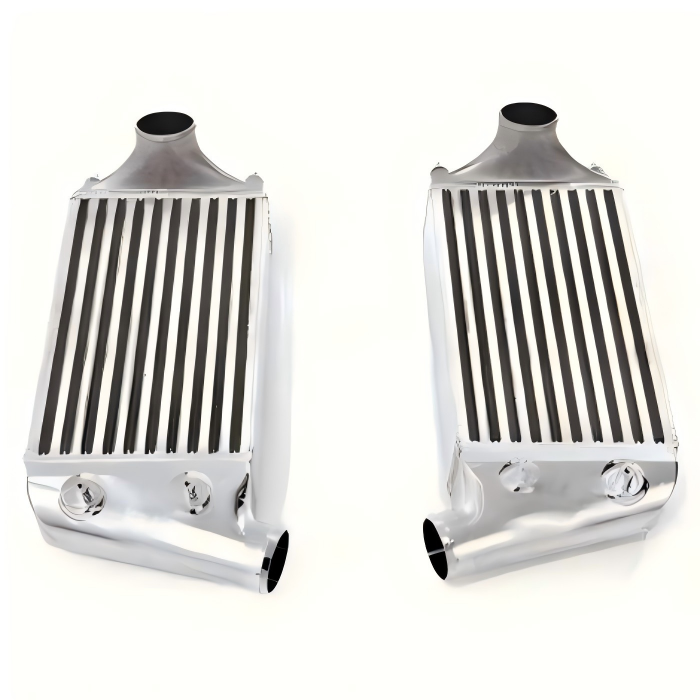
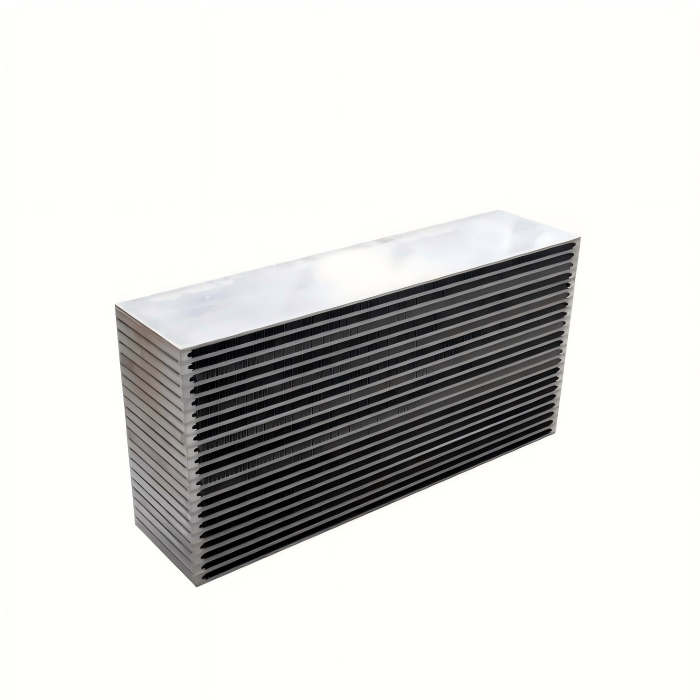
Fabricação de Radiador Personalizado:
Além de reparos, construímos radiadores de alumínio personalizados do zero usando nossa experiência em soldagem TIG em radiador de alumínio. Este serviço é popular entre construtores de hot rods, equipes de corrida e lojas de motocicletas personalizadas.
Começamos com suas dimensões ou um desenho. Você especifica o tamanho do núcleo, formato do tanque, locais e tamanhos de entrada e saída e configuração de montagem. Em seguida, cortamos chapa de alumínio 3003 para os tanques, usinamos quaisquer conexões personalizadas e montamos tudo usando nosso equipamento TIG.
O núcleo em si é normalmente adquirido como uma unidade pré-montada de um fornecedor de aftermarket. Nós soldamos os tanques personalizados ao núcleo. Esta abordagem oferece um radiador único a um custo menor do que mandar fabricar um núcleo totalmente personalizado. Cada radiador personalizado recebe o mesmo processo cuidadoso de tig welding aluminum radiator que o nosso trabalho de reparo.
O prazo de entrega para radiadores personalizados é de 2 a 3 semanas. Oferecemos assistência de design se você não tiver certeza sobre as dimensões ou a colocação dos encaixes.
Procedimentos de Teste de Qualidade:
Todo radiador que sai da nossa oficina passa por testes, independentemente de o cliente solicitar ou não. Consideramos isso uma questão de responsabilidade profissional para o nosso serviço de tig welding aluminum radiator.
Inspeção Visual –
Todas as soldas são examinadas quanto a trincas, porosidade e rebaixo. A área de reparo deve ser lisa e livre de arestas vivas.
Teste de Pressão – Aplicamos 15 PSI de pressão de ar com o radiador submerso em um tanque de água. Este é o mesmo método de teste usado pelos fabricantes de radiadores. O radiador deve manter a pressão por 5 minutos sem nenhuma bolha.
Teste de Fluxo – Para radiadores personalizados e reparos grandes, também realizamos um teste de fluxo para garantir que o líquido de arrefecimento circule adequadamente. A água passa pelo radiador a uma taxa medida.
Verificação Dimensional – Verificamos se as posições de entrada e saída, as localizações dos suportes de montagem e as dimensões gerais correspondem às suas especificações ou ao radiador original.
Para aplicações de corrida, podemos fornecer um relatório de teste de pressão certificado. Esta documentação é às vezes exigida pelos inspetores técnicos de corrida e valida o nosso trabalho de tig welding aluminum radiator.
Por que o TIG é o Processo Correto?
Você pode se perguntar por que especificamos TIG em vez de MIG para trabalhos em radiadores. A resposta está no controle de calor.
A soldagem MIG deposita metal de adição rapidamente, mas cria uma entrada de calor significativa. Em materiais finos de radiador, o MIG queimaria quase instantaneamente. O TIG permite que o soldador comece com baixa amperagem, adicione calor gradualmente e recue instantaneamente quando a poça se formar. Este nível de controle é essencial para um reparo bem-sucedido de tig welding aluminum radiator.
Além disso, o TIG não produz respingos. Os respingos do MIG se incrustariam nas aletas do núcleo e seriam impossíveis de remover. O TIG também nos permite usar varetas de adição de pequeno diâmetro, que combinam com o material base fino.
Por essas razões, não oferecemos soldagem MIG para trabalhos em radiadores. Nosso processo TIG é mais lento, mas produz resultados confiáveis e à prova de vazamentos que definem um serviço profissional de tig welding aluminum radiator.