When sourcing tig welding aluminum pipe, buyers usually focus on two questions: How much will it cost? And will the weld quality remain consistent in production?
The answer depends on much more than welding time. Aluminum alloy, pipe thickness, joint design, preparation, welding parameters, production volume, inspection, and finishing can all affect the final result.
For engineers and procurement teams, understanding these factors makes it easier to compare quotations and select a manufacturing process that works not only for prototypes, but also for repeat production.
Why Is TIG Welding Aluminum Pipe Sensitive to Production Conditions?
TIG welding is widely used for aluminum because it provides precise control over the weld pool and can produce clean, visually consistent welds.
However, aluminum presents several challenges during welding. Its oxide layer has a much higher melting point than the base metal, while aluminum itself conducts heat rapidly. These characteristics make tig welding aluminum pipe particularly sensitive to surface preparation and heat control. Poor cleaning, unstable fit-up, or excessive heat can therefore lead to problems such as porosity, incomplete fusion, distortion, or inconsistent weld appearance.
For production work, the objective is not simply to create a weld that looks good once. The process needs to produce similar results from the first part to the last.
Several factors need to work together:
- Aluminum alloy and temper
- Tube diameter and wall thickness
- Joint configuration
- Подготовка поверхности
- Параметров сварки
- Shielding gas
- Fixture and positioning
- Последовательностью сварки
- Требования к контролю
This is why experienced manufacturers evaluate the complete production process before determining the cost of tig welding aluminum pipe.
Which Design and Material Factors Affect the Cost?
The aluminum alloy is one of the first factors to consider. Choosing the right alloy is therefore an important first step when planning tig welding aluminum pipe for a specific application.
Common aluminum alloys used for welded components include 5052, 5083, 6061, and 6063. They have different mechanical properties and welding characteristics, so the selected alloy should match the application rather than being chosen only because it is inexpensive or readily available.
Pipe geometry also has a direct effect on the cost and manufacturability of TIG Welding Aluminum Pipe.
A simple tube-to-tube joint may require relatively little preparation, while a multi-joint frame may involve precise cutting, notching, positioning, and several welding operations.
Wall thickness is another important variable. Thin-wall aluminum requires careful heat control to avoid burn-through and distortion. Thicker sections may require higher heat input and additional preparation to achieve the required penetration.
Good design can therefore reduce manufacturing cost before welding even starts.
For projects combining machined and welded components, integrating CNC machining and metal fabrication can also help maintain consistent interfaces between machined parts and welded assemblies.
Design factors that influence production:
| Фактор | Possible production impact |
|---|---|
| Алюминиевый сплав | Weldability and filler selection |
| Толщина стенки | Heat input and welding speed |
| Конструкции соединения | Preparation and welding time |
| Tube tolerance | Fit-up and alignment |
| Number of joints | Welding and inspection workload |
| Surface finish | Post-weld processing |
| Объем производства | Fixture and setup cost per part |
A drawing that looks simple from a purchasing perspective can therefore involve very different manufacturing requirements depending on its tolerances and joint details.
How Do Welding Parameters Influence Quality?
Once the design is suitable for manufacturing, the welding process becomes critical to consistent TIG Welding Aluminum Pipe production.
For aluminum TIG welding, current, AC balance, frequency, travel speed, tungsten selection, filler metal, and shielding gas need to be matched to the material and joint.
Heat input deserves particular attention.
Too little heat can cause poor fusion or insufficient penetration. Too much heat can increase distortion and affect the surrounding material. On assemblies with several closely positioned joints, heat can also accumulate during welding.
This is where production experience becomes important.
Instead of treating every weld as an isolated operation, a repeatable manufacturing process should define the welding sequence, fixture position, preparation method, and inspection criteria.
The goal is process consistency, not simply operator skill.
For example, a welding process may produce an attractive bead during a prototype run but become difficult to repeat when production volume increases. A suitable fixture, standardized preparation, and documented welding parameters can make the process much more stable.
Наш aluminum tube welding services are designed around this type of production approach, from tube preparation and welding to the required finishing operations.
What Really Determines the Production Cost?
The quoted welding price is only one part of the actual manufacturing cost.
A more useful way to evaluate the cost of TIG Welding Aluminum Pipe is to consider the entire manufacturing process:
Material → Cutting → Joint Preparation → Fixturing → TIG Welding → Inspection → Finishing → Packaging
For low-volume orders, setup and fixture costs can have a noticeable effect on the unit price. As production volume increases, these costs can be distributed across more parts, while dedicated fixtures can improve repeatability and reduce setup time.
Finishing can also change the final price significantly.
Depending on the application, welded aluminum components may require grinding, polishing, anodizing, powder coating, or another surface treatment. If a weld creates excessive distortion or requires substantial rework, the additional labor can increase the real cost of each accepted part.
Therefore, two suppliers can quote different prices for apparently identical aluminum pipe assemblies without either quotation being incorrect.
The better comparison is not simply:
“Which supplier has the lowest welding price?”
Instead, procurement teams should consider:
Unit price + setup + finishing + inspection + potential rework + logistics
This provides a more realistic picture of the cost of production-ready parts.
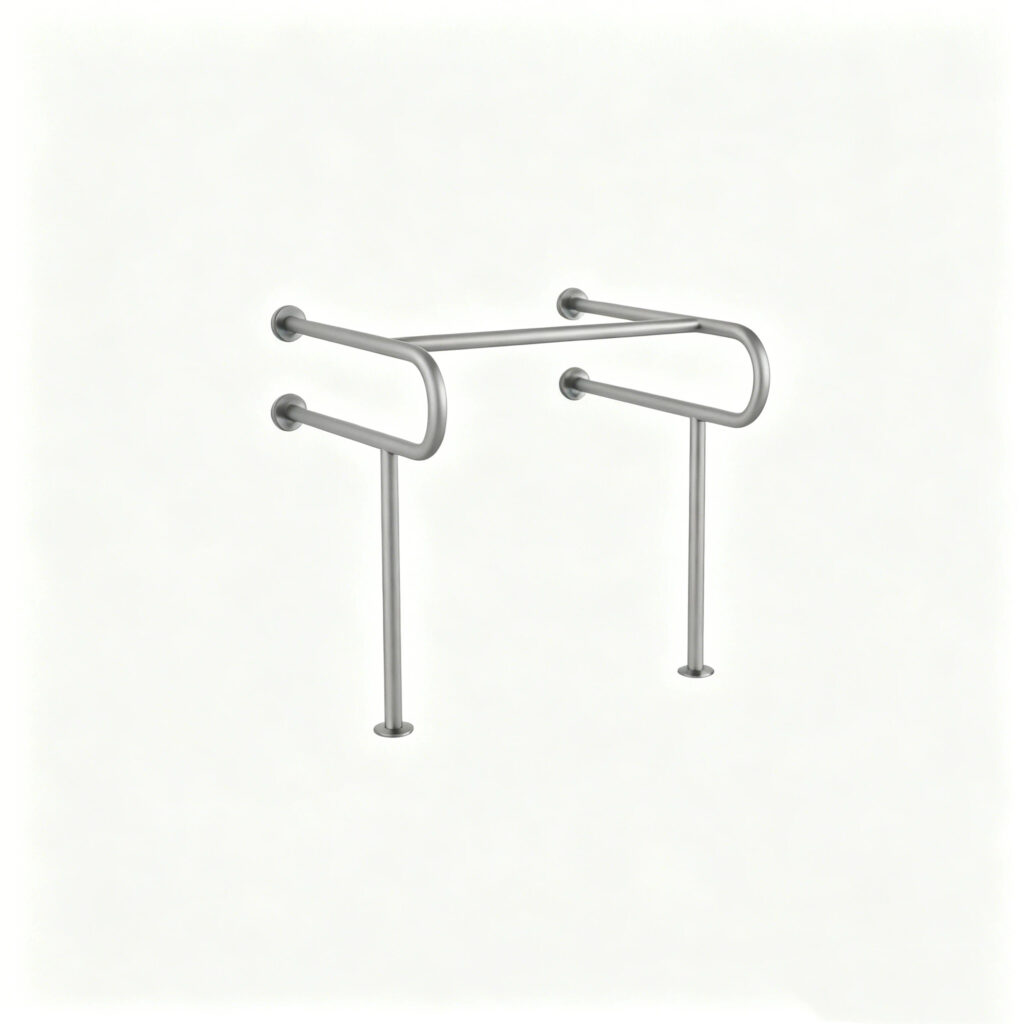
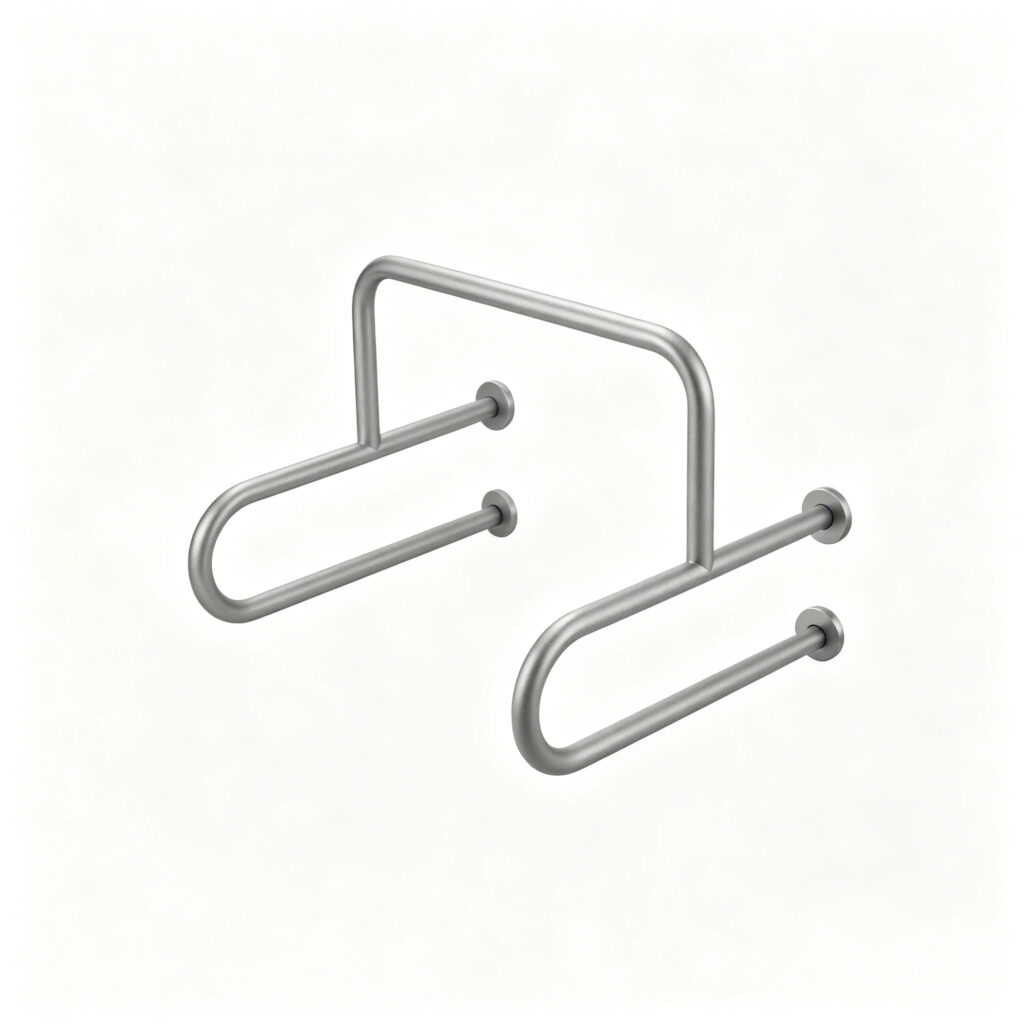
Flow Wing TIG-Welded Aluminum Grab Rail Project:
One of our own projects involved a TIG-welded aluminum grab rail for bathroom applications, designed for elderly and disabled users.
You can see the finished product in our TIG-welded aluminum grab rail project.
For this project, our focus was on clean weld appearance, accurate joint alignment, controlled heat input, and consistent dimensions.
Because the grab rail is both functional and highly visible, the welding process needed to balance reliable joints with a clean finished appearance.
We controlled tube preparation, fit-up, TIG welding, and post-weld finishing as part of the production process. This helped us maintain consistent dimensions while reducing unnecessary distortion and finishing work.
The project also demonstrates an important point: the cost of tig welding aluminum pipe is not determined by welding speed alone. Preparation, joint design, heat control, finishing, and production consistency all contribute to the final manufacturing cost.
For similar custom aluminum assemblies, our услуги по сварке алюминия can support projects from prototype development to repeat production.
FAQ: What Else Should Buyers Know?
1. Can aluminum pipe be TIG welded after anodizing?
The anodized layer should normally be removed from the welding area before welding. Anodizing can be applied after welding.
2. How can welding costs be reduced?
Optimize the joint design, reduce unnecessary welds, and use suitable fixtures for repeat production.
3. Does tube diameter affect welding productivity?
Yes. Diameter affects torch access, weld length, heat distribution, and welding time.
4. Is TIG welding suitable for prototypes?
Yes. TIG is well suited to prototypes requiring precise weld control and clean appearance.
5. What should be inspected after welding?
Typical checks include dimensions, joint alignment, weld appearance, and surface defects.
6. Why is production quantity important for quotation?
Quantity affects setup, fixturing, production efficiency, inspection, and the final unit cost.