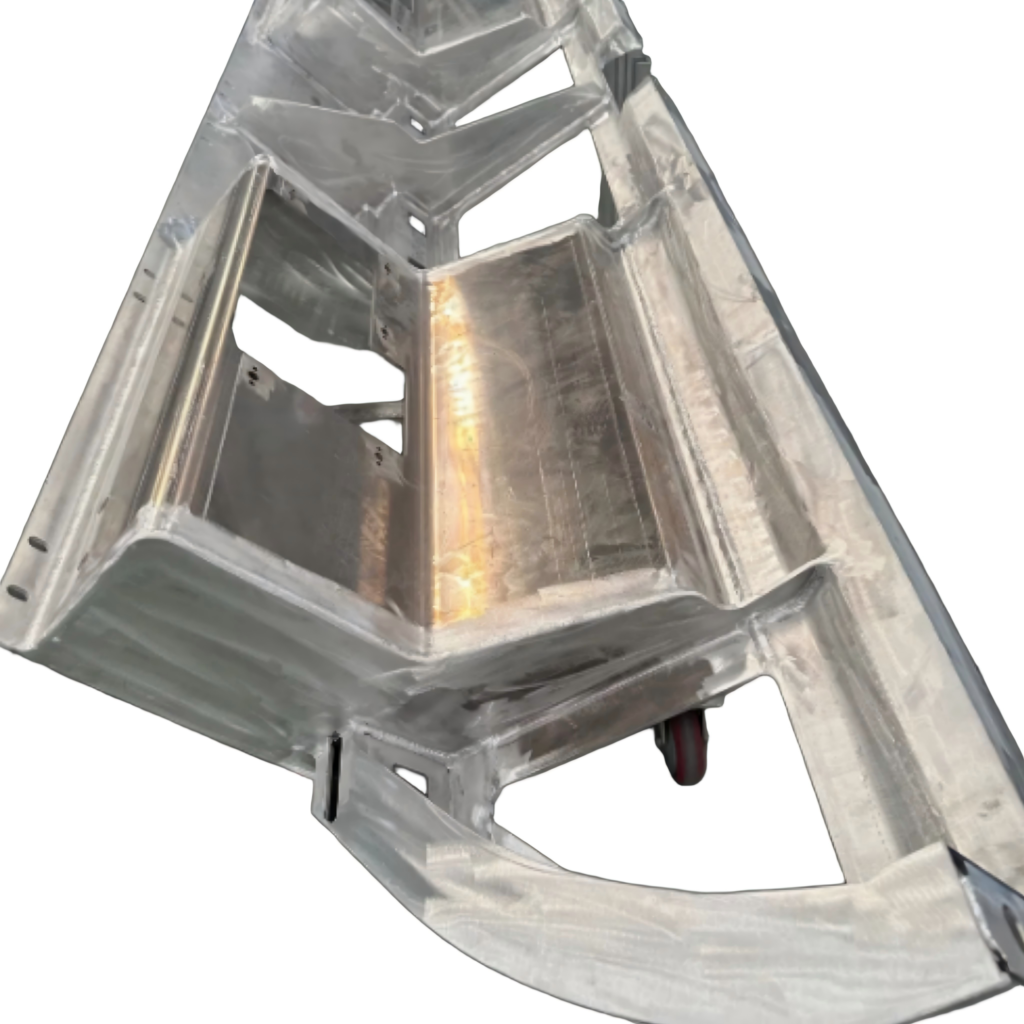
Superior Welded Aluminum Frame Instant 6 Corner Reinforcement Welding Service for High Vibration Applications
申请报价
输入您需要的数量,并将其添加到您的报价清单,以便查询价格。.
产品详情
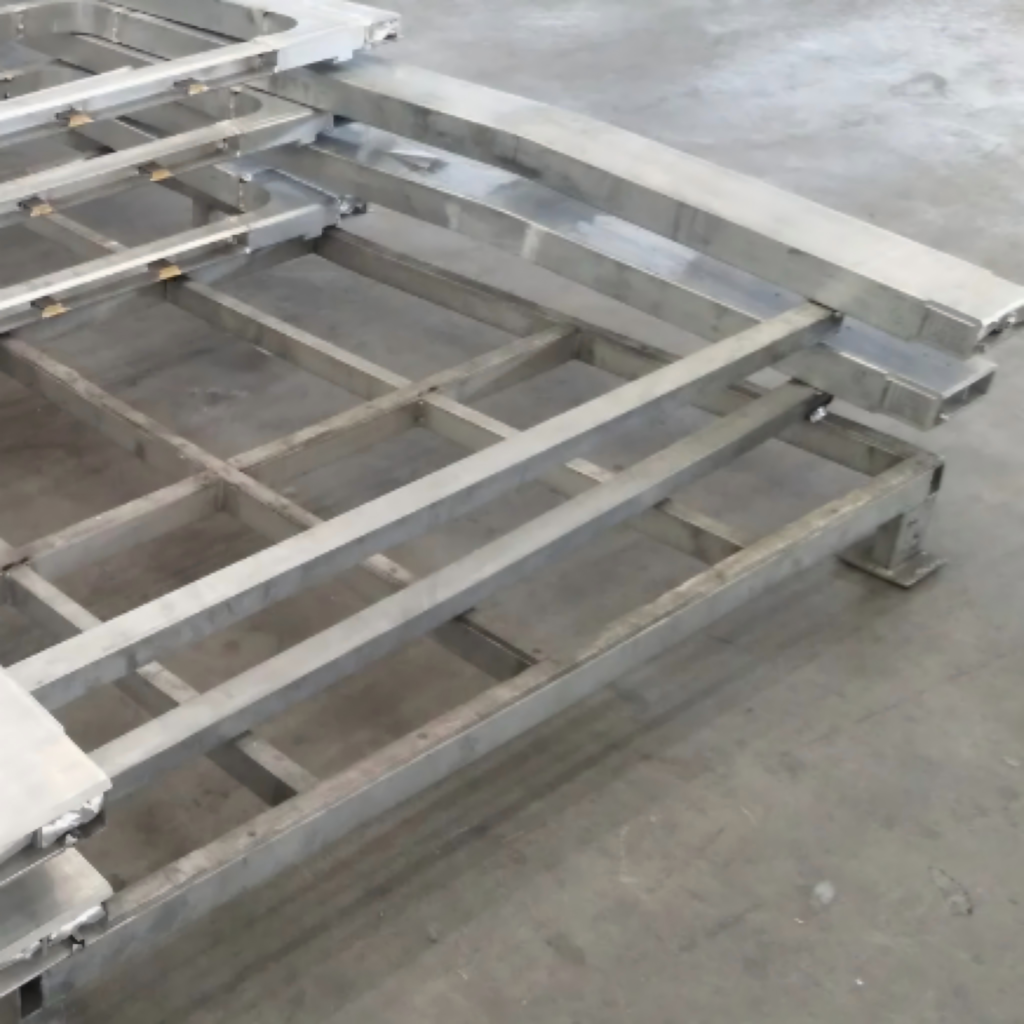
Professional welded aluminum frame fabrication for machinery bases, equipment stands, platforms, and custom structures. Lightweight, strong, and corrosion resistant.
Why Welded Construction Beats Bolted?
Many frame manufacturers prefer bolted assembly because it requires less skill and equipment. Bolted frames have advantages in certain applications. However, welded construction offers benefits that bolted connections cannot match.
A welded aluminum frame has no stress concentrations at bolt holes. Bolted joints create localized forces that can elongate holes over time, especially under vibration. A welded joint distributes load across the entire weld length. There are no fasteners to loosen, corrode, or strip.
Welding also allows for cleaner design. No flanges or brackets are needed for bolted connections. The frame can be lighter and more compact. For applications where space is limited or cosmetic appearance matters, welding is the superior choice.
Additionally, a welded frame is more rigid. Bolted joints have slight movement under load, which can affect precision equipment. Welded structures behave as a single monolithic piece.
Our welded aluminum frame process produces structures that are permanent, rigid, and maintenance-free.
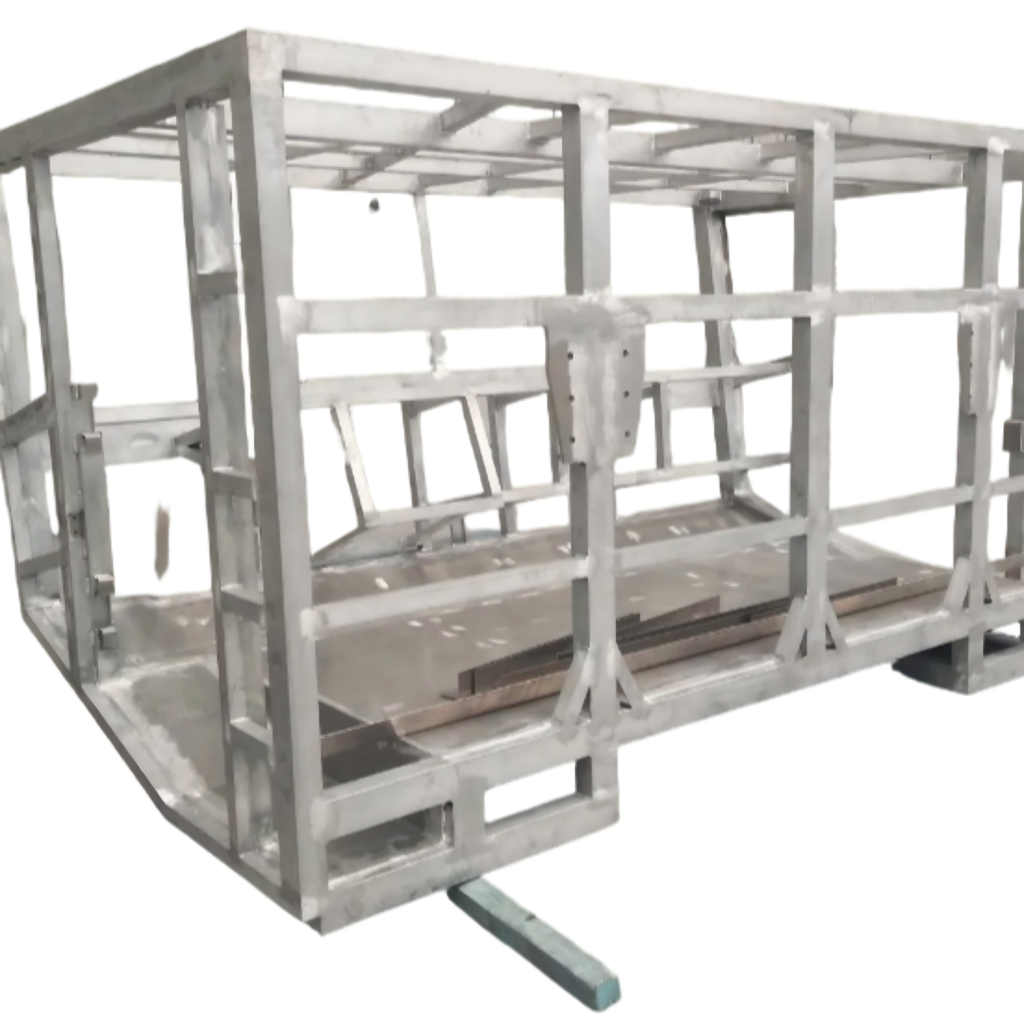
Frame Types We Fabricate:
We build frames for a wide range of applications.
Machinery Bases – Platforms that support industrial equipment, presses, and production machinery. Vibration resistance and flatness are critical.
Equipment Stands – Mobile or fixed stands for conveyors, workstations, testing equipment, and medical devices.
Work Platforms – Elevated structures for maintenance access, inspection, and assembly operations. Safety railings and stair attachments available.
Conveyor Supports – Structures that hold material handling systems. Long spans require distortion control.
Safety Cages – Enclosures around dangerous machinery. Guarding must meet OSHA requirements.
Custom Carts – Welded aluminum frames for material handling carts, utility vehicles, and mobile workstations.
Architectural Frames – Structural supports for signage, displays, canopies, and building features.
For each type, our welded aluminum frame process includes design review to optimize joint configuration and minimize weld count.
Aluminum Alloys for Frames:
Different applications require different alloys.
6061-T6 – The most common structural alloy. Excellent strength, good weldability, and widely available. Used for machinery bases, equipment stands, and heavy duty frames. Use 4043 filler for general work or 5356 for higher shear strength.
6063-T5 – Extruded alloy with better surface finish than 6061. Used for architectural frames, display structures, and cosmetic applications. Slightly lower strength. Use 4043 filler.
5052 – Good corrosion resistance and formability. Used for frames in marine environments or chemical plants. Use 5356 filler for best corrosion resistance.
5083 – High strength marine alloy. Used for heavy duty frames in saltwater applications. Excellent corrosion resistance. Use 5356 filler.
3003 – General purpose alloy with good formability. Used for light duty frames and non-structural applications. Use 4043 filler.
Our welded aluminum frame technicians select alloy and filler based on load requirements, environment, and cosmetic needs.
Extrusion Profiles We Work With:
Aluminum frames often use standard extrusion profiles.
Square Tube – 1 inch to 4 inch sizes. Wall thickness from 0.083 to 0.375 inches. Used for primary structural members.
Rectangular Tube – Various dimensions. Used for beams and longer spans where depth is needed.
Angle – Equal and unequal leg sizes. Used for bracing, corners, and light duty frames.
Channel – Used for edge protection and as mounting tracks.
I Beam – For heavy load applications where weight is a concern.
T Slot – Extrusions with integrated mounting grooves. Used for modular frames and adjustable structures.
Flat Bar – For gussets, brackets, and reinforcement plates.
For custom extrusions, we can work with your supplied material or recommend standard profiles that meet your requirements. Our welded aluminum frame service includes cutting, coping, and mitering of all extrusion profiles.
Joint Configurations for Frames:
Frame welding requires specific joint designs.
Corner Joint – Two members meeting at 90 degrees. The most common frame joint. For tube, we miter both ends at 45 degrees. For angle, we cope the vertical member.
T Joint – One member perpendicular to another. Used for cross braces and internal supports. The vertical member may be coped or left full width.
Lap Joint – Two members overlapping. Used for splices and attachments. We weld both sides for full strength.
Butt Joint – Two members end to end. Used for lengthening extrusions. A reinforcing sleeve inside the tube provides additional strength.
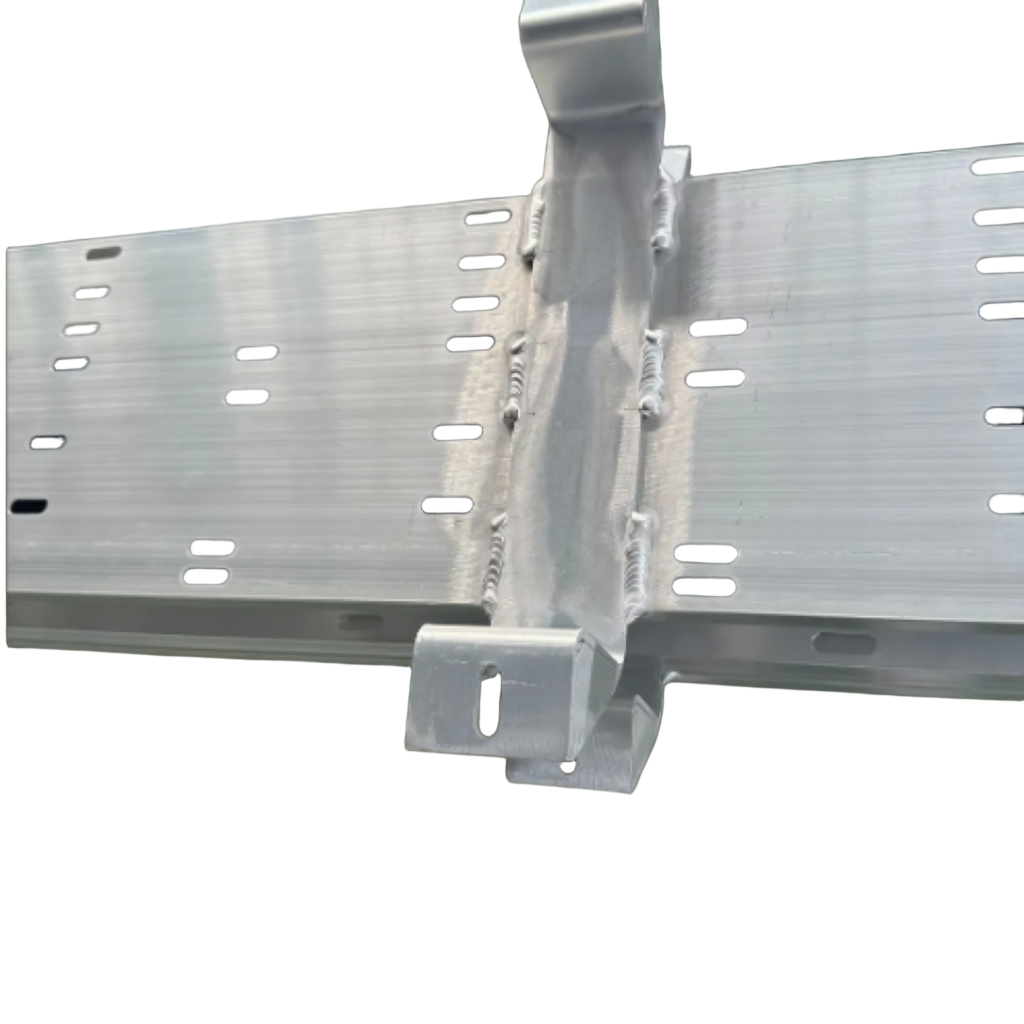
Gusset Joint – A flat plate welded across a corner for reinforcement. Used on high load frames and vibration applications.
For every welded aluminum frame, we verify fit-up using fixtures and templates before welding.
Distortion Control for Frames:
Frame distortion is the most common quality issue in aluminum welding. A frame that pulls out of square cannot be easily corrected.
Our methods include the following.
Weld Sequence – We weld in a pattern that balances thermal contraction. For a rectangular frame, we weld opposite corners first, then the remaining corners.
Strongback Fixturing – Our welding tables have slotted holes and clamps that hold members in position during welding. The fixture allows some movement but prevents permanent distortion.
Tack Welding – We use multiple tack welds to hold alignment. The frame is checked for square after tacking and adjusted if needed.
Backstep Welding – On long joints, we weld 2 inch segments in reverse order.
Interpass Cooling – Between weld passes, we cool the frame with compressed air.
Post-Weld Straightening – For frames with minor distortion, we use hydraulic presses and straightening fixtures.
Using these techniques, we hold squareness to within 1/16 inch per foot and flatness to within 1/32 inch per foot for most welded aluminum frame projects.
Surface Preparation and Cleaning:
Cleanliness is essential for strong frame welds.
Our process includes the following.
Degreasing – We wipe all weld zones with acetone. For large frames, we use spray degreaser followed by clean cloths.
Mechanical Abrasion – A stainless steel brush dedicated to aluminum removes the oxide layer. For extrusion surfaces, we use abrasive pads on a die grinder.
Edge Preparation – Cut ends are deburred. For beveled joints, we use carbide burrs or belt sanders.
Final Wipe – A clean lint-free cloth with acetone removes any remaining particles.
We weld within 4 hours of cleaning. For critical welded aluminum frame applications, we also use chemical cleaning with a mild caustic solution followed by nitric acid rinse.
Quality Inspection Methods:
Every welded aluminum frame receives appropriate inspection.
Visual Inspection – All welds are examined for cracks, porosity, undercut, incomplete fusion, and surface appearance.
Dimensional Inspection – We verify overall length, width, height, squareness, and flatness using tape measures, squares, levels, and optical instruments.
Dye Penetrant Testing – Reveals surface cracks invisible to the naked eye. Used for structural frames and safety-critical applications.
Load Testing – For frames that will support heavy equipment, we can perform proof load testing to verify capacity.
Welder Certification – All welders are certified to AWS D1.2 for aluminum structures.
We retain inspection records for a minimum of 7 years. Certified test reports are available upon request.
Common Applications:
Our welded aluminum frame service supports many industries.
Industrial Machinery – Bases for presses, stamping equipment, assembly machines, and packaging systems.
Material Handling – Conveyor supports, cart frames, rack structures, and lifting equipment.
Medical Equipment – Frames for MRI machines, surgical tables, hospital beds, and diagnostic devices.
Food Processing – Equipment stands and platforms that require washdown capability.
Automotive – Assembly fixtures, test stands, and production line supports.
Aerospace – Ground support equipment, assembly jigs, and test fixtures.
Architectural – Sign frames, display structures, canopy supports, and building features.
For each industry, we adjust our welded aluminum frame process to meet specific cleanliness, strength, and cosmetic requirements.