
Powder Coat Hopper Welding Service 304 Stainless Industrial Hopper
Powder coat hopper chipping or rusting? We weld 304 stainless and apply tough coating that actually stays on. No flaking, no corrosion, no rework.
Request a Quote
Enter the quantity you need and add to your quote list for pricing inquiries.
Product Details
Why Professional Powder Coat Hopper Welding Defines Coating Line Efficiency?
Many powder coating system failures occur not at the spray gun or booth but at the hopper that supplies powder to the system. A poorly fabricated unit creates powder leaks, uneven flow, or contamination points. These defects are often invisible until the coating line is running at full production. Over time, poor welds cause powder to accumulate in crevices, leading to color contamination and wasted material.
A properly manufactured hopper provides consistent powder flow while preventing contamination between color changes. The stainless steel base material resists corrosion from powder chemicals and is easy to clean. Our welding process ensures every joint achieves full penetration with smooth interior surfaces, preventing the powder trapping that plagues lower quality alternatives. Additionally, this component is critical for efficient color changes as any rough weld or crevice will hold old powder.
Our shop has invested in precision cutting equipment, interior smoothing tools, and multiple TIG welding stations to produce each hopper with consistent quality. Dedicated fixturing ensures correct cone angles and outlet placement for every unit. For production runs of 10 pieces or more, we recommend robotic TIG welding. Every project we undertake begins with a thorough review of capacity requirements, powder type, and cleaning frequency.
What Is a Powder Coat Hopper?
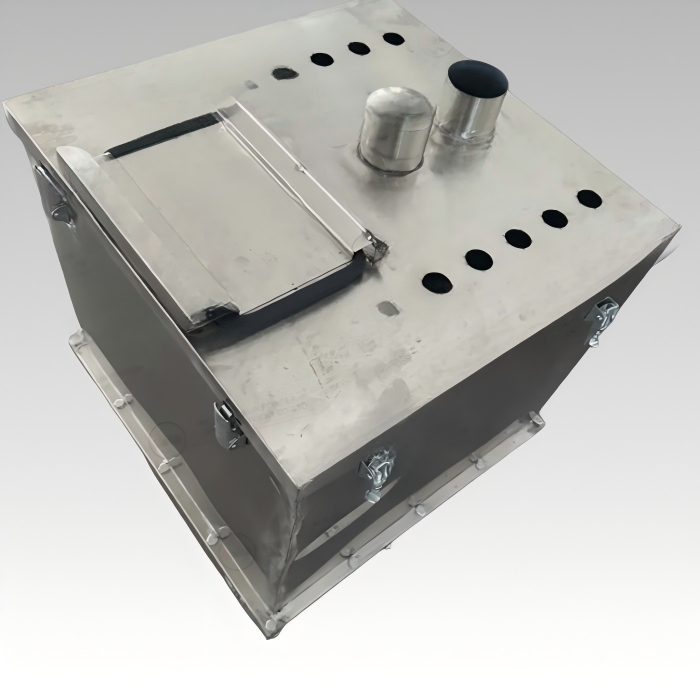
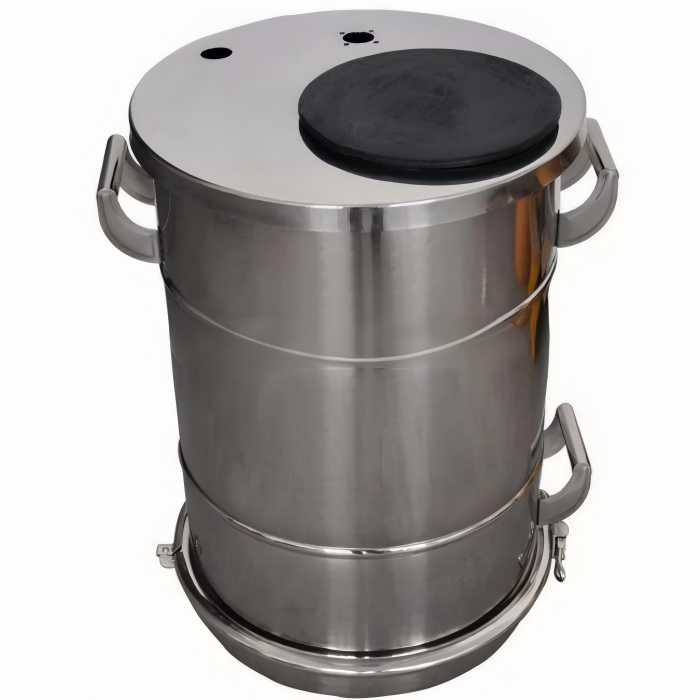
A powder coat hopper is a stainless steel container that holds and feeds powder coating material to a spray gun or fluidized bed system. These hoppers typically have a conical bottom for complete powder evacuation, an inlet for powder supply, and an outlet connected to the spray system. Stainless steel contains at least 10.5 percent chromium, which forms a passive oxide layer on the surface.
Our welding technique uses shielding gas—pure argon—to protect the molten weld pool during fabrication. This allows the chromium to re form its protective layer as the weld cools. A properly welded powder coat hopper will resist rust at the weld line as effectively as the base metal. We also control heat input carefully because too much heat causes distortion that can affect powder flow. By using low heat input and proper technique with back purging, we prevent this problem on every powder coat hopper we produce. All interior welds are ground smooth to prevent powder accumulation.
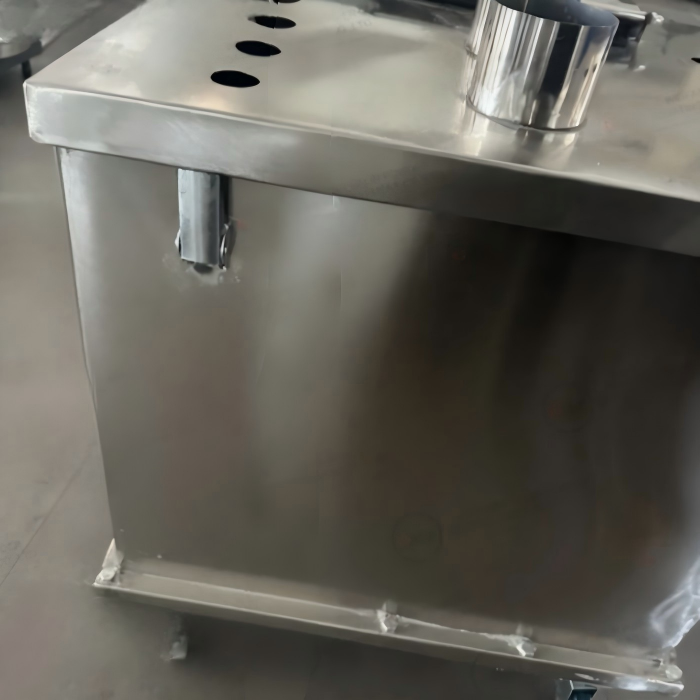
Common Powder Coat Hopper Configurations:
We produce several configurations of this component to suit different powder coating applications.
Standard Conical Hopper – For Gravity Feed Systems:
Featuring a cylindrical upper body and a tapered conical base, this design relies on gravity to deliver powder to the spray equipment. It is widely used in both manual and automated coating operations.
Fluidized Bed Hopper – With Porous Membrane:
This configuration incorporates a porous plate or membrane at the bottom of the vessel. Compressed air passes through the membrane to fluidize the powder, creating a consistent material flow for fluidized bed coating applications.
Pressure Vessel Hopper – For Dense Phase Conveying:
A sealed pressure-rated vessel uses compressed air to transport powder through the delivery system. This solution is commonly selected for long-distance transfer applications and high-volume production environments.
Portable Tote Hopper – With Casters and Handle:
Mounted on locking casters, this mobile unit can be easily moved between coating stations. It is particularly useful for job shops and facilities that perform frequent color changes.
Size and Capacity Options:
We offer a full range of sizes to suit any powder coating operation.
Small Batch Hopper – 5 to 10 Gallons:
Designed for laboratory testing, sample runs, and small parts coating. This compact unit is ideal for operations with limited space or low-volume production needs.
Standard Production Hopper – 15 to 30 Gallons:
Suitable for most industrial coating lines, this mid-range capacity provides sufficient material supply for several hours of continuous operation without frequent refilling.
High Volume Hopper – 40 to 60 Gallons:
Built for large-scale production environments, this configuration reduces downtime by minimizing refill cycles and supporting continuous coating of larger components.
Bulk Storage Hopper – 80 to 120 Gallons:
Used in centralized powder delivery systems, this large-capacity unit supplies multiple spray stations from a single source, improving efficiency in high-output facilities.
Material Selection for Powder Coat Hopper:
Not all stainless steel performs equally in powder coating environments. We stock two primary alloys.
304 Stainless Steel – The standard choice for most powder coating applications. Good corrosion resistance and excellent weldability make it ideal for powder coat hopper fabrication. Used for standard powders including epoxy, polyester, and hybrid formulations. Easy to clean and maintain.
316 Stainless Steel – For corrosive powder formulations and washdown environments. Molybdenum addition improves pitting resistance against aggressive chemicals. A 316 powder coat hopper is recommended for powder containing corrosive additives or facilities with frequent caustic cleaning.
We do not recommend carbon steel for powder coat hopper applications as rust particles will contaminate the powder.
Welding Process for Powder Coat Hopper:
We use TIG welding exclusively for all powder coat hopper fabrication due to the need for smooth interior surfaces.
GTAW for All Seams:
Manual TIG welding provides precise control over heat input and weld formation, resulting in clean internal profiles with minimal distortion. Typical parameters range from 80 to 140 amps using 3/32-inch 308L or 316L filler rod. Argon back purging is applied to every seam to eliminate internal oxidation and ensure weld quality.
Interior Weld Finishing:
After welding, all internal seams are mechanically finished using flap discs and abrasive tools to create a smooth surface. This prevents powder buildup and improves material flow within the hopper.
Robotic TIG for Production Runs:
For batch production of ten or more identical units, robotic TIG welding ensures consistent weld quality, penetration, and appearance across every assembly, maintaining strict repeatability standards.
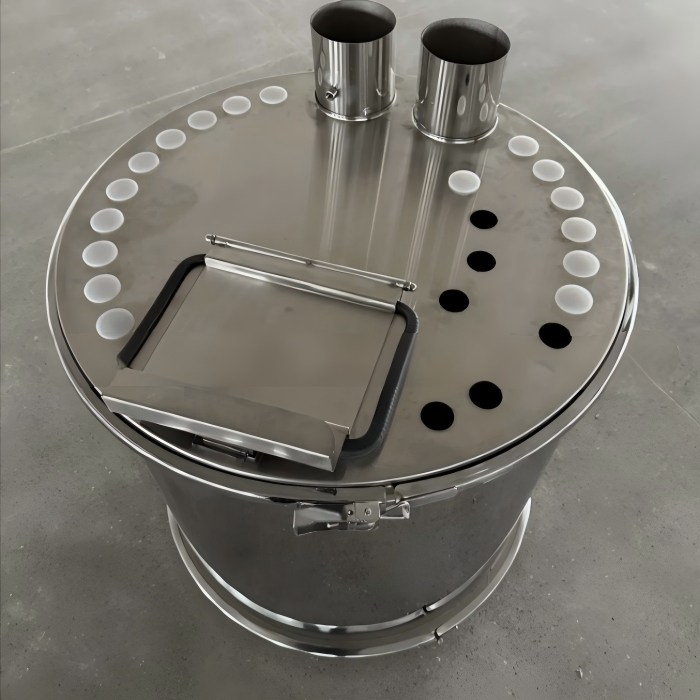
Common Applications and Industries:
Our clients use this welding service for many powder coating applications.
Industrial Powder Coating Lines:
Manufacturing facilities that coat metal components, furniture, and household appliances require reliable material handling systems. These configurations are designed to support smooth powder flow and efficient color changeovers in continuous production environments.
Automotive Parts Coating:
Applications include wheels, bumpers, trim components, and under-hood parts. These systems are often built with stainless steel construction and polished internal surfaces to improve material consistency and reduce contamination risk.
Architectural Aluminum Coating:
Used for window frames, curtain walls, and structural building elements, these systems are designed for high-volume throughput with minimal downtime, supporting large-scale architectural finishing operations.
Fluidized Bed Coating:
Suitable for wire products, mesh structures, and small components, these systems incorporate air distribution technology to maintain consistent powder suspension and coating uniformity.
Pharmaceutical and Medical Coating:
Designed for controlled environments, these systems support tablet coating and medical device finishing where cleanliness and material compliance are critical requirements.
Job Shop Coating Operations:
For custom coating facilities with frequent color changes, portable systems enable fast changeover and flexible production scheduling across multiple coating jobs.
Frequently Asked Questions About Powder Coat Hoppers:
Q1: What size powder coat hopper do I need?
A: For small batch work, a 5 to 10 gallon powder coat hopper is sufficient. For standard production, 15 to 30 gallons is recommended. For high volume lines, 40 to 60 gallons is ideal.
Q2: What material is best for a powder coat hopper?
A: 304 stainless steel is the standard choice for most powder coat hopper applications. For corrosive powders or caustic cleaning, 316 stainless is recommended.
Q3: Why do welds in my powder coat hopper trap powder?
A: Rough welds and crevices trap powder, causing color contamination. Our powder coat hopper fabrication includes grinding all interior welds smooth to prevent powder accumulation.
Q4: Can you make a custom size powder coat hopper?
A: Yes. We specialize in custom fabrication. Send us your capacity requirements and space constraints, and we will design a perfect fitting powder coat hopper for your line.
Q5: What is the standard cone angle for a powder coat hopper?
A: 60 degrees is standard for most powders. For poor flowing powders, we recommend a 45 degree cone on your powder coat hopper.