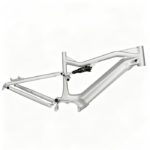
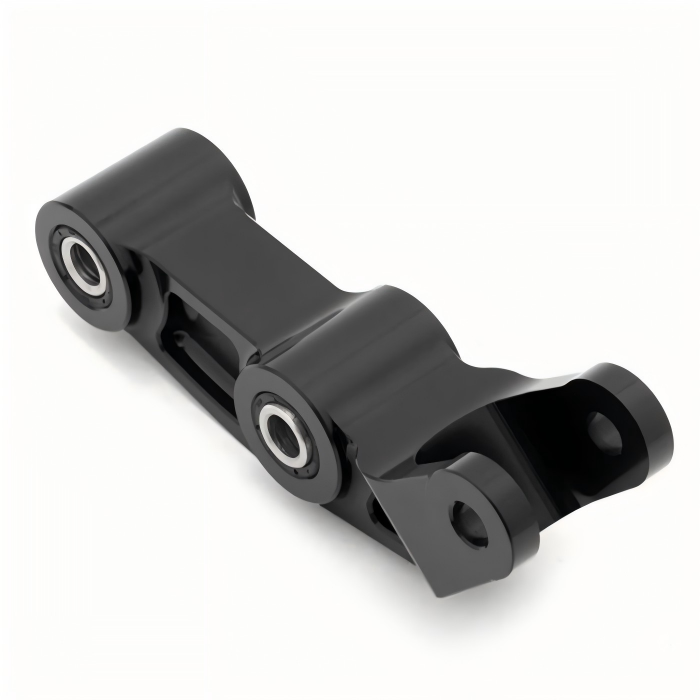
Rear Suspension Linkage 1.25 Rise Ergal Link High Performance E Bike
rear suspension linkage provides durable suspension solutions with precision fabrication, reliable performance, and custom options for motorcycle applications.
Request a Quote
Enter the quantity you need and add to your quote list for pricing inquiries.
Product Details
What Is a Rear Suspension Linkage?
A rear suspension linkage is a mechanical assembly of connecting rods and pivot points that transmits forces between the rear swingarm and the shock absorber. This linkage changes the leverage ratio throughout the suspension travel, allowing the shock to provide progressive damping—softer in the initial stroke and firmer toward the end to prevent bottoming out.
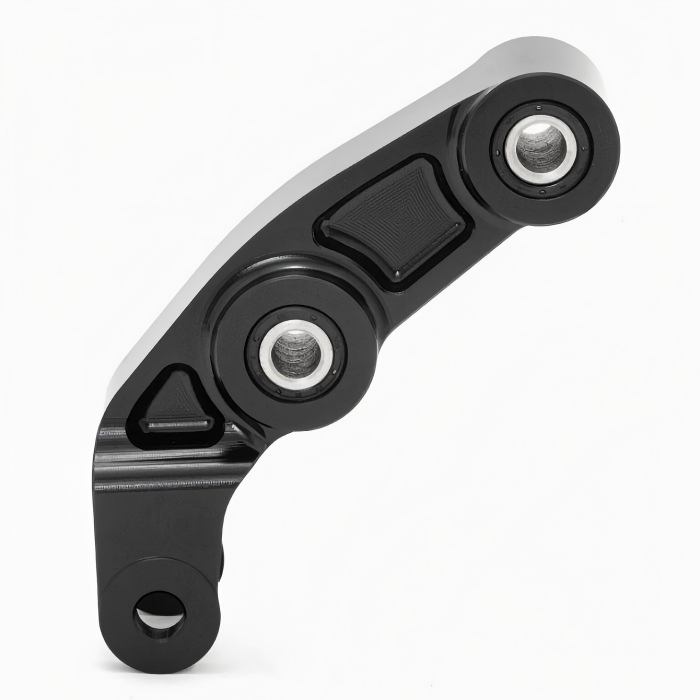
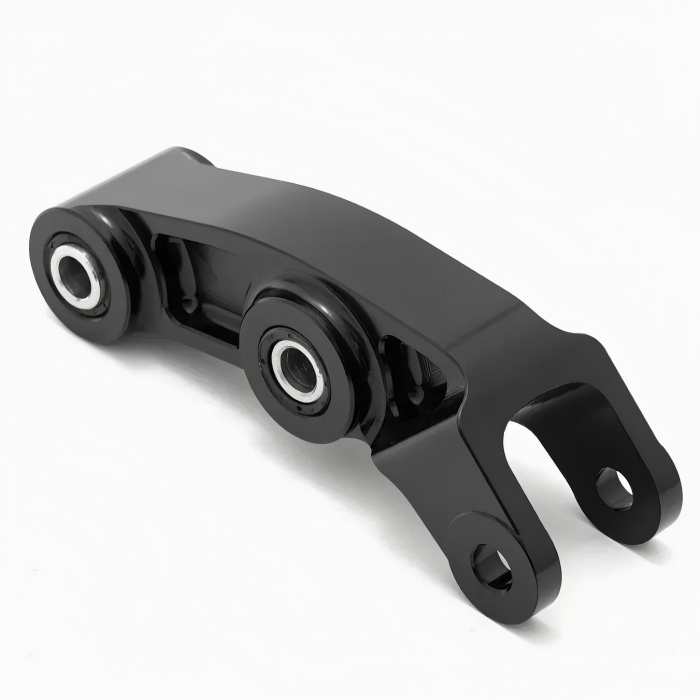
The assembly is characterized by its pivot points, connecting links, and mounting geometry. Typical features include precision-machined linkage arms, needle or spherical bearings at pivot points, grease fittings for lubrication, and anodized or coated surfaces for corrosion resistance. The component is typically made from aluminum alloy (6061 or 7075) or steel, with CNC machining ensuring precise tolerances for smooth operation and long service life.
Manufacturing Process:
The production of a rear suspension linkage follows a precise sequence of operations. For high-performance aftermarket linkages, the process begins with 6061 or 7075 aluminum billet, which is CNC machined to create the complex link geometries and pivot bores. Some manufacturers use 3D technology to optimize the design before machining. The linkage is then heat-treated for strength, and pivot bores are precision reamed to accept bearings and seals. Surface finishing including anodizing or powder coating is applied for corrosion protection and appearance. Each rear suspension linkage undergoes dimensional inspection and bearing fit verification.
Common Materials for Rear Suspension Linkage:
7075 Aluminum is the premium material for performance rear suspension linkage components. It offers exceptional strength-to-weight ratio and excellent fatigue resistance. CNC machined 7075 linkages are common in racing and off-road applications where durability is paramount.
6061 Aluminum is the most common material for aftermarket rear suspension linkage production. It offers good strength, excellent machinability, and corrosion resistance. Suitable for most motorcycle, ATV, and bicycle applications.
Ergal (7075 T6) is a high-strength aluminum alloy used in premium racing linkages. CNC machined Ergal linkages are lightweight and extremely strong.
Steel provides maximum strength and durability. Steel brackets and linkages are often laser cut and then burnished or powder coated. Suitable for heavy-duty applications and racing use.
Types of Rear Suspension Linkage:
Four-Bar Linkage is the most common rear suspension linkage design for two-wheeled vehicles. It consists of a floating link containing the rear axle, pivotally connected to both upper and lower connecting links. This design gives designers greater freedom to control kinematic parameters such as axle path, anti-squat, and leverage ratio.
Progressive Linkage changes the leverage ratio through the suspension travel, providing softer initial travel and firmer bottoming resistance. Common in ATVs and off-road vehicles.
Adjustable Linkage allows riders to fine-tune suspension geometry for different riding conditions. Some aftermarket linkages offer adjustable pivot positions to change leverage ratio and ride height.
Applications Across Industries:
Motorcycles
Aftermarket rear suspension linkage kits are popular for sportbikes and dirt bikes, offering improved traction, better suspension feel, and adjustability.
ATVs and Off-Road
Rear suspension linkages for ATVs are designed to provide progressive damping and correct up and down travel. Progressive linkages improve ride quality and safety by changing leverage ratio through the suspension travel.
Electric Dirt Bikes
Custom rear suspension linkages for electric dirt bikes are popular upgrades, offering increased strength, improved geometry, and aesthetic customization.
Mountain Bicycles
Four-bar suspension linkages are common on mountain bikes, controlling axle path, anti-squat, and leverage curve for improved pedaling and bump absorption performance.
Excellent Use Case: Sur-Ron Light Bee Linkage Upgrade
Background: Sur-Ron Light Bee owners often find the stock rear suspension linkage prone to failure under heavy riding conditions. The factory linkage lacks the strength needed for aggressive off-road use and larger riders.
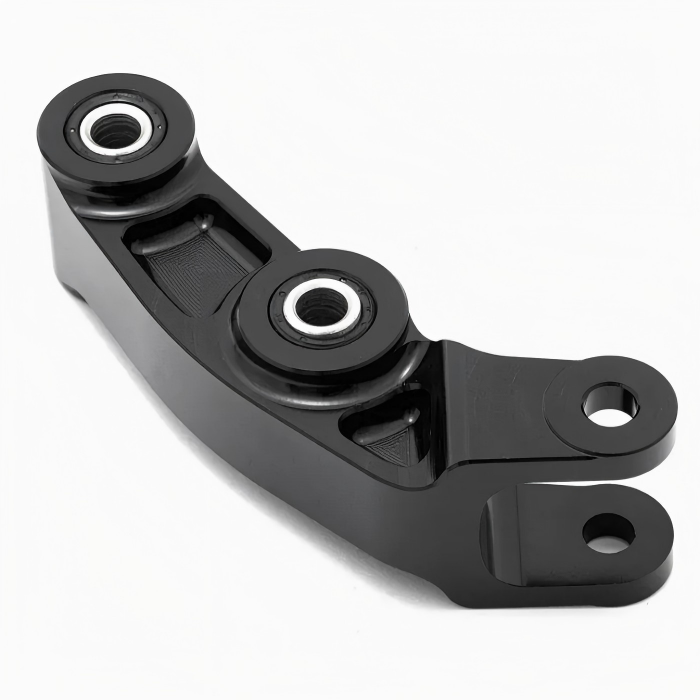
Solution: An aftermarket rear suspension linkage was developed using 7075 aluminum billet, CNC machined for precise fitment. The linkage features hard anodized finish, needle bearings, and chamfered edges for aesthetics.
Results:
- Strength: Significantly stronger than stock linkage, resistant to harshest rides and landings
- Ride Height: Raises the bike 1.5 inches, beneficial for taller riders
- Durability: Bearings are pre-greased and ready to install
- Weight: 200g, minimal weight increase for substantial strength gain
- Customization: Available in multiple colors
This case demonstrates how a CNC machined rear suspension linkage improves durability and performance for electric dirt bikes.
How to Select the Right Rear Suspension Linkage:
Choosing the appropriate rear suspension linkage requires careful consideration of several factors. Vehicle make and model determines compatibility and bolt pattern. Riding style influences material selection, with 7075 aluminum for aggressive use and 6061 for general use. Adjustability needs determine whether fixed or adjustable linkage is required. Budget considerations influence material and brand selection. Bearing quality affects long-term performance and maintenance frequency.
Frequently Asked Questions:
Q: What does a rear suspension linkage do?
A: A rear suspension linkage connects the shock absorber to the swingarm and controls the leverage ratio as the suspension compresses. It determines how the suspension feels—whether it is soft at the beginning of travel and firms up toward the end (progressive) or remains consistent throughout. This directly affects traction, comfort, and handling.
Q: When should I replace my rear suspension linkage?
A: You should replace or rebuild your rear suspension linkage when you notice excessive play, loose pivot bolts, worn bearings that produce a clunking sound, noticeable side-to-side play in the swingarm, or visible bearing corrosion. Generally, inspect linkage bearings every 50 hours for off-road use or 10,000 miles for street use.
Q: Can I install an aftermarket linkage on my bike?
A: Yes, aftermarket rear suspension linkages are available for many motorcycle, ATV, and e-bike models. They can be used to lower or raise ride height, adjust leverage ratio for different shock tuning, replace worn factory components, or upgrade to stronger materials like billet aluminum.
Q: What is the difference between 6061 and 7075 aluminum for linkages?
A: 6061 aluminum is more common and affordable, offering good strength and excellent machinability. 7075 aluminum is stronger and more fatigue-resistant, ideal for racing and off-road use where durability is critical. 7075 is typically 20-30 percent stronger than 6061 but more expensive.