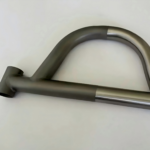
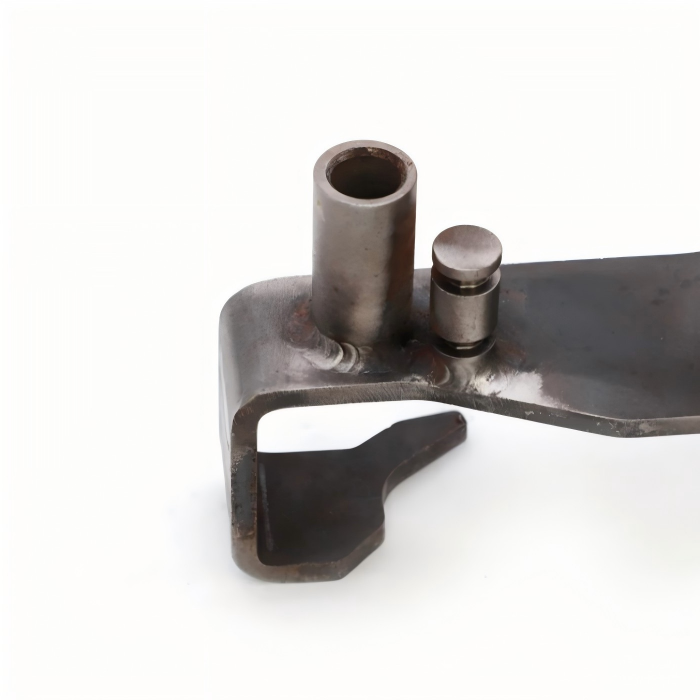

SS304 Welded Steel Bracket with Custom Sizes For Industrial Mounting
Heavy-duty SS304 welded steel bracket with custom size options. Built for secure industrial mounting and long-lasting performance. Request samples now.
Request a Quote
Enter the quantity you need and add to your quote list for pricing inquiries.
Product Details
Why Professional Welded Steel Bracket Design Defines Structural Reliability?
Many equipment failures occur not at the device itself but at the brackets that hold it in place. A poorly fabricated bracket creates weak attachment points, misaligned mounting holes, or insufficient load capacity. These defects are often invisible until the equipment is under full load. Over time, vibration and weight cause cracks to propagate until the bracket fails completely.
A properly manufactured component provides secure attachment that maintains equipment position through years of service. The stainless steel base material resists corrosion from moisture and chemicals. Our welding process ensures each joint achieves full strength, preventing the hidden weakness that plagues lower quality brackets. Additionally, this component type is critical for maintaining proper equipment alignment and preventing stress on connected machinery.
Our shop has invested in precision cutting equipment, CNC fixturing, and multiple TIG welding stations to produce each assembly with consistent quality. Dedicated tooling ensures correct angles and hole alignment for every unit. For production runs of 100 pieces or more, we recommend robotic welding. Every welded steel bracket project we undertake begins with a thorough review of material grade, load requirements, and mounting conditions.
What Is a Welded Steel Bracket?
This component is a metal support device that attaches to a wall, floor, machine, or structural member to hold equipment securely in place. These brackets typically have a mounting plate with bolt holes and a supporting arm or gusset for strength. Stainless steel contains at least 10.5 percent chromium, which forms a passive oxide layer on the surface.
Our welding technique uses shielding gas—pure argon—to protect the molten weld pool during fabrication. This allows the chromium to re form its protective layer as the weld cools. A properly welded steel bracket will resist rust at the weld line as effectively as the base metal. We also control heat input carefully because too much heat causes distortion that can affect mounting hole alignment. By using low heat input and proper technique, we prevent this problem on every welded steel bracket we produce. The result is a durable, corrosion resistant support that performs reliably for decades.
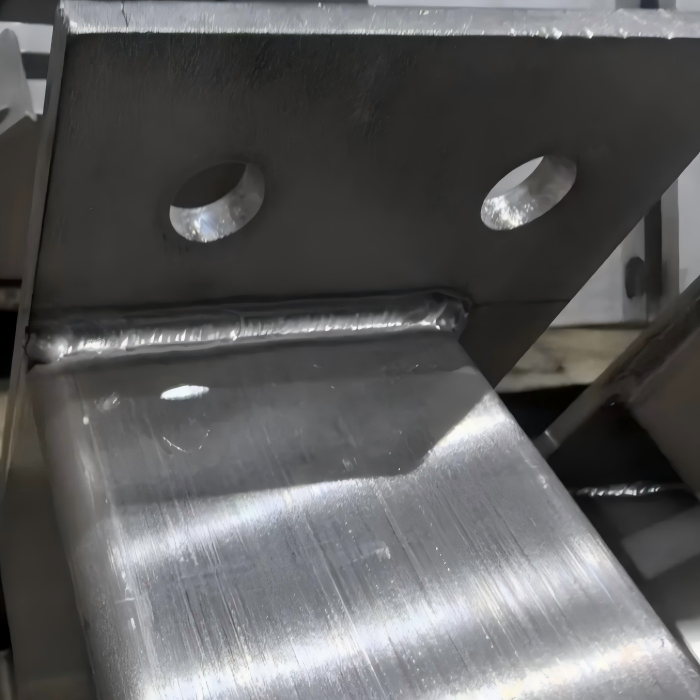
Common Welded Steel Bracket Styles:
We produce several styles of this component to suit different mounting requirements.
L-Shape Bracket – 90-Degree Support:
Constructed from two plates joined at a right angle, this configuration is widely used for supporting shelves, machinery, equipment, and wall-mounted structures. Its simple design offers excellent strength and ease of installation.
Gusseted Bracket – Reinforced Corner Design:
This style incorporates a triangular reinforcement plate at the corner to increase rigidity and load capacity. It is commonly used in industrial equipment, heavy-duty supports, and structural applications.
U-Shape Bracket – Dual-Side Retention:
Formed from three welded plates, this design secures components from both sides. It is frequently used for mounting pipes, cylinders, rollers, and other round or enclosed objects.
Z-Shape Bracket – Offset Mounting Solution:
Featuring two parallel mounting surfaces connected by an offset section, this configuration allows components to be installed on different planes. It is particularly useful where mounting surfaces are misaligned.
Custom Bracket Configurations – Built to Specification:
For specialized applications, we fabricate custom designs based on customer drawings, CAD files, or physical samples. These solutions are ideal for unique equipment layouts and installations where standard configurations are not suitable.
For each order, we document the style and dimensions.
Material Selection for Welded Steel Bracket:
We stock several materials for these fabrication projects.
304 Stainless Steel – The standard choice for most industrial and commercial applications. Good corrosion resistance and excellent weldability. Used for welded steel bracket in food processing, pharmaceutical, and general manufacturing facilities.
316 Stainless Steel – For marine environments, chemical plants, or outdoor installations near salt water. Molybdenum addition significantly improves pitting resistance. A 316 version costs more but lasts indefinitely in harsh conditions.
304L Low Carbon Grade – For applications requiring maximum weld integrity. Lower carbon content reduces the risk of weld decay. Recommended for welded steel bracket used in high humidity or food processing environments.
409 Stainless Steel – Cost effective for mild environments. Less corrosion resistance than 304 but adequate for dry indoor applications.
Welding Processes for Different Material Thicknesses:
We select the optimal process based on your bracket material thickness.
GTAW for 2 mm to 6 mm Material:
Manual TIG welding provides precise control over the weld pool and produces a clean, high-quality finish. Typical welding parameters range from 70 to 140 amps using 3/32-inch 308L or 316L filler rod. This process creates smooth weld profiles that require minimal post-processing.
Pulsed MIG for 4 mm to 10 mm Heavy-Duty Components:
Pulsed spray transfer minimizes spatter while increasing deposition efficiency. Production welding is typically performed between 180 and 250 amps using 0.045-inch wire. This method provides an excellent balance of quality and cost-effectiveness for medium- to high-volume manufacturing.
Robotic MIG for High-Volume Production:
For large production runs requiring consistent results, robotic welding delivers repeatable weld size, penetration, and appearance across every assembly. Automated weld paths help maintain tight quality standards while improving manufacturing efficiency.
Multi-Pass Welding for Material Over 10 mm:
Thicker sections require multiple welding passes to achieve complete penetration and structural integrity. Root, fill, and cap passes are carefully controlled to manage heat input and maintain proper interpass temperatures.
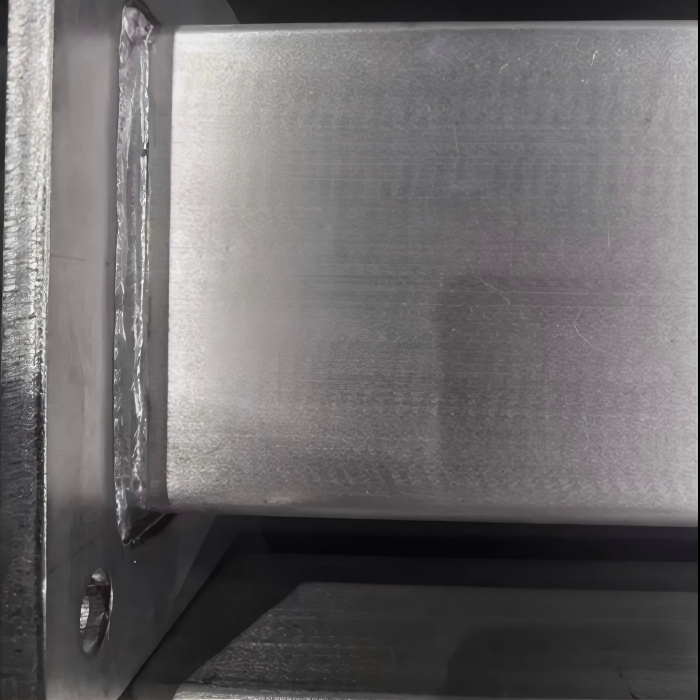
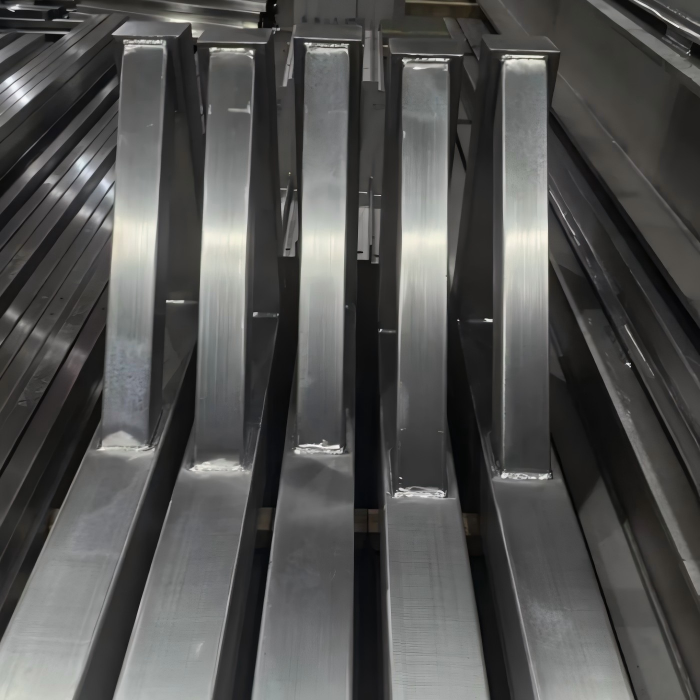
Common Applications and Industries:
Our clients use this welding service for many purposes.
Industrial Equipment Mounting:
Used for securing motors, pumps, conveyors, compressors, and other heavy machinery. These support structures are designed to handle substantial loads while maintaining long-term reliability.
Pipe and Conduit Supports:
Suitable for both horizontal and vertical installations, these assemblies are engineered to accommodate vibration, thermal expansion, and varying load conditions commonly found in industrial facilities.
Shelving and Racking Systems:
Applications include warehouse storage systems, mezzanines, workstations, and industrial shelving. Structural support components are designed to provide dependable load-bearing performance for demanding environments.
Machine Guards and Safety Covers:
Protective frames and mounting structures are commonly used around moving equipment to improve workplace safety while maintaining convenient access for inspection and maintenance.
Solar Panel Mounting Frames:
Used in both rooftop and ground-mounted solar installations, these structural components are designed to withstand environmental exposure, wind loading, and long-term outdoor service conditions.
Food Processing Equipment:
Common applications include conveyor stands, stainless work tables, processing equipment supports, and washdown stations. Materials and finishes can be selected to meet sanitation and corrosion-resistance requirements.
Automotive Manufacturing:
Widely used in assembly fixtures, tooling supports, parts racks, and production-line equipment. Precision fabrication ensures accurate mounting locations and repeatable installation performance.
Frequently Asked Questions About Welded Steel Brackets:
Q1: What material is best for a welded steel bracket?
A: For most industrial applications, 304 stainless steel is the best choice due to its corrosion resistance and strength. For marine or chemical environments, 316 stainless is recommended.
Q2: How much weight can your welded steel bracket hold?
A: Load capacity depends on material thickness and design. A standard 6 inch L bracket made from 1/4 inch 304 stainless can hold up to 500 pounds. We can design for any load requirement.
Q3: Why does my welded steel bracket keep bending?
A: Bending indicates insufficient material thickness or poor design. We can analyze your application and recommend the correct material gauge and gusset placement for your welded steel bracket.
Q4: Can you make a custom welded steel bracket for my equipment?
A: Yes. We specialize in custom fabrication. Send us a drawing or sketch with dimensions and load requirements, and we will manufacture the perfect welded steel bracket for your application.
Q5: What is the standard tolerance for hole placement?
A: Our standard tolerance for hole locations on a welded steel bracket is plus or minus 1/32 inch. Tighter tolerances are available for precision applications.