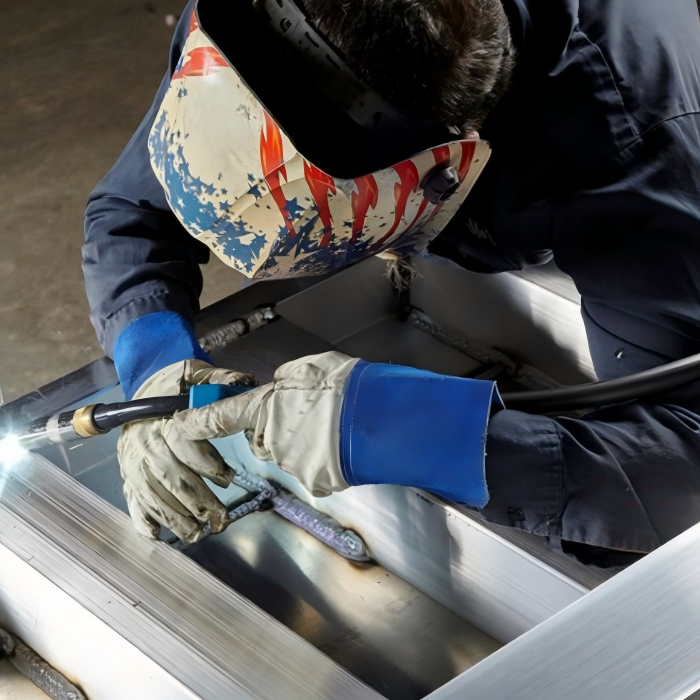
Escolher o processo de soldagem certo para o seu projeto de alumínio não é apenas uma questão de preferência do operador ou do que sempre foi feito no chão de fábrica—isso tem um impacto direto na qualidade das peças, nos custos de produção e na confiabilidade de longo prazo. Em nossa instalação, ouvimos a pergunta sobre soldagem de alumínio TIG vs MIG quase todos os dias, tanto de engenheiros quanto de equipes de compras, e por um bom motivo: esses dois processos produzem resultados claramente diferentes, e fazer a escolha errada pode ser caro.
O alumínio é inerentemente difícil de soldar. Ele forma uma camada de óxido quase instantaneamente, conduz o calor para longe muito mais rápido que o aço e é altamente suscetível a distorções sem um controle cuidadoso. É por isso que, quando avaliamos a soldagem de alumínio TIG vs MIG, a verdadeira questão continua a mesma: Qual processo lhe dará o melhor resultado para a sua aplicação específica?
Neste guia, cortamos o jargão técnico e comparamos TIG e MIG em alumínio sob a perspectiva de um parceiro de manufatura—não apenas do ponto de vista de um soldador. Se você é novo na soldagem de alumínio ou está reavaliando sua abordagem atual, esta comparação lado a lado fornecerá a clareza necessária para tomar uma decisão confiante.
Soldagem MIG de Alumínio: Produção em Alta Velocidade Sem Compromisso
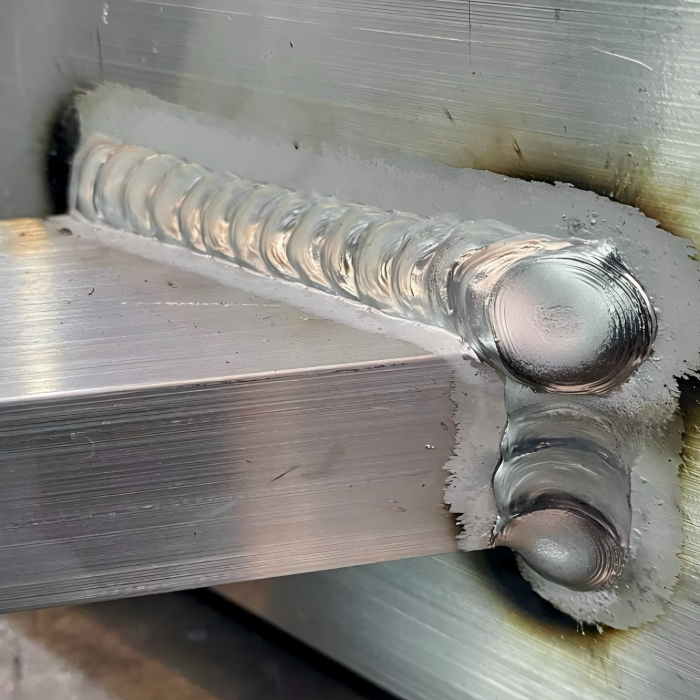
Quando a discussão se volta para a soldagem de alumínio TIG vs MIG em produção de alto volume, o MIG consistentemente surge como o líder. Onde quer que a velocidade de deposição e o rendimento tenham prioridade, o MIG entrega desempenho excepcional—especialmente quando combinado com a configuração e a técnica certas.
O que o MIG Traz para Suas Peças:
Maior Produção:
No debate sobre soldagem de alumínio TIG vs MIG, o MIG deposita metal de solda a uma taxa significativamente mais rápida—frequentemente o triplo do TIG. Para grandes pedidos de produção, essa vantagem se traduz diretamente em prazos mais curtos e menor custo por unidade.
Fusão Mais Forte em Seções Espessas:
O arco de alta energia proporciona penetração profunda, tornando o MIG uma escolha sólida para calibres mais pesados. Para quem está avaliando a soldagem de alumínio TIG vs MIG em espessuras de chapa acima de ¼", o MIG oferece a resistência de junta necessária para aplicações estruturais e de suporte de carga.
Qualidade Repetível e Confiável:
Com sistemas MIG semiautomáticos ou totalmente automatizados, a consistência da solda permanece alta em longas costuras e grandes lotes de produção—uma clara vantagem na equação de soldagem de alumínio TIG vs MIG para eficiência no chão de fábrica.
Quando o MIG se Adequa Melhor ao Seu Projeto:
- A espessura do material excede 3/16" (4,8 mm)
- Grandes peças estruturais que exigem soldas longas e contínuas
- Produção em alto volume onde o controle de custos é uma prioridade
- Aplicações onde uma pequena quantidade de limpeza pós-soldagem é aceitável
Se o seu projeto atende a essas condições, sua decisão sobre soldagem de alumínio TIG vs MIG fica muito mais clara—e o MIG provavelmente é a sua resposta. vs MIG a decisão pende claramente para o MIG. soldagem de alumínio a decisão pende claramente para o MIG.
A Diferença Técnica Central: O Que Realmente Acontece no Arco?
Entender os mecanismos por trás do TIG e do MIG é essencial para qualquer comparação significativa de soldagem de alumínio TIG vs MIG. Esses fundamentos afetam diretamente a aparência, a resistência e o custo das suas peças acabadas.
| Aspecto | MIG (Gás Inerte de Metal) | TIG (Gás Inerte de Tungstênio) |
|---|---|---|
| Como Funciona | Um arame alimentado continuamente atua tanto como eletrodo quanto como metal de adição. | Um eletrodo de tungstênio não consumível cria o arco; o metal de adição é adicionado manualmente. |
| Entrada de Calor | Maior calor geral no material de base. | Calor preciso e localizado com controle independente por pedal. |
| Taxa de Deposição | Rápida—até 3x mais rápida que o TIG. | Lenta—deposição meticulosa e controlada. |
| Habilidade do Operador | Moderada (máquinas modernas com pulso auxiliam significativamente). | Alta (exige experiência e coordenação significativas). |
| Aplicações Típicas | Estruturas estruturais, equipamentos pesados, componentes marítimos. | Fabricações personalizadas, aeroespacial, automotivo, invólucros de parede fina. |
Esta é a base de qualquer discussão sobre soldagem de alumínio TIG vs MIG. A escolha depende, em última análise, do que você prioriza: velocidade e volume, ou precisão e estética.
Soldagem TIG de Alumínio: Precisão, Estética e Integridade Estrutural
No outro lado do espectro de soldagem de alumínio MIG vs. TIG está o TIG—o padrão de referência em qualidade na fabricação de alumínio. Quando uma peça exige aparência impecável, distorção mínima ou desempenho estrutural crítico, o TIG é frequentemente o processo preferido.
O que o TIG Entrega para o Seu Produto:
Estética Superior:
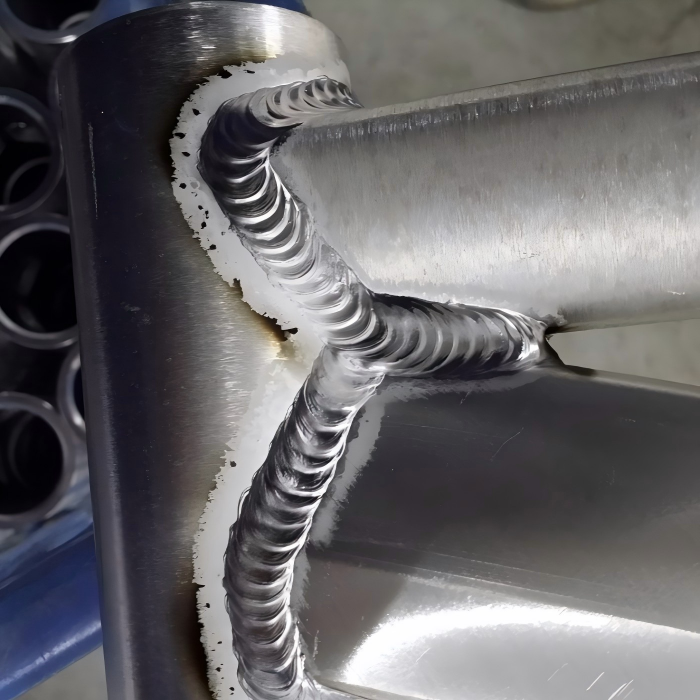
O perfil de solda em pilha de moedas é a marca do artesanato premium. No debate de soldagem de alumínio TIG vs. MIG, o TIG vence inequivocamente em aparência—crítico para produtos voltados ao consumidor e elementos arquitetônicos.
Distorção Térmica Mínima:
A entrada de calor precisa significa menos empenamento. Para invólucros de parede fina e peças com tolerâncias apertadas, esse fator sozinho pode decidir sua escolha de soldagem de alumínio MIG vs. TIG.
Propriedades Metalúrgicas Superiores:
A menor entrada de calor geral preserva a resistência da zona afetada pelo calor (ZAC), resultando em peças acabadas mais fortes e duráveis.
Zero Salpicos:
Sem salpicos significa sem retificação pós-soldagem—reduzindo o tempo e o custo de processamento secundário.
Quando o TIG é a Escolha Certa para o Seu Projeto:
- A espessura do material é inferior a 1/8" (3,2 mm)
- A aparência e o acabamento superficial são críticos
- As peças exigem tolerâncias dimensionais apertadas com distorção mínima
- A aplicação envolve padrões de grau alimentício, médico ou aeroespacial
Para esses cenários, a decisão de soldagem de alumínio MIG vs. TIG aponta firmemente para o TIG.

A Regra de Ouro para o Seu Projeto: Produção vs. Precisão:
Aqui está nossa estrutura de recomendação direta—construída a partir de centenas de projetos de alumínio que entregamos em diversos setores. Ela destila a decisão de soldagem de alumínio TIG vs MIG em dois caminhos claros:
Escolha MIG se o seu projeto envolver:
- Estruturas de equipamentos pesados, reboques ou estruturas marítimas
- Lotes de 100+ unidades onde o custo por peça é um fator crítico
- Espessura de material consistentemente acima de 3/16"
- Soldas com mais de 12 polegadas por junta
→ Veja nossas capacidades de soldagem MIG de alumínio
Escolha TIG se o seu projeto envolver:
- Invólucros personalizados, estruturas ou componentes arquitetônicos visíveis
- Tubos de parede fina ou chapas metálicas abaixo de 1/8"
- Aplicações onde a aparência é um ponto de venda
- Peças que exigem qualidade de raio-X ou soldas com zero porosidade
- Volume baixo a médio com alta complexidade
→ Veja nossas capacidades de soldagem TIG de alumínio
Este quadro resolve a maioria das perguntas que recebemos sobre soldagem de alumínio TIG vs MIG. Se o seu projeto se enquadra entre essas categorias, continue lendo—o Pulse MIG oferece um meio-termo atraente.
Comparação Lado a Lado: O Que Importa para Suas Peças:
Ao avaliar um parceiro de fabricação, estas são as métricas que devem orientar sua decisão de MIG vs. TIG para soldagem de alumínio:
| Fator | MIG | TIG |
|---|---|---|
| Espessura de Material Ideal | > 3/16″ (seções mais espessas) | < 1/8″ (seções finas) |
| Custo Relativo por Peça | Menor para altos volumes | Maior (processo mais lento) |
| Prazo de Entrega | Mais rápido para pedidos grandes | Mais lento para pedidos complexos/pequenos |
| Aparência da Solda | Boa (Pulse MIG se aproxima da qualidade do TIG) | Excelente (acabamento de pilha de moedas) |
| Risco de Distorção | Maior em materiais finos | Baixo em todas as espessuras |
| Necessidades de Pós-Processamento | Moderado (remoção de respingos) | Mínimo (pronto para acabamento) |
Esta visão lado a lado é a peça central de qualquer guia prático de MIG vs. TIG para soldagem de alumínio. Use-a como referência ao revisar os requisitos do projeto.
Por Que o Pulse MIG Está Preenchendo a Lacuna?
Se você tem explorado a questão da soldagem de alumínio TIG vs MIG, é provável que tenha encontrado o Pulse MIG. Esta tecnologia mudou o jogo, oferecendo uma solução híbrida que não existia antes.
O que ela traz para suas peças:
- Reduz respingos em até 80% em comparação ao MIG convencional
- Permite soldagem em bitolas mais finas (a partir de 18 gauge) sem risco de queima
- Produz aparência de solda próxima à do TIG
- Mantém velocidades de deslocamento bem acima do que o TIG pode alcançar
Nossa perspectiva:
Em nossa oficina, recorremos ao Pulse MIG para trabalhos que ficam entre a produção de alto volume e o trabalho de precisão fina. Ele não substitui a necessidade de entender os princípios fundamentais da soldagem de alumínio TIG vs MIG, mas nos dá uma terceira opção útil para as aplicações certas.
Impacto de Custo no Mundo Real: A Perspectiva de um Parceiro de Fabricação
Para ilustrar como a decisão de MIG vs. TIG para soldagem de alumínio afeta seus resultados financeiros, vamos examinar dois cenários reais:
Cenário 1: 100 Unidades de uma Estrutura de Equipamento Pesado (Alumínio de 1/4″)
| Rota MIG | Rota TIG | |
|---|---|---|
| Tempo de Produção Estimado | 2,5 horas por unidade | 8,5 horas por unidade |
| Custo Total de Mão de Obra | Menor | 3x maior |
| Custo por Unidade | Mais econômico | Significativamente maior |
| Nossa Recomendação | MIG é claramente a escolha certa aqui | — |
→ Veja projetos semelhantes de estruturas pesadas que entregamos
Cenário 2: 50 Unidades de uma Estrutura de Exibição Personalizada (Alumínio de 1/16″)
| Rota MIG | Rota TIG | |
|---|---|---|
| Risco de Distorção | Alto — requer gabaritos e retrabalho | Baixo — entrada de calor controlada |
| Taxa de Sucata | ~15-20% | < 1% |
| Acabamento Pós-Solda | Retificação extensa necessária | Mínimo — pronto para anodização |
| Nossa Recomendação | TIG entrega melhor valor total aqui | — |
→ Veja projetos semelhantes de estruturas de precisão que entregamos
Esses cenários demonstram por que a decisão de MIG vs. TIG para soldagem de alumínio nunca é única para todos. A escolha certa depende inteiramente dos parâmetros específicos do seu projeto.
Garantia de Qualidade: O Que Garantimos para Cada Solda
Não importa qual direção você tome em sua decisão de soldagem de alumínio TIG vs MIG, toda solda que sai de nossas instalações é mantida sob rígidos padrões de qualidade. Nossas capacidades incluem:
Inspeção Dimensional: Sistemas de medição CMM e ópticos para verificar tolerâncias
Ensaios Não Destrutivos: Opções incluem inspeção por líquido penetrante, raio-X e ultrassom
Acabamento de Superfície: Limpeza pré-solda e preparação pós-solda para suportar anodização ou pintura
Rastreabilidade de Material: Documentação completa garantindo verificação de liga em cada etapa
Conclusão: Vamos Encontrar o Processo Certo para Suas Peças
Não há uma resposta única para a questão da soldagem de alumínio TIG vs MIG—apenas o ajuste certo para sua aplicação específica. A melhor escolha depende de fatores como espessura do material, volume de produção, requisitos estéticos e restrições orçamentárias.
O que prometemos a você:
Não aplicamos um processo de soldagem padrão em todos os trabalhos. Em vez disso, revisamos seus desenhos, estudamos como sua peça será usada e então recomendamos—e executamos—o processo que oferece o equilíbrio ideal de qualidade, custo e prazo de entrega. Seja MIG de alta velocidade para sua produção em larga escala ou TIG de precisão para seu protótipo personalizado, temos as habilidades e o equipamento para tornar isso realidade.
A escolha entre soldagem de alumínio TIG vs MIG é crítica. Estamos aqui para garantir que você escolha com sabedoria.
Pronto para discutir seu projeto de soldagem de alumínio?
Nossa equipe de engenharia está à disposição para avaliar seus desenhos, recomendar o processo certo e fornecer um orçamento competitivo—tudo em uma única etapa.
Comece hoje:
- Envie seus desenhos → Receba uma avaliação gratuita do processo
- Explore nossas capacidades → Navegue pela galeria de casos de soldagem de alumínio
- Tem perguntas? → Fale diretamente com nossos engenheiros de soldagem
Entregamos soluções bem-sucedidas de soldagem de alumínio em uma ampla gama de indústrias—automotiva, marítima, arquitetônica, equipamentos médicos e maquinário industrial. Vamos tornar seu projeto o próximo dessa lista.