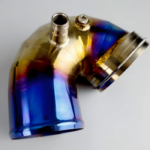
Welding Pipe Flanges are mechanical components used to connect pipes, valves, pumps, fittings, and other equipment. Unlike permanent pipe connections, a flange connection can usually be opened for inspection, maintenance, or replacement.
For machinery manufacturers, the value of Welding Pipe Flanges goes beyond simply joining two pipes. The flange must match the pipe dimensions, maintain correct alignment, withstand the working environment, and provide a reliable connection after welding and assembly.
The right flange design depends on the pipe size, material, pressure, temperature, connection method, and application.
What Are Welding Pipe Flanges?
A welding pipe flange is normally attached to a pipe or fitting by welding. The finished component can then be connected to another flange using bolts and, where required, a gasket.
A typical connection may include:
- Pipe
- Flange
- Weld joint
- Gasket
- Bolts and nuts
- Valve or equipment connection
This structure makes Welding Pipe Flanges useful for systems that require both structural connection and future maintenance.
Why Use Flanges Instead of Permanent Pipe Connections?
A welded pipe joint can provide a permanent connection, but it is not always convenient for equipment that requires regular maintenance.
A flange assembly can be disconnected without cutting the pipe.
This is particularly useful around:
- Pumps
- Valves
- Filters
- Heat exchangers
- Pressure equipment
- Industrial machinery
For equipment manufacturers, this can reduce maintenance time and simplify component replacement.
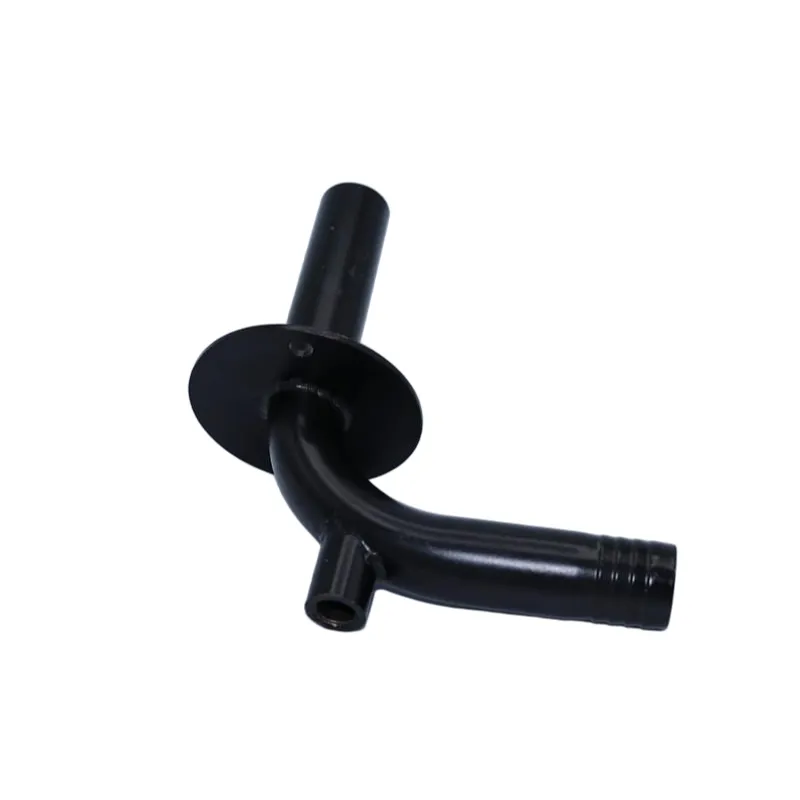
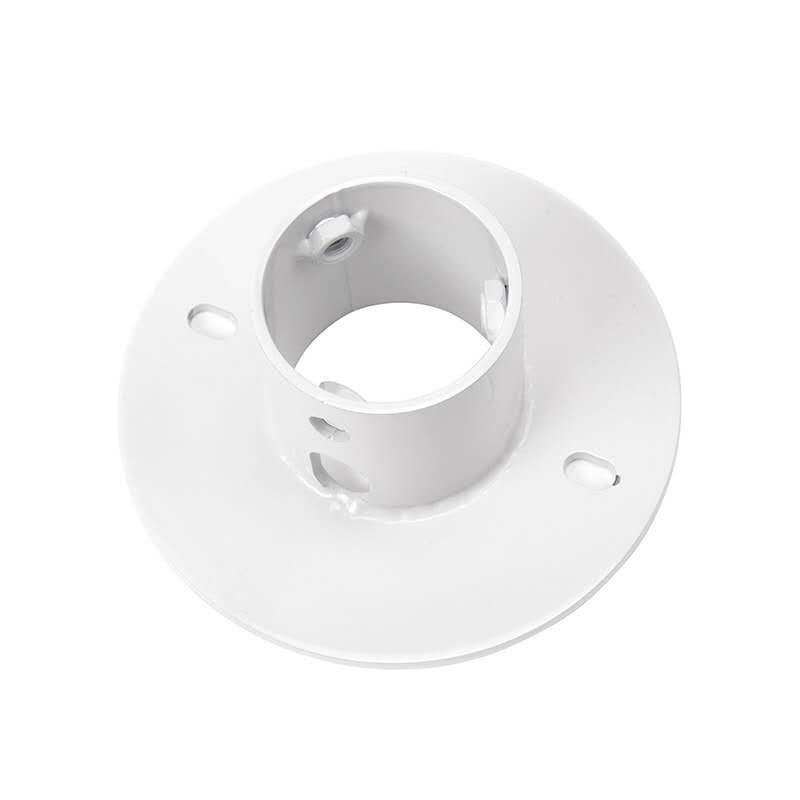
Types of Welding Pipe Flanges
Different flange designs are used for different mechanical requirements. Selecting the correct type is one of the first decisions in a flange project.
| Flange Type | Typical Application | Main Consideration |
|---|---|---|
| Welded Pipe Flange | General piping | Alignment and welding |
| Flanged Reducer | Pipe size transition | Dimensional matching |
| Flanged Tee Fittings | Branch connections | Branch orientation |
| V Band Flange | Fast-release systems | Clamp and sealing |
| Turbo Exhaust Flange | Exhaust systems | Heat and vibration |
| Long Weld Neck Flange | Demanding pipe systems | Strength and stress |
Flanged Reducer
A Flanged Reducer connects pipes with different diameters.
For example, an equipment system may require a larger inlet pipe and a smaller outlet pipe. A reducer provides the transition while the flange makes installation and maintenance easier.
The overall length, centerline, flange dimensions, and pipe diameter need to match the equipment drawing.
Flanged Tee Fittings
Flanged Tee Fittings are used when a branch connection is required.
They can be found in:
- Cooling systems
- Fluid handling equipment
- Air systems
- Process machinery
- Industrial piping
The branch direction must be controlled carefully. A small orientation error can make installation difficult, especially when several components are connected together.
V Band Flange
A V Band Flange uses a V-shaped clamp to join two mating flange sections.
Compared with conventional bolted connections, the design can provide faster installation and removal.
It is often considered for:
- Exhaust systems
- Turbocharger assemblies
- Performance vehicles
- Compact machinery
The flange faces still need accurate alignment because the connection depends on proper contact between the mating surfaces.
Turbo Exhaust Flange
A Turbo Exhaust Flange is designed for exhaust applications where temperature and vibration can be significant.
The flange may experience repeated thermal expansion and contraction during operation.
Therefore, material selection, welding control, flange thickness, and dimensional accuracy should be considered together.
Long Weld Neck Flange
A long weld neck flange has a longer tapered neck between the flange body and the pipe connection.
Its geometry provides a gradual transition from the flange to the pipe.
This type of flange can be considered for demanding applications where connection strength and stress distribution are important.
Welding Process for Welding Pipe Flanges
The welding process has a direct effect on flange accuracy and final performance.
Before welding, the pipe and flange should be properly prepared and aligned.
Step 1: Material and Dimensional Inspection
Before fabrication, the supplier should verify:
- Material
- Pipe diameter
- Wall thickness
- Flange dimensions
- Drawing requirements
Incorrect material or dimensions can create problems later in production.
Step 2: Joint Preparation
The pipe end and flange connection need to be clean and properly prepared.
The fit-up should be checked before welding.
Good fit-up helps reduce unnecessary welding correction and improves dimensional stability.
Step 3: Tack Welding and Alignment
The flange should be positioned using suitable fixtures or alignment methods.
Tack welds help maintain the position before final welding.
For complex Welding Pipe Flanges, the welding sequence should be planned before production.
Step 4: Controlled Welding
Welding heat causes expansion and contraction.
If heat input is excessive or welding is performed unevenly, the flange may become distorted.
A controlled welding sequence can help maintain:
- Flange flatness
- Pipe alignment
- Bolt-hole position
- Overall dimensions
Step 5: Final Inspection
After welding, the finished component should be checked against the drawing.
Depending on the application, inspection may include visual weld inspection and dimensional measurement.
Accuracy Requirements for Welding Pipe Flanges
Accuracy is one of the most important factors when Welding Pipe Flanges are installed into mechanical equipment.
A flange may have acceptable weld appearance but still create an assembly problem if its position is incorrect.
Critical Dimensions to Check
| Inspection Item | Why It Matters |
|---|---|
| Flange Outside Diameter | Ensures dimensional compatibility |
| Bolt Hole Position | Allows proper bolt connection |
| Flange Face | Supports reliable sealing |
| Pipe Centerline | Prevents assembly misalignment |
| Overall Length | Matches equipment layout |
| Flange Orientation | Ensures correct installation |
For equipment manufacturers, these dimensions should be checked before shipment rather than discovered during final assembly.
Applications of Welding Pipe Flanges
Welding Pipe Flanges are used across many mechanical and industrial systems because they combine a strong pipe connection with easier maintenance.
Industrial Machinery
Machinery manufacturers may use flange connections around pumps, valves, filters, tanks, and other equipment.
A flange allows individual components to be removed without rebuilding the entire pipe system.
This is particularly useful for machines that require regular servicing.
Fluid Handling Systems
Fluid systems often contain multiple pipe sizes and branches.
A Flanged Reducer can connect different pipe diameters, while Flanged Tee Fittings can create branch lines.
Together, these components allow engineers to build more flexible piping layouts.
Cooling and Circulation Systems
Industrial equipment often requires cooling water, oil, or other circulating fluids.
Flanged connections allow pumps, filters, heat exchangers, and valves to be separated for inspection or replacement.
In these systems, accurate alignment is important because excessive pipe stress can affect connected equipment.
Exhaust and Turbo Systems
Exhaust applications have different requirements from low-temperature fluid systems.
A Turbo Exhaust Flange or V Band Flange may be selected when temperature, vibration, and maintenance access are important.
The connection needs to remain stable during repeated heating and cooling cycles.
Pressure and Process Equipment
More demanding systems may require specialized flange designs such as a long weld neck flange.
Here, engineers need to consider operating pressure, temperature, material, pipe dimensions, and applicable standards before selecting the final configuration.
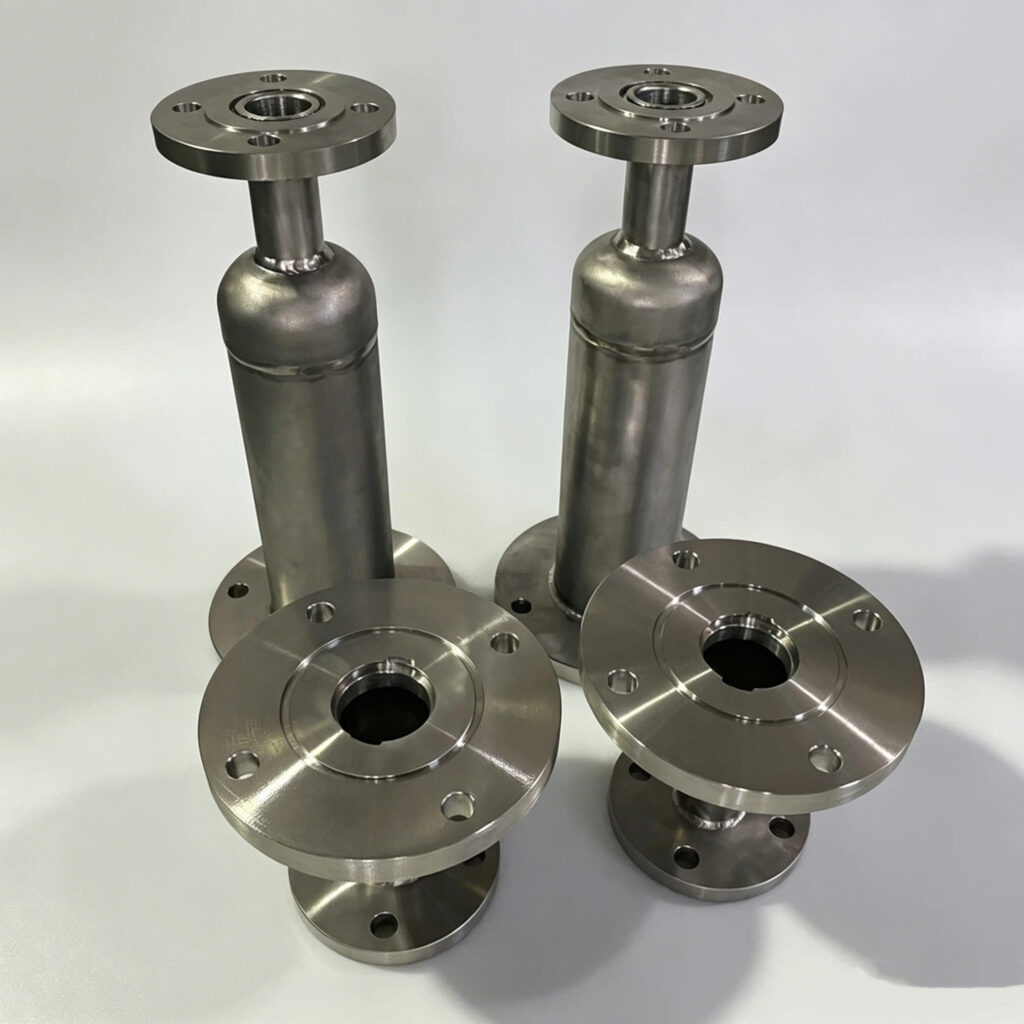
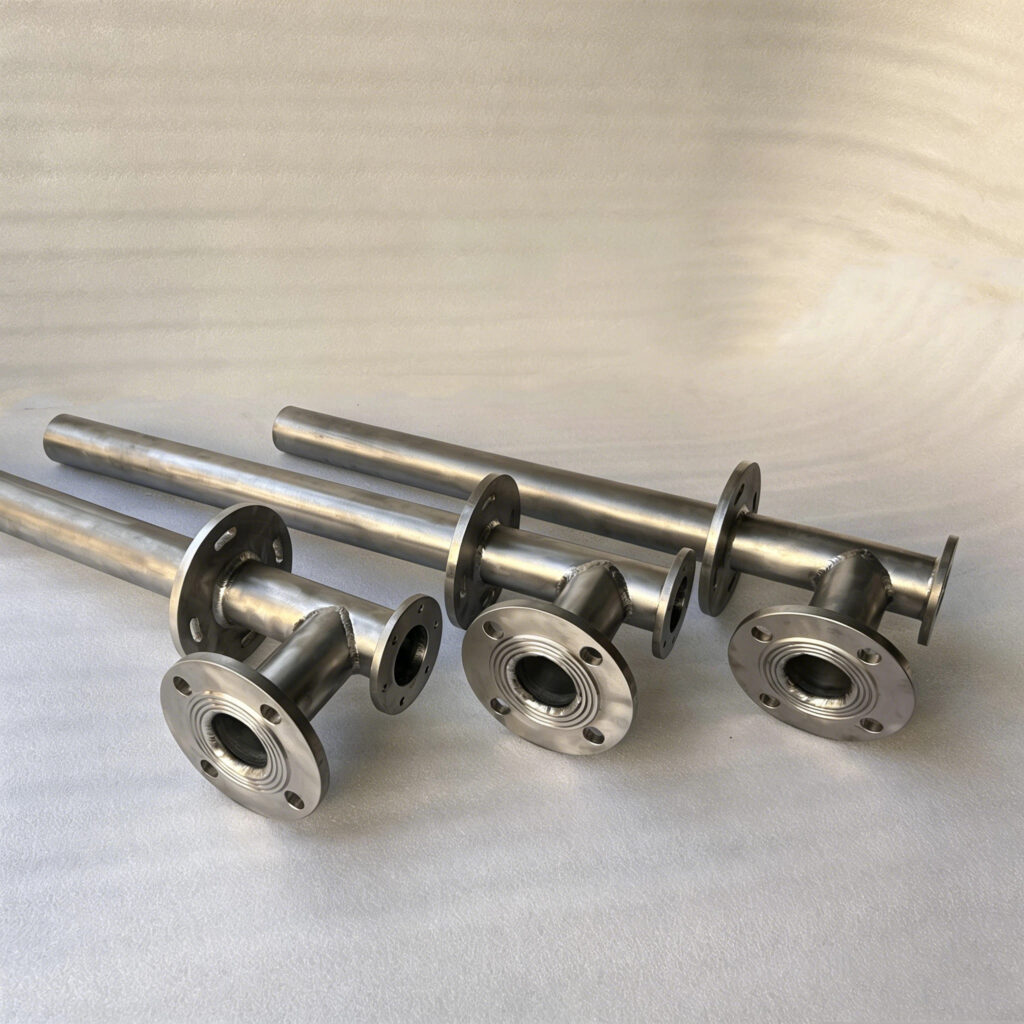
How to Choose a Welding Pipe Flange Supplier
For purchasing teams, choosing a flange supplier should involve more than comparing unit prices.
The supplier should be able to understand drawings and identify potential manufacturing problems before production.
Check Manufacturing Consistency
Ask whether the supplier can maintain consistent:
- Flange dimensions
- Pipe alignment
- Weld quality
- Bolt-hole position
- Overall assembly dimensions
This becomes increasingly important when ordering multiple batches.
Confirm Prototype Capability
For a new machine or piping design, a prototype can be useful before full production.
A prototype allows engineers to check:
- Physical fit
- Installation sequence
- Flange orientation
- Welding deformation
- Compatibility with mating components
This can prevent larger production problems later.
Consider Engineering Communication
A good supplier should be able to communicate when a drawing creates a manufacturing concern.
For example, if a flange position may cause welding deformation or make assembly difficult, identifying the issue before production is more valuable than simply following the drawing without discussion.
Manufacturing Capability for Custom Welding Pipe Flanges
Producing reliable Welding Pipe Flanges requires coordination between material preparation, fitting, welding, dimensional control, and inspection.
A capable manufacturer should be able to support customized drawings, prototype projects, and small-batch production while maintaining consistent manufacturing processes.
For projects involving a Flanged Reducer, Flanged Tee Fittings, V Band Flange, Turbo Exhaust Flange, or long weld neck flange, the supplier should understand not only how to manufacture the individual component but also how it will be installed in the customer’s complete system.
Final Thoughts on Welding Pipe Flanges
Welding Pipe Flanges are simple-looking components with an important role in mechanical systems.
Their performance depends on several factors:
- Correct flange selection
- Suitable material
- Proper joint preparation
- Controlled welding
- Accurate alignment
- Dimensional inspection
- Application-specific design
For machinery manufacturers, the best flange is not simply the one with the lowest price. It is the one that fits correctly, performs reliably, and reduces problems during assembly and maintenance.
Whether the project requires a Flanged Reducer, Flanged Tee Fittings, V Band Flange, Turbo Exhaust Flange, or long weld neck flange, careful design and controlled manufacturing are the foundation of a reliable flange assembly.