Aluminum welding is widely used in automotive, aerospace, marine, and industrial manufacturing because of its lightweight properties, corrosion resistance, and excellent strength-to-weight ratio.
However, learning how to weld aluminum can be more challenging than welding steel. Aluminum has a protective oxide layer and high thermal conductivity, which require proper cleaning, heat control, and welding techniques.
This guide explains how to weld aluminum, including the best aluminum welding methods, material selection, preparation steps, common defects, and professional welding practices to help beginners and engineers achieve better welding results.
For applications requiring consistent weld quality, manufacturers provide TIG welding aluminum services for custom aluminum assemblies and industrial components. Understanding how to weld aluminum properly helps engineers select the right welding method and avoid common production issues.
How to Weld Aluminum: Understanding the Main Challenges
Before understanding how to weld aluminum, it is important to know why aluminum requires different welding techniques compared with steel.
The biggest challenge is the aluminum oxide layer. Although this layer protects aluminum from corrosion, it also has a much higher melting point than the aluminum material itself. If it is not removed properly, it can cause poor penetration and weld contamination.
Another challenge is aluminum’s high thermal conductivity. Heat spreads quickly through the material, making it more difficult to maintain a stable welding temperature.
In addition, aluminum expands more than steel when heated, which increases the risk of distortion and cracking during welding.
Aluminum vs Steel Welding Comparison:
| Property | Aluminum | Steel |
| Melting Point | 660°C | Around 1370°C |
| Thermal Conductivity | High | Medium |
| Oxide Layer | Strong protective film | Less influential |
| Heat Control Difficulty | Higher | Lower |
Proper preparation, suitable welding equipment, and skilled operation are essential for achieving high-quality aluminum welds. These factors form the foundation of how to weld aluminum and help prevent common welding failures during production.
Best Methods for Welding Aluminum:
When learning how to weld aluminum, choosing the right aluminum welding process depends on material thickness, production requirements, and final application.
TIG Welding Aluminum:
TIG (Tungsten Inert Gas) welding is one of the most popular methods for aluminum because it provides excellent control over heat input and produces clean, attractive welds.
Advantages:
- Precise heat control
- Excellent weld appearance
- Suitable for thin aluminum parts
- Low welding defects
For precision components and complex aluminum assemblies, professional TIG welding aluminum solutions are commonly used.
MIG Welding Aluminum:
MIG welding is faster than TIG and is often used for thicker aluminum parts or higher-volume production. However, it requires proper wire feeding systems and parameter adjustment.
Laser Welding Aluminum:
Laser welding provides high accuracy, minimal deformation, and excellent repeatability, making it suitable for automated manufacturing.
Comparison of Aluminum Welding Methods:
| Welding Method | Advantages | Suitable Applications |
| TIG Welding | High precision, clean welds | Thin and complex parts |
| MIG Welding | Fast production speed | Medium and thick aluminum |
| Laser Welding | Low distortion | Automated production |
How to Weld Aluminum Step by Step:
Learning how to weld aluminum successfully requires proper preparation, correct equipment settings, and careful process control.Successful aluminum welding requires proper preparation and process control.
Step 1: Select the Right Aluminum Alloy
Different aluminum alloys have different welding characteristics. Common weldable materials include 5052, 6061, and 6063 aluminum.
6061-T6 aluminum is widely used because it offers a good balance of strength, corrosion resistance, and weldability.
Step 2: Clean the Aluminum Surface
Surface preparation is critical because oil, dirt, and oxide contamination can create welding defects.
Recommended preparation steps:
- Remove grease and oil
- Clean the oxide layer
- Use dedicated stainless-steel brushes for aluminum
Step 3: Choose the Correct Filler Rod
Common aluminum filler materials include:
- ER4043: Good appearance and lower cracking risk
- ER5356: Higher strength and better corrosion resistance
The correct filler depends on the base material and application requirements.
Step 4: Adjust Welding Parameters
Proper current settings, shielding gas flow, and welding speed help maintain weld quality.
| Aluminum Thickness | Recommended Welding Method |
| Less than 3mm | TIG welding |
| 3-10mm | TIG or MIG welding |
| Above 10mm | MIG or high-power TIG |
Step 5: Control Heat Input
Excessive heat can cause distortion, while insufficient heat may result in incomplete fusion. Experienced welders control travel speed and welding sequence to achieve consistent results.
Common Aluminum Welding Defects and Solutions:
Even experienced welders may encounter problems when learning how to weld aluminum, especially during preparation and heat control.
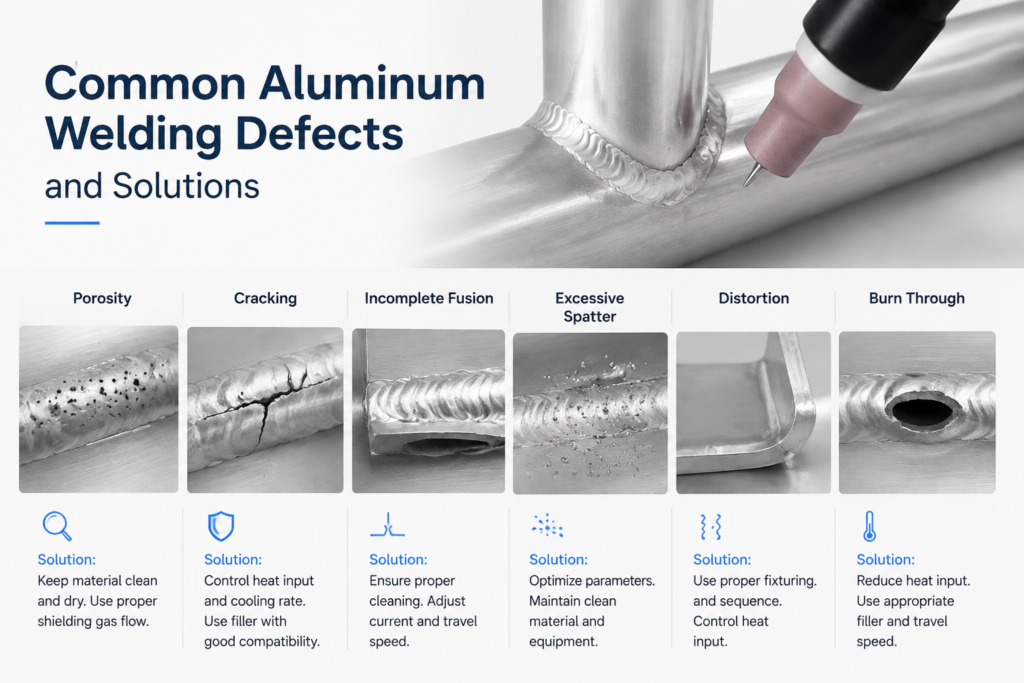
Professional aluminum welding manufacturers usually combine skilled welders, proper equipment, and inspection procedures to reduce defects and improve production consistency.
Choosing the Right Aluminum Alloy for Welding:
Selecting the correct aluminum alloy is an important step when planning an aluminum welding project.
Different alloys provide different levels of strength, corrosion resistance, and weldability.
| Aluminum Alloy | Key Features | Common Applications |
| 5052 | Excellent corrosion resistance | Marine components, tanks |
| 6061-T6 | Strong, versatile, easy to machine | Automotive parts, structures |
| 6063 | Good surface finish | Frames and profiles |
| 7075 | Extremely high strength | Aerospace applications |
For manufacturers requiring lightweight but durable assemblies, custom aluminum welding solutions can provide optimized welding processes based on material requirements and product design.
Industrial Applications of Aluminum Welding:
Aluminum welding is widely used across industries where weight reduction, durability, and corrosion resistance are important.
Automotive Industry:
Automakers use aluminum welding for:
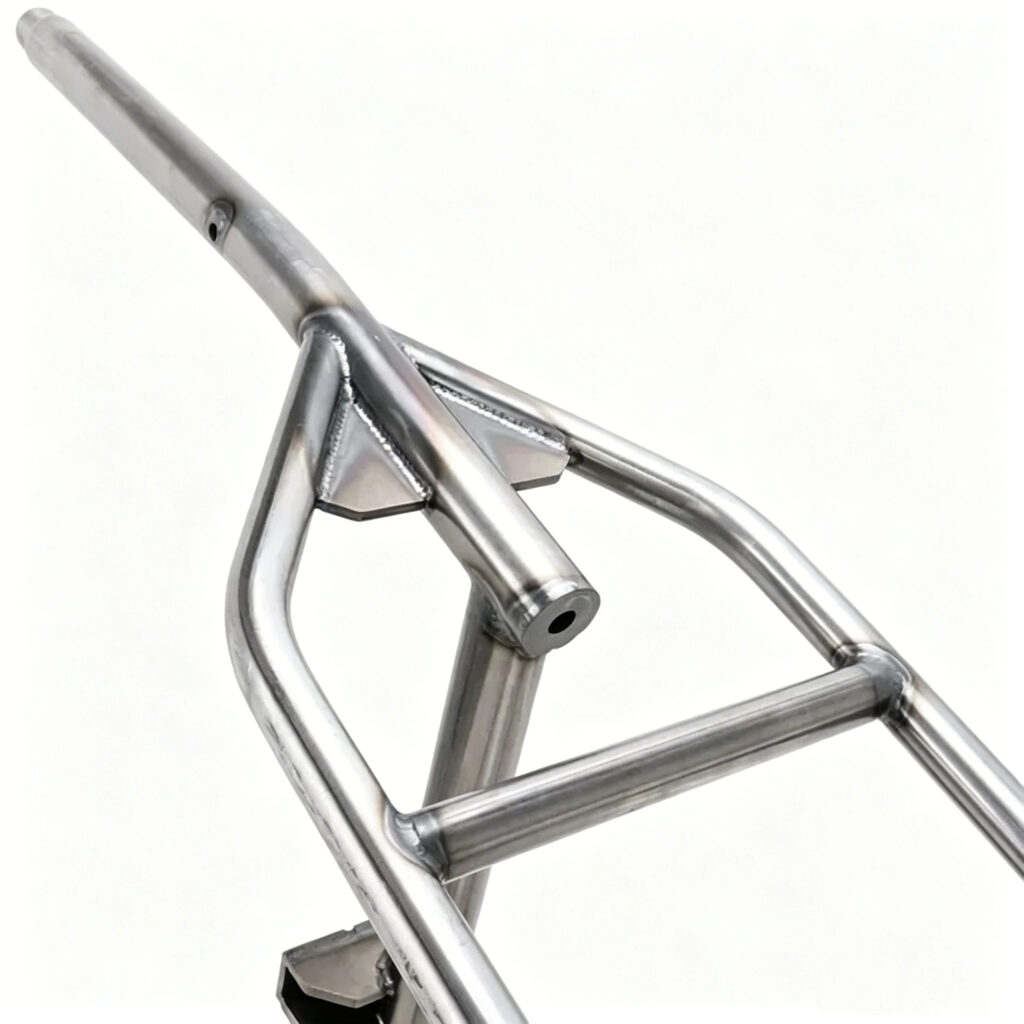
- Vehicle frames
- Battery housings
- Suspension components
- Lightweight structures
Aerospace Industry:
Aircraft manufacturers rely on aluminum alloys because they provide high strength while reducing overall weight.
Marine Industry:
Aluminum welding is commonly used for:
- Boat structures
- Marine equipment
- Offshore components
Industrial Manufacturing:
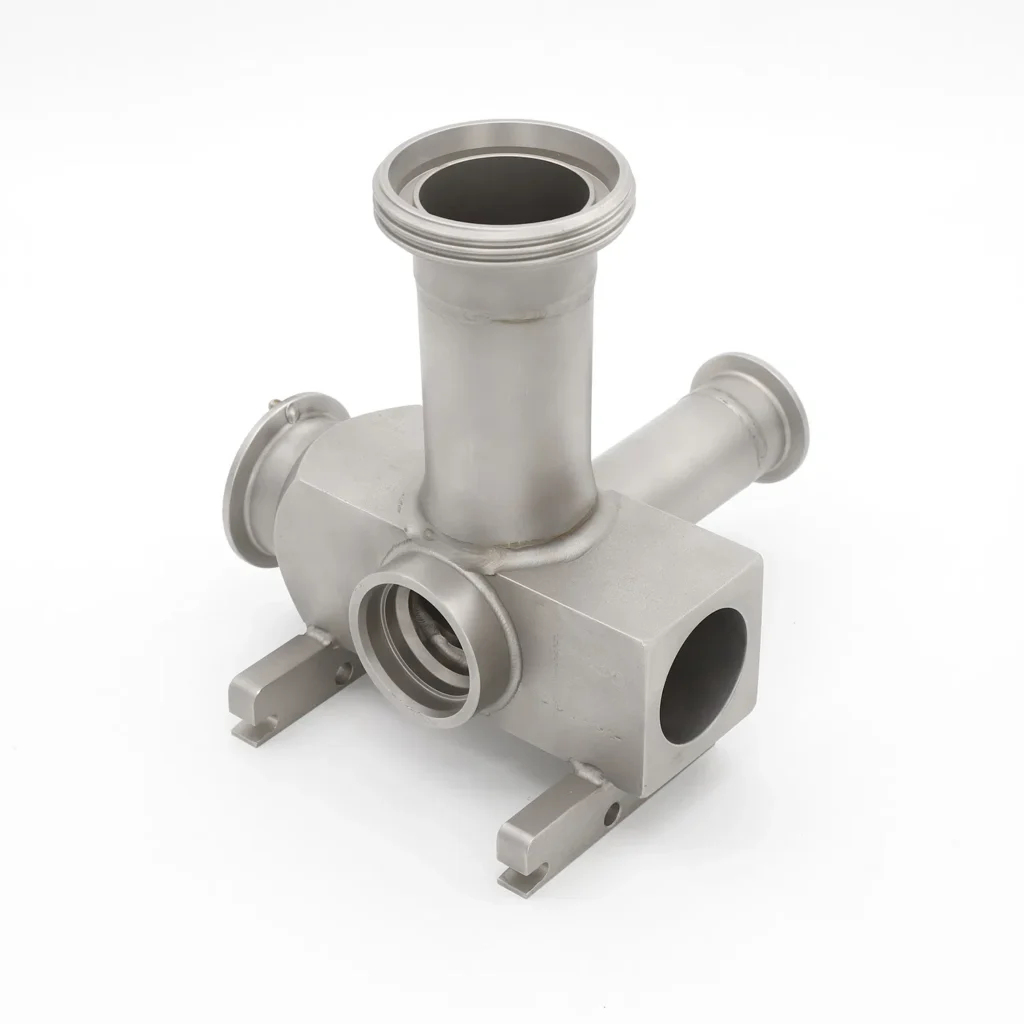
From machinery frames to custom fabricated parts, aluminum welding helps manufacturers create strong and lightweight products.
When projects require stable quality and repeatable results, professional TIG welding aluminum services are often selected for industrial applications.
FAQ About How to Weld Aluminum:
1. Can you weld aluminum without removing the oxide layer?
No. The oxide layer can prevent proper fusion and reduce weld strength. Cleaning the surface before welding is necessary to achieve better penetration and weld quality.
2. What type of welding machine is needed for aluminum?
An AC TIG welding machine is commonly used for aluminum because it provides better heat control and helps remove the oxide layer during welding.
3. Why does aluminum welding sometimes turn black?
Black marks are usually caused by contamination, poor shielding gas coverage, or incorrect welding settings. Proper cleaning and stable argon flow can reduce this problem.
4. What is the best aluminum thickness for TIG welding?
TIG welding is suitable for thin to medium-thickness aluminum parts. The ideal thickness depends on the material type, joint design, and welding equipment.
5. How long does aluminum welding take?
The welding time depends on part size, thickness, welding method, and complexity. Simple parts may take minutes, while complex assemblies require more preparation.
6. How can aluminum weld quality be tested?
Aluminum welds can be tested through visual inspection, dimensional checks, leak testing, and non-destructive testing methods to ensure reliability.
Conclusion:
Understanding how to weld aluminum requires knowledge of material properties, proper preparation, and the right welding method. Although aluminum welding is more challenging than steel welding, suitable techniques such as TIG welding can produce strong, clean, and reliable results. By understanding how to weld aluminum correctly, manufacturers can improve weld quality, reduce defects, and create durable aluminum assemblies.
For industrial applications requiring consistent quality, experienced aluminum welding specialists can help optimize welding processes, reduce defects, and achieve better product performance.