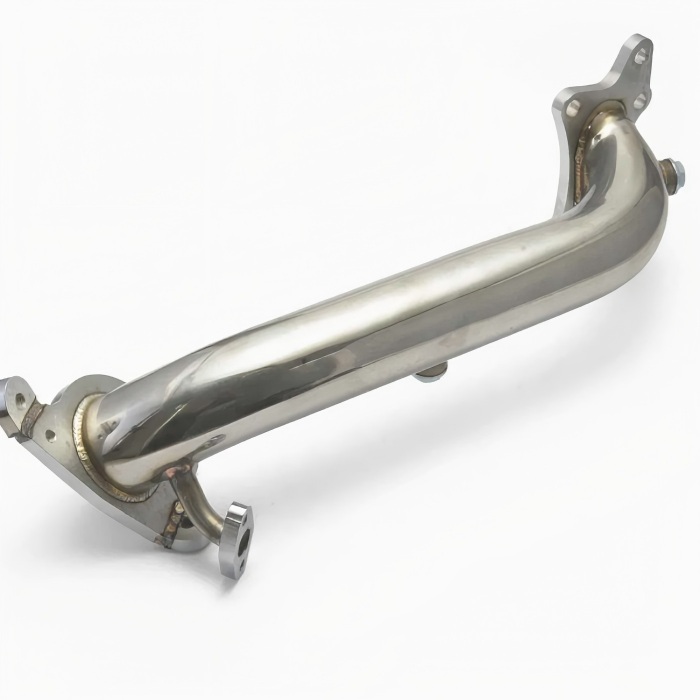

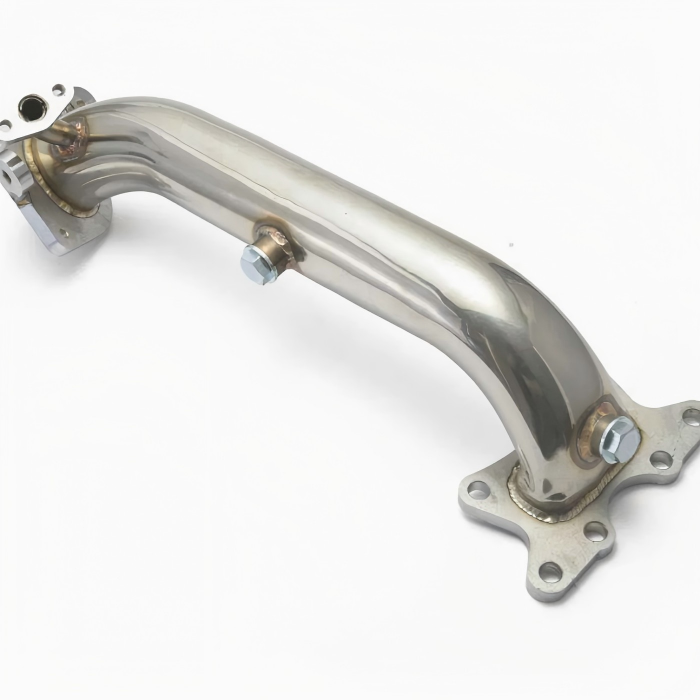
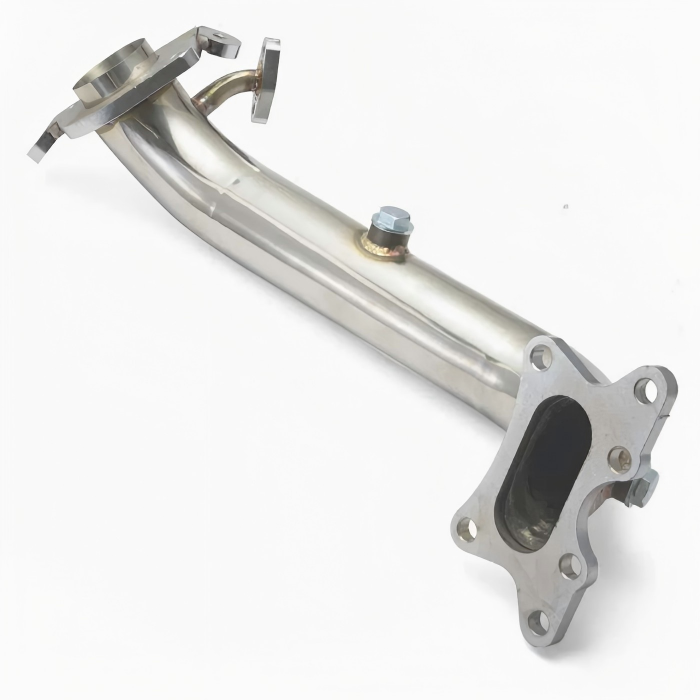
Turbo Exhaust Piping Welding Service 3 Inch Divorced Wastegate
Turbo exhaust piping done right—3-inch, divorced wastegate, no shortcuts. Better flow, faster spool, and that signature turbo whistle. Hit us up.
Request a Quote
Enter the quantity you need and add to your quote list for pricing inquiries.
Product Details
What Is Turbo Exhaust Piping?
This component is the exhaust pipe system that connects the turbocharger outlet to the catalytic converter or muffler. These pipes typically range from 2.5 to 4 inches in diameter and must withstand exhaust gas temperatures up to 1600°F. Stainless steel contains at least 10.5 percent chromium, which forms a passive oxide layer on the surface.
Our welding technique uses shielding gas—typically argon or a helium argon mix—to protect the molten weld pool from atmospheric oxygen. This allows the chromium to re form its protective layer as the weld cools. Properly welded turbo exhaust piping will resist rust at the weld line as effectively as the base metal. We also control heat input carefully because too much heat causes chromium carbide precipitation, a condition known as weld decay. By using low heat input and proper technique, we prevent this problem on every project.
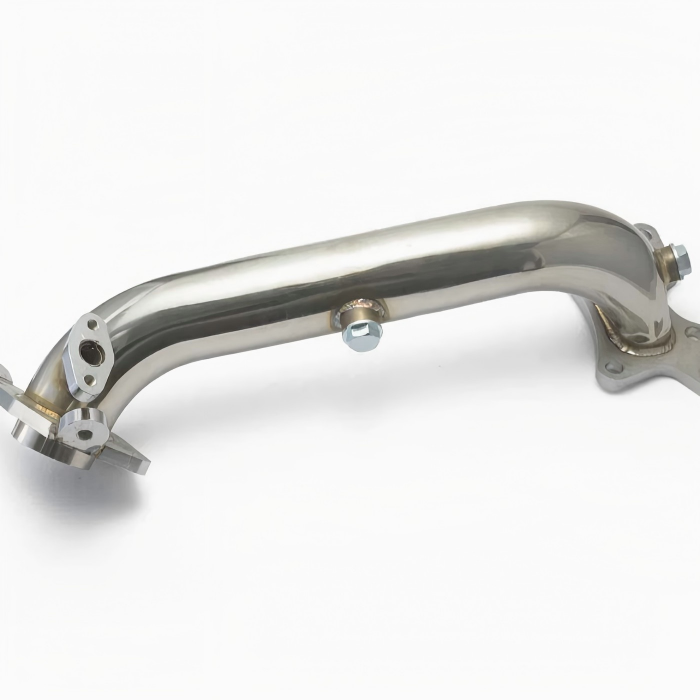
Common Turbo Exhaust Piping Configurations:
We manufacture a variety of turbo exhaust components to accommodate different vehicle platforms, power levels, and turbocharger arrangements.
Turbo Downpipe – Turbo Outlet to Catalytic Converter:
Positioned immediately after the turbocharger, this section experiences the highest exhaust temperatures and flow rates. Most street applications use 3-inch tubing, while high-output builds often benefit from 4-inch diameters for improved exhaust evacuation.
Divorced Wastegate Downpipe – Separate Wastegate Return:
This configuration incorporates an independent channel for wastegate discharge before merging it farther downstream. Separating the exhaust streams helps reduce turbulence and improves flow efficiency in performance-oriented applications.
Turbo-Back Exhaust System – Complete Exhaust Upgrade:
A turbo-back package replaces the entire exhaust tract from the turbine outlet to the rear exhaust tip. By upgrading every section, drivers can achieve greater airflow capacity and enhanced engine performance.
V-Band Connection System – Fast Serviceability:
Using V-band clamps instead of conventional bolted flanges simplifies installation and maintenance. The design also minimizes sealing issues, making it a popular choice for motorsport and high-performance vehicles.
Consistent Specifications for Future Orders:
All custom assemblies are documented with detailed measurements and fabrication records, allowing customers to reorder matching components whenever needed.
Material Selection for Turbo Exhaust Piping:
Not all stainless steel performs equally in turbo exhaust environments. We stock two primary alloys for these fabrication projects.
304 Stainless Steel – The standard choice for most turbo exhaust applications. Good corrosion resistance and excellent weldability make it our most popular material. Used for turbo exhaust piping in street cars, track cars, and mild performance builds. Handles continuous operation at 1200°F and spikes to 1600°F.
316 Stainless Steel – For extreme heat and corrosion environments. Molybdenum addition improves high temperature strength and pitting resistance. A 316 version costs more but is recommended for high boost applications and diesel turbo exhaust piping.
321 Stainless Steel – For the most demanding turbo applications. Titanium stabilization prevents carbide precipitation at extreme temperatures. Used for turbo exhaust piping in competition racing and endurance applications.
We do not recommend 409 stainless for turbo exhaust piping as its heat resistance is inadequate for turbo temperatures.
Welding Processes for Turbo Exhaust Piping:
We select the optimal welding process based on your pipe wall thickness and performance requirements.
GTAW for 1.5 mm to 3 mm Wall Thickness:
Manual TIG welding provides exceptional control over the weld pool and creates a smooth internal surface for unrestricted exhaust flow. For stainless steel tubing, we typically operate between 70 and 130 amps using 1/16-inch 308L or 309L filler rod. Argon back purging protects the root side of the weld from oxidation, making this process ideal for high-end and visible exhaust assemblies.
Pulsed MIG for 2 mm to 4 mm Wall Thickness:
Pulsed spray transfer minimizes spatter while increasing deposition rates and production efficiency. Our welding parameters generally range from 180 to 230 amps with 0.045-inch wire. This method offers an excellent balance between quality and cost for medium-volume manufacturing.
Robotic MIG for High-Volume Production:
When customers require large quantities of identical components, robotic welding delivers exceptional consistency and repeatability. Weld paths are generated directly from CAD data, ensuring each assembly meets the same dimensional and quality standards throughout the production run.
Joint Configurations for Turbo Exhaust Piping:
We offer several joint types for connecting turbo exhaust piping sections.
V-Band Clamp Connection – Easy Service and Maintenance:
Two flanged ends are secured with a V-band clamp to create a strong, leak-resistant seal without the need for gaskets. This design allows rapid assembly and disassembly, making it the preferred choice for most performance applications.
3-Bolt Flange – OEM-Style Mounting:
A triangular flange secured with three fasteners provides a reliable factory-style connection. Commonly found on many Japanese vehicles, this configuration typically uses a multi-layer steel gasket to ensure proper sealing.
2-Bolt Flange – Popular on European Vehicles:
Featuring an oval-shaped flange and two mounting points, this style is widely used on European platforms. It offers a compact and durable connection for a variety of exhaust applications.
Slip-Fit Connection – Adjustable Installation:
One section of tubing slides into the adjoining section and is secured with a band clamp. This arrangement provides flexibility during installation and is frequently used in custom fabrication projects and universal exhaust kits.
Common Applications:
Our clients use this welding service for many performance applications.
Street Performance Cars:
Turbocharged street vehicles require durable exhaust systems that can withstand daily driving and elevated operating temperatures. We typically fabricate these assemblies from 304 stainless steel with 3-inch tubing, supporting applications up to 600 horsepower.
Track and Race Cars:
Motorsport applications demand maximum strength, reliability, and serviceability. For racing environments, we often use 316 stainless steel combined with V-band connections to withstand extreme temperatures and power levels exceeding 1,000 horsepower.
Diesel Trucks:
Turbo-diesel engines generate significant vibration and sustained load conditions. To improve durability, we manufacture these exhaust assemblies with reinforced welds and thicker 3 mm wall tubing.
Import Cars:
Japanese and European performance vehicles often require precise fitment and factory-style mounting points. Our fabrication process incorporates OEM-style flanges to simplify installation and maintain compatibility with existing components.
Custom Fabrication:
For one-off turbocharger projects, we can build fully customized assemblies based on customer drawings, CAD models, measurements, or physical templates. Each system is designed to match the vehicle’s unique routing and performance requirements.
Frequently Asked Questions About Turbo Exhaust Piping:
Q1: What size turbo exhaust piping do I need for my horsepower goal?
A: For up to 400 horsepower, 2.5 inch is sufficient. For 400 to 700 horsepower, 3 inch is recommended. For 700 to 1000 horsepower, 3.5 inch is ideal. Above 1000 horsepower, 4 inch or larger is required.
Q2: Is 304 stainless steel good for turbo exhaust piping?
A: Yes, 304 stainless is excellent for most turbo applications. It handles up to 1600°F exhaust gas temperatures and resists corrosion well. For extreme racing applications, 321 stainless offers even higher heat resistance.
Q3: Why do my turbo exhaust piping welds keep cracking?
A: Cracking is usually caused by lack of back purging during welding, which causes internal sugaring, or using incorrect filler metal. Our back purging process and proper 309L filler prevent these issues.
Q4: Do you offer mandrel bent turbo exhaust piping?
A: Yes. All our bends are mandrel bent to maintain full pipe diameter through the curve. This maximizes exhaust flow and turbo response compared to crush bent pipes.
Q5: How long does it take to get a custom turbo exhaust piping system?
A: Custom turbo exhaust piping typically ships within 7 to 10 business days. Standard configurations ship within 5 business days.