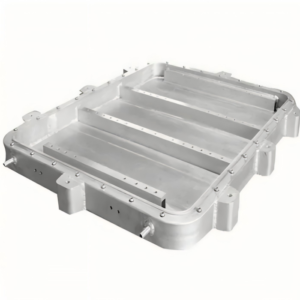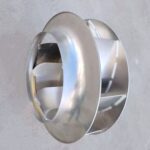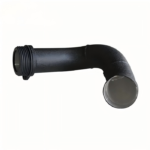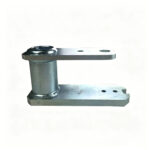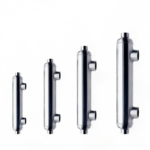
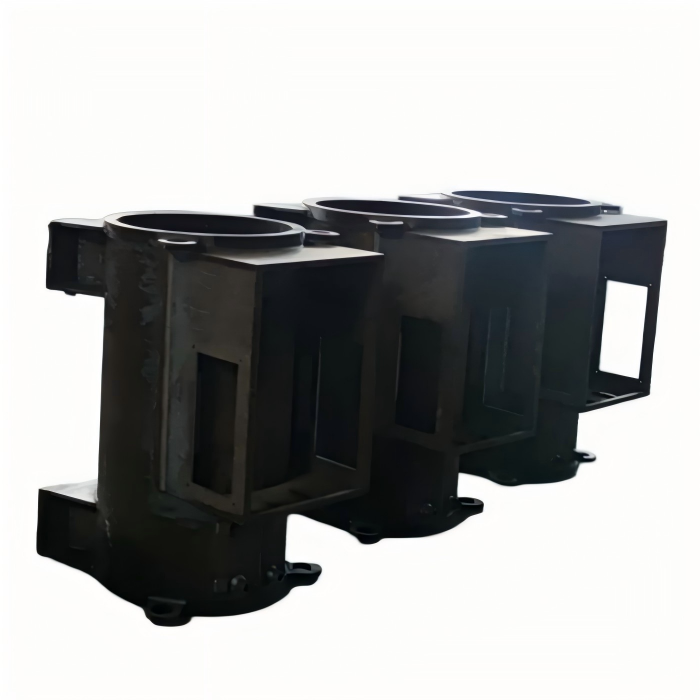

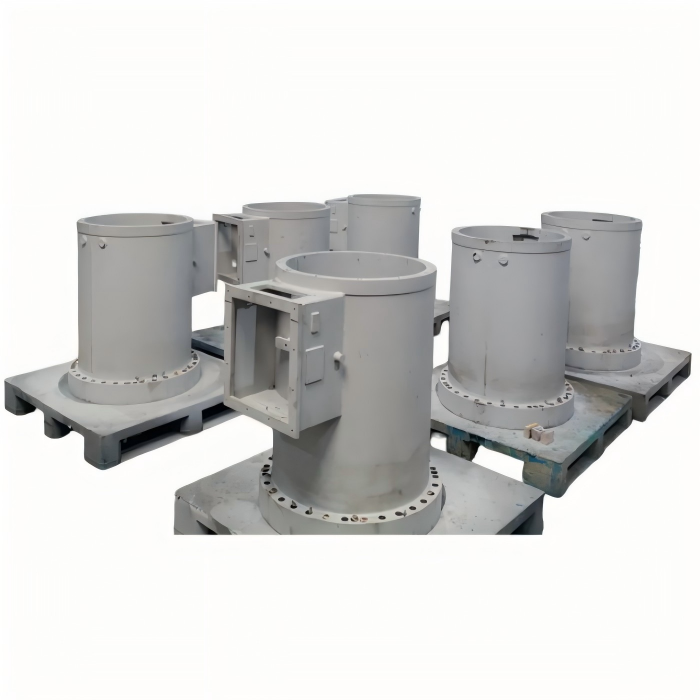
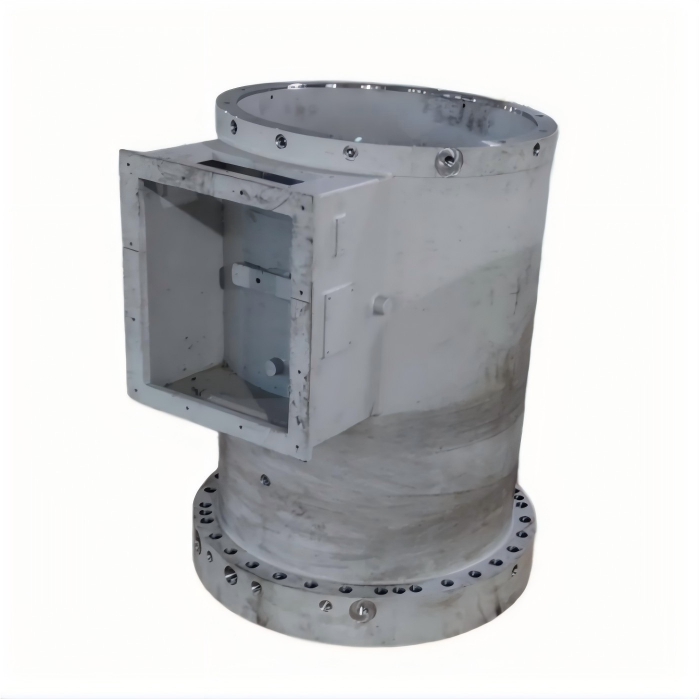
Стабильный алюминиевый корпус двигателя, сваренный TIG, с толщиной стенки 5 мм
TIG Welded Aluminum Motor Housing with 5mm wall thickness delivers structural stability, heat dissipation, and reliable protection for industrial motors.
Request a Quote
Enter the quantity you need and add to your quote list for pricing inquiries.
Product Details
High-precision Aluminum Motor Housing adopts premium aluminum alloy material, made by CNC machining and die-casting process. It features excellent heat dissipation, high structural stability, corrosion resistance and long service life. Custom size, surface treatment and mounting structure are available for various industrial motor, pump and automation equipment applications.
What is Aluminum Motor Housing?
An aluminum motor housing is the outer enclosure of an electric motor. It holds the stator in place, provides mounting points for end bells, dissipates heat from the windings, and protects internal components from the environment.
Typical features of an aluminum motor housing include a cylindrical main body, mounting feet or flanges, cooling fins on the exterior, bearing housings on both ends, and terminal box attachments.
Most mass produced motor housings are die cast from A380 or ADC12 aluminum. But for custom sizes, odd shapes, or small quantities, die casting is impractical.
Our approach is different. We fabricate aluminum motor housing by welding precision cut 6061 aluminum plates and extrusions into the exact shape you need. The result is a housing that fits your motor perfectly without the overhead of casting tooling.
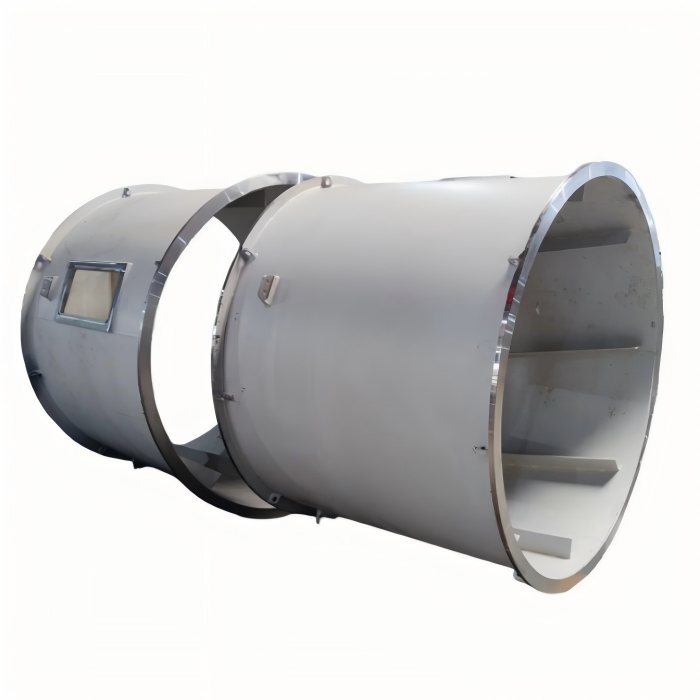
Our Welded Manufacturing Process For Aluminum Motor Housing:
Step One Design Review:
We start with your CAD drawing or a sample part. Our engineers review the design for weldability. We check wall thickness, joint access, and heat management. If we see potential problems, we suggest design changes that make welding easier and the final product stronger.
Step Two CNC Cutting:
We cut all components from 6061 aluminum plate, sheet, or bar stock. Main body sections are cut to width then rolled into cylinders. End plates and mounting flanges are cut on our CNC machining center. Cooling fins are cut from flat bar or extruded T slot profiles.
Step Three Fit Up And Tacking:
All parts are fitted into a weld jig we build specifically for your motor housing design. The jig holds everything in perfect alignment. We tack weld the components together before full welding. This prevents distortion.
2. Step Four TIG Welding:
3. We TIG weld all seams using ER4047 or ER5356 filler metal. For cylindrical motor housings, we weld the longitudinal seam first. Then we weld the end plates to the cylinder body. Finally we weld mounting feet, cooling fins, and terminal box brackets. Each weld is done with controlled heat input to minimize warping.
4. Step Five Post Weld Machining:
5. After welding, the aluminum motor housing goes back to the CNC machine. We bore the bearing seats to exact diameter, face the end plate surfaces, and drill mounting holes. This post weld machining ensures that every critical dimension is accurate even if the housing moved slightly during welding.
6. Step Six Surface Finish:
7. We finish the housing according to your requirements. Options include raw aluminum, clear anodized, black anodized, or powder coating in any RAL color. For cooling performance, we recommend leaving the fins uncoated or only lightly anodized.
8. Why Choose Welded Aluminum Motor Housing Over Casting:
9. No Tooling Cost:
10. Die casting tooling costs start at 5000 dollars for simple housings and can exceed 30000 dollars for complex designs. Welding has zero tooling cost. You pay only for the material and labor of your specific order.
11. Fast Lead Time:
12. Casting tooling takes 6 to 12 weeks. Sample castings take another 2 to 4 weeks. Welded prototype aluminum motor housing can be in your hands in 10 to 15 business days from drawing approval.
13. Easy Design Changes:
14. Discovered a problem with your motor housing design after the first batch? With casting, a design change means new tooling. With welding, we simply update the CNC program and weld fixture. Changes cost a fraction of casting tooling modifications.
15. Ideal For Large Housings:.
Step Four TIG Welding:
We TIG weld all seams using ER4047 or ER5356 filler metal. For cylindrical motor housings, we weld the longitudinal seam first. Then we weld the end plates to the cylinder body. Finally we weld mounting feet, cooling fins, and terminal box brackets. Each weld is done with controlled heat input to minimize warping.
Step Five Post Weld Machining:
After welding, the aluminum motor housing goes back to the CNC machine. We bore the bearing seats to exact diameter, face the end plate surfaces, and drill mounting holes. This post weld machining ensures that every critical dimension is accurate even if the housing moved slightly during welding.
Step Six Surface Finish:
We finish the housing according to your requirements. Options include raw aluminum, clear anodized, black anodized, or powder coating in any RAL color. For cooling performance, we recommend leaving the fins uncoated or only lightly anodized.
Why Choose Welded Aluminum Motor Housing Over Casting:
No Tooling Cost:
Die casting tooling costs start at 5000 dollars for simple housings and can exceed 30000 dollars for complex designs. Welding has zero tooling cost. You pay only for the material and labor of your specific order.
Fast Lead Time:
Casting tooling takes 6 to 12 weeks. Sample castings take another 2 to 4 weeks. Welded prototype aluminum motor housing can be in your hands in 10 to 15 business days from drawing approval.
Easy Design Changes:
Discovered a problem with your motor housing design after the first batch? With casting, a design change means new tooling. With welding, we simply update the CNC program and weld fixture. Changes cost a fraction of casting tooling modifications.
Ideal For Large Housings:
Die casting machines have size limits. Very large motor housings for industrial motors over 50 horsepower are difficult or impossible to cast. Welding has no size limit. We have fabricated aluminum motor housing up to 600mm diameter and 800mm length.
Better For Small Batches:
Casting makes economic sense at 1000 units or more. Below that, the tooling cost per part becomes too high. Welding is cost effective for batches from 1 to 500 units. Many of our customers start with 5 or 10 welded housings for prototyping, then order 100 to 200 for production.
Types Of Aluminum Motor Housing We Weld:
Servo Motor Housing:Servo motors require precise bearing alignment. Our welded servo motor housings are post machined on the same setup to ensure concentricity within 0.02mm. We have supplied housings for 40mm, 60mm, 80mm, and 130mm frame servo motors.
Industrial AC Motor Housing:For general purpose industrial motors from 0.5 kW to 50 kW, our welded housings include cooling fins, mounting feet, and terminal boxes. The welded fin design provides better heat dissipation than cast fins because we can use taller, thinner fin profiles.
E Motor Housing For Electric Vehicles:EV motors need lightweight, strong housings with integrated cooling channels. We weld aluminum motor housing with internal passages for liquid cooling. The welded construction allows complex coolant routing that would be impossible with casting.
Brake Motor Housing:Motors with electromagnetic brakes need extra depth at the rear end. We weld custom depth housings without tooling changes. Just tell us the required length.
Explosion Proof Motor Housing:For hazardous environments, motor housings must contain any internal explosion. Welded 6061 aluminum construction with thick walls meets several explosion proof standards. We have supplied housings certified for Class 1 Division 2 environments.
Aluminum Motor Housing For Different Industries:
Robotics And Automation:Robot joints use compact servo motors with custom housing shapes. Standard cast housings do not fit. We weld custom shapes with integrated mounting interfaces.
Робототехника и автоматизация:В суставах роботов используются компактные серводвигатели с корпусами нестандартной формы. Стандартные литые корпуса не подходят. Мы свариваем корпуса произвольной формы с интегрированными крепежными интерфейсами.
Medical Equipment:
Медицинское оборудование:
Аппараты МРТ и хирургические инструменты требуют немагнитных алюминиевых корпусов двигателей. Отливки иногда содержат примеси железа, которые становятся магнитными. Наш сварной корпус двигателя из алюминия 6061 на 100 процентов немагнитен.
Аэрокосмическое наземное оборудование:
Аэропортовые системы обработки багажа и наземные силовые установки требуют корпусов двигателей, выдерживающих воздействие внешней среды. Наши сварные корпуса с анодированной отделкой проходят 1000-часовые испытания солевым туманом.
Станкостроительная промышленность:
Шпиндельные двигатели для станков с ЧПУ требуют корпусов без вибрации. Сварной шов на наших корпусах добавляет демпфирование по сравнению с тонкостенными отливками.
Морская и оффшорная промышленность:
Лебедки для лодок и палубное оборудование требуют корпусов двигателей, устойчивых к коррозии. Мы свариваем морской алюминий 6061 и наносим тяжелое порошковое покрытие.
Контроль качества алюминиевого корпуса двигателя:
Контроль размеров:
Мы измеряем каждый критический размер, включая диаметр отверстия, параллельность торцевых пластин, положение монтажных отверстий и общую длину. Допуски на обработанные элементы выдерживаются в пределах плюс-минус 0,05 мм.
Контроль сварных швов:
Все сварные швы проходят визуальный контроль. Для корпусов с жидкостным охлаждением мы проводим испытание охлаждающих каналов давлением 2 Бар в течение 30 минут. Падение давления не допускается.
Проверка концентричности:
Концентричность посадочного отверстия подшипника проверяется на координатно-измерительной машине. Биение не должно превышать 0,03 мм.
Сертификация материала:
Мы предоставляем заводские протоколы испытаний для всего алюминия 6061, используемого в вашем корпусе двигателя. Это часто требуется для промышленных и государственных контрактов.